Why Are Gravestones Leaning?
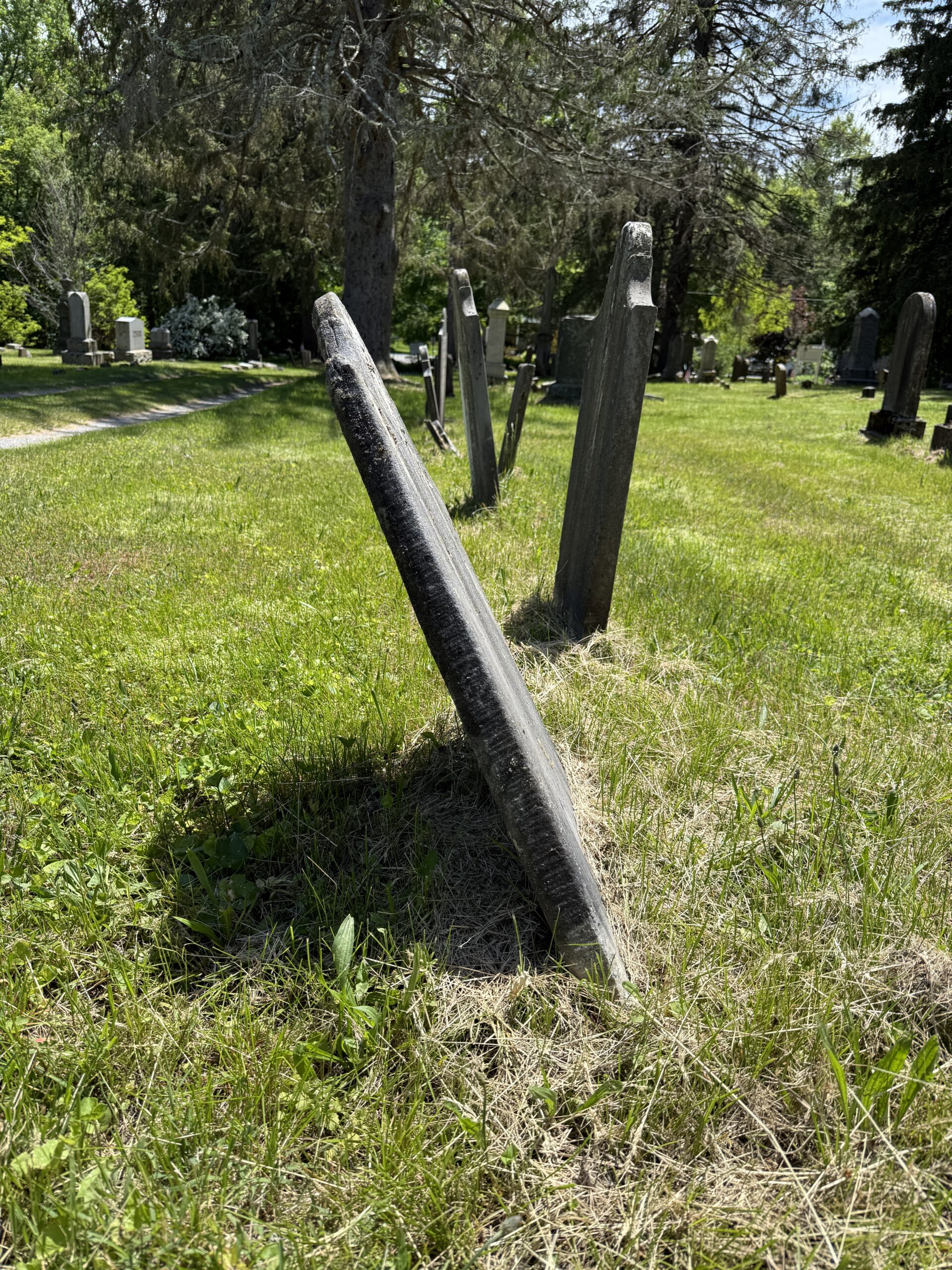
Gravestones lean because soil settles, bases shift, freeze-thaw cycles move the ground, roots apply pressure, water drains unevenly, graves subside, and older foundations lose support over time. A leaning gravestone may be only slightly out of alignment, or it may be unstable enough to need professional leveling, resetting, repair, or stabilization.
This guide explains what causes gravestones to lean, why gravestones sink, how grave settling and grave subsidence affect cemetery memorials, when a tilted headstone becomes a safety concern, and what families should do before trying to fix or move a cemetery marker.
Gravestone Revival provides preservation-first cemetery care throughout Saratoga County, Montgomery County, and Fulton County, New York. Before & After Photo Documentation and a Written Gravesite Condition Report are always provided for cemetery care projects.
Quick Answer: What Causes Gravestones to Lean?
Gravestones usually lean because the ground or foundation beneath the memorial has changed. Common causes include soil settling, grave subsidence, poor drainage, frost movement, tree roots, erosion, failed bases, previous improper resets, heavy monument weight, and long-term cemetery maintenance conditions.
A leaning gravestone should not be pushed, pulled, braced, or straightened by hand. The safest first step is documentation, condition review, and a preservation-first recommendation for leveling, resetting, repair, or stabilization.
Common Reasons Gravestones Lean
Most leaning gravestones do not shift overnight. The movement usually develops slowly through years of weather, ground movement, cemetery maintenance, grave settling, and changes beneath the marker.
- Soil settlement: The ground under the marker compresses or shifts, causing one side of the stone or base to drop.
- Grave subsidence: The soil over or around a burial can sink as loosened ground settles, air pockets close, and the grave naturally compacts.
- Freeze-thaw cycles: Water in the soil freezes, expands, thaws, and moves the ground around the memorial.
- Poor drainage: Water collects near the stone, softens the soil, and weakens support beneath the base.
- Tree roots: Roots can lift, push, or destabilize nearby grave markers.
- Erosion: Rain, runoff, slope, or missing soil can remove support from one side of a monument.
- Failed base material: Older bases, uneven stone, soil-only support, or inadequate bedding material can shift over time.
- Improper earlier resetting: If a marker was reset without proper support, it may lean again.
- Age and weight: Heavy upright stones, slant markers, and older family plot monuments can settle unevenly over decades.
Why Do Gravestones Sink Into the Ground?
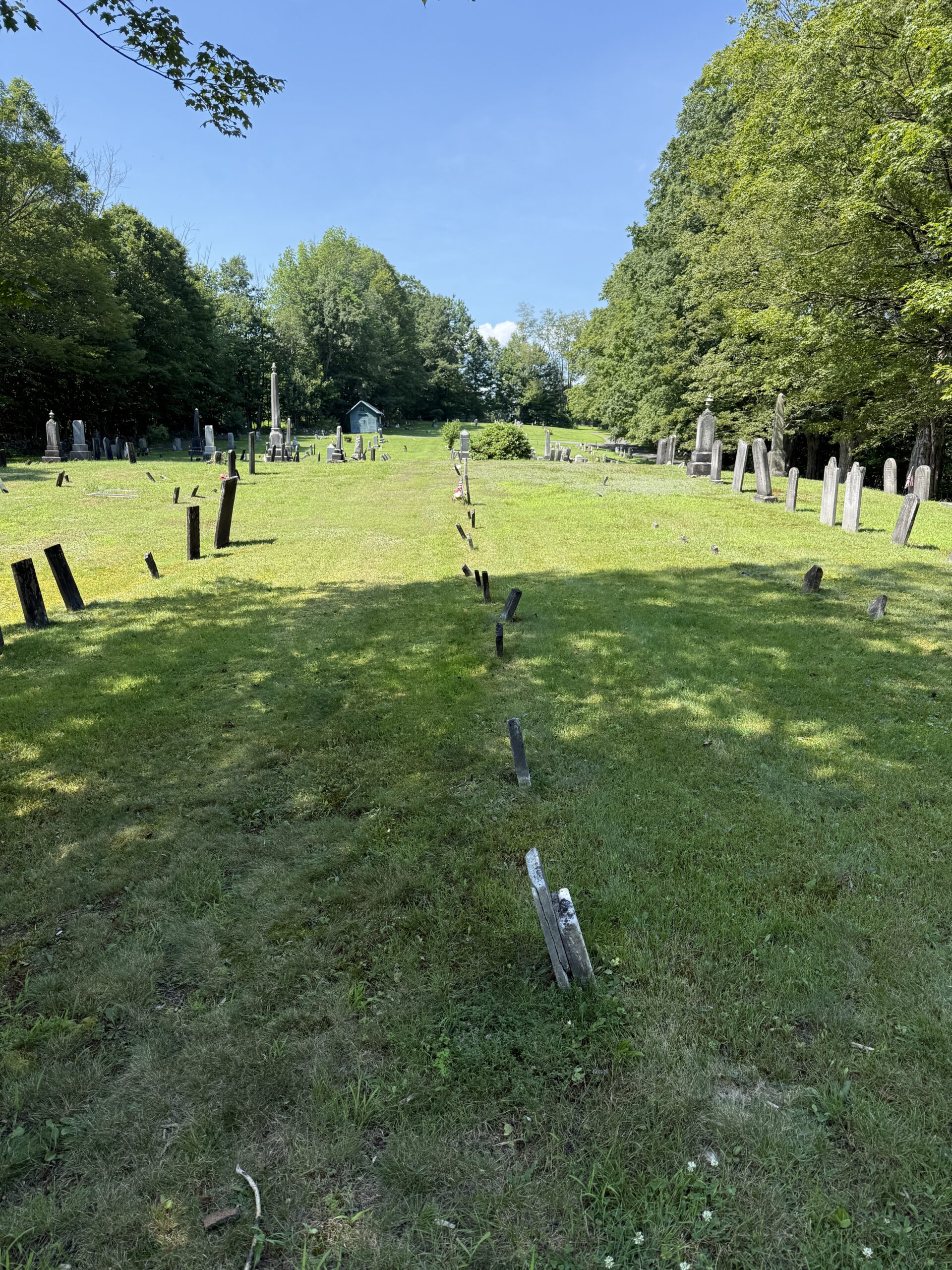
Gravestones sink when the soil beneath or around the marker loses support. This can happen because of natural soil settlement, grave subsidence, water runoff, poor drainage, freeze-thaw movement, erosion, or inadequate base preparation beneath the memorial.
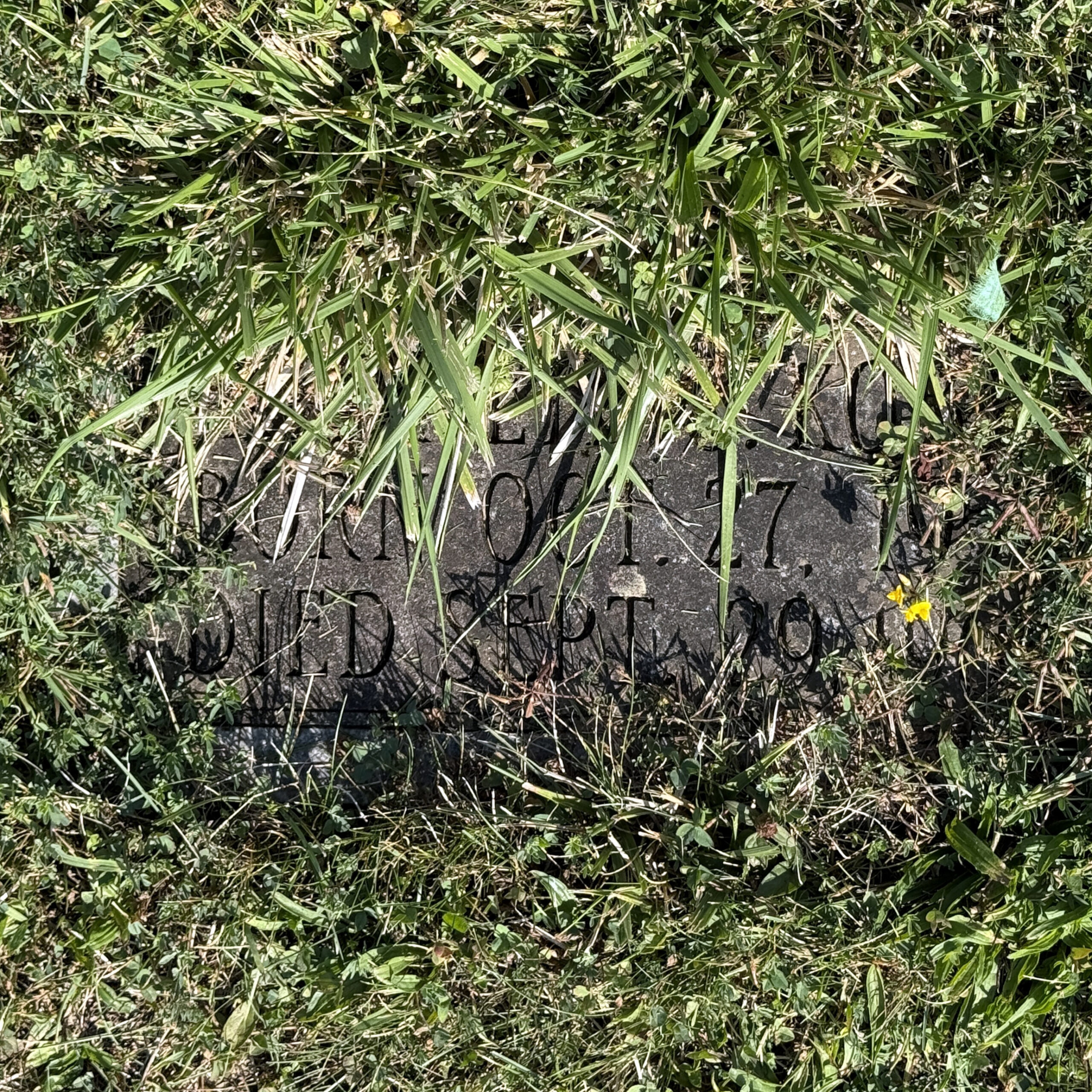
Flat markers are especially vulnerable because they sit close to grade. Grass, soil, and mowing debris can slowly cover the edges. Over time, the marker may become partly buried, harder to read, and more difficult to maintain.
Upright gravestones can also sink unevenly. If one side of the base settles more than the other, the stone may begin to tilt. This is why sinking and leaning are often part of the same cemetery condition problem.
What Is Grave Settling?
Grave settling is the natural process of soil compacting after a burial or after ground has been disturbed. When a grave is excavated and then backfilled, the soil does not return to the exact density it had before. Air pockets, loosened soil, clay, moisture, and rainfall can all affect how the ground settles over time.
Newer graves may settle noticeably during the first months after burial. Older graves can also settle again over time, especially when drainage is poor, soil is heavy, rainfall is prolonged, or the plot has not been maintained. When the ground settles unevenly around a memorial, the marker can sink, lean, rotate, or separate from its base.
This is one reason cemetery rules sometimes require families to wait before installing a permanent memorial after burial. The ground often needs time to stabilize before a headstone is placed.
What Is Grave Subsidence?
Grave subsidence is the sinking or settling of the ground over a burial plot. It can happen as loosened soil compacts, air pockets close, rainwater moves through the grave, and the ground naturally settles downward.
Grave subsidence does not automatically mean something is wrong with the cemetery or the burial. Some settling is natural. The concern for families is what happens when settling affects the memorial: the grave surface becomes uneven, a marker sinks below grade, the base loses support, or an upright stone begins to lean.
Severe or uneven subsidence can also create a trip hazard, especially near walkways, family plots, flat markers, and cemetery sections with frequent visitors.
Why Freeze-Thaw Cycles Matter in New York Cemeteries
In Saratoga County, Montgomery County, and Fulton County cemeteries, winter conditions can be hard on grave markers. Water enters the soil around a memorial, freezes, expands, and then thaws. Over time, this movement can lift, drop, rotate, or shift the stone and its base.
This is one reason a gravestone may appear slightly more tilted after winter or after several seasons of heavy moisture. A marker that was once level may gradually lean, sink, rotate, or separate from its base.
Freeze-thaw movement becomes more serious when combined with poor drainage, soil settlement, old base material, or a marker that was already leaning before winter.
Leaning and Sinking Often Happen Together
A gravestone may lean because one side of the base has sunk lower than the other. This is common with flat markers, small upright stones, slant markers, and older monuments set on unstable or aging support.
When a marker sinks below grade, grass, soil, and mowing debris can cover the edge of the memorial. When an upright stone sinks unevenly, the entire memorial may begin to tilt. In either case, the issue is usually below the surface, not just in the visible stone.
Related service: Gravestone Leveling & Reset
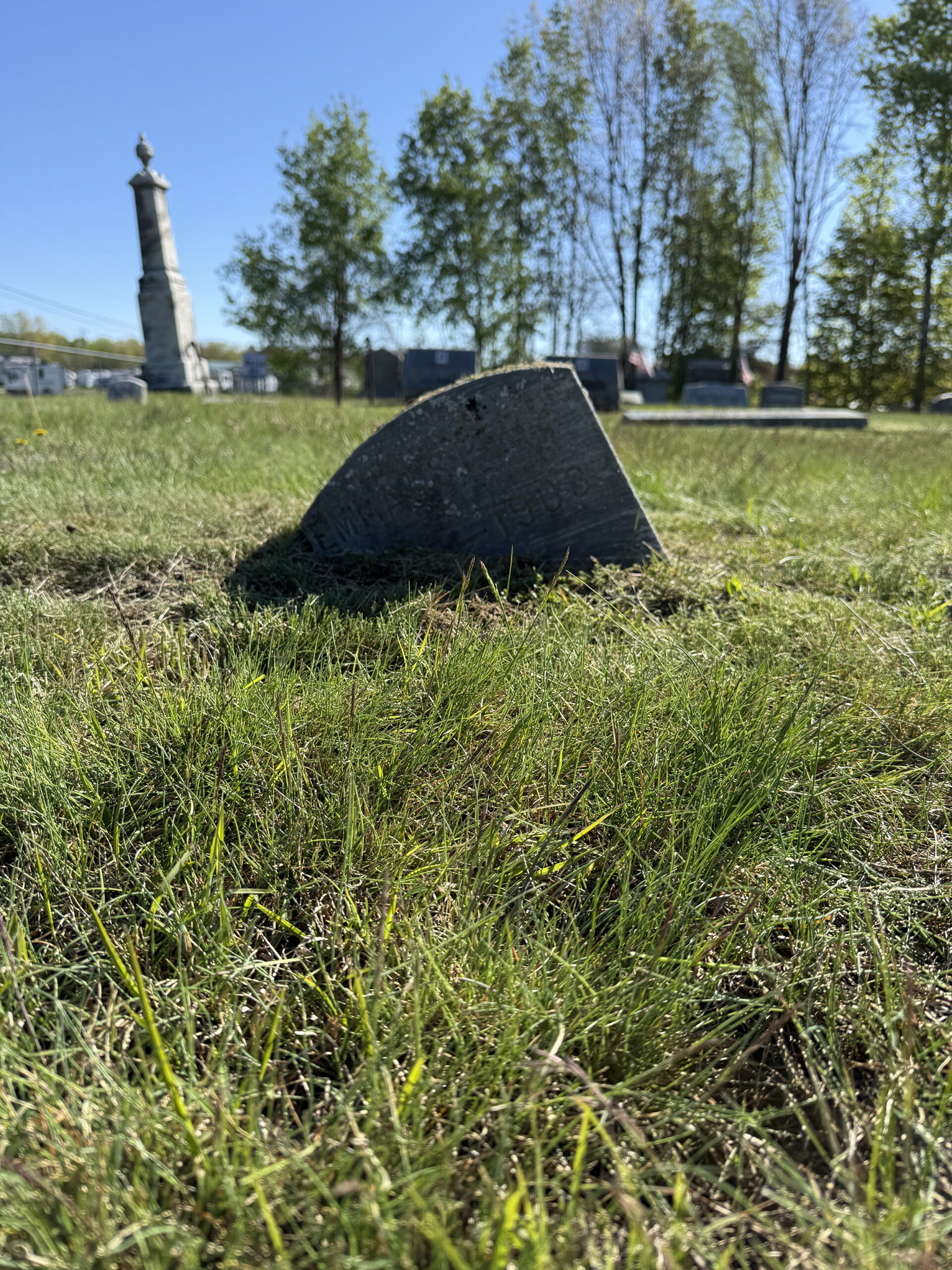
When a Leaning Gravestone Becomes a Safety Concern
A slightly tilted marker may not be urgent, but a severely leaning gravestone can become a safety concern. Upright stones, tablets, monuments, and markers with separated bases may shift suddenly if touched, leaned on, or exposed to additional ground movement.
- The stone is leaning sharply or appears ready to fall.
- The base is cracked, separated, or no longer supporting the stone evenly.
- The monument rocks, moves, or feels unstable.
- The stone is leaning toward a walkway, road, neighboring grave, or visitor area.
- The marker has visible cracks, open joints, or failed previous repairs.
- The ground around the grave has visibly sunk or become uneven.
- The stone is heavy enough that falling could cause injury or additional damage.
If a memorial appears unstable, do not push, pull, lift, or brace it yourself. Document it from a safe distance and request a condition review.
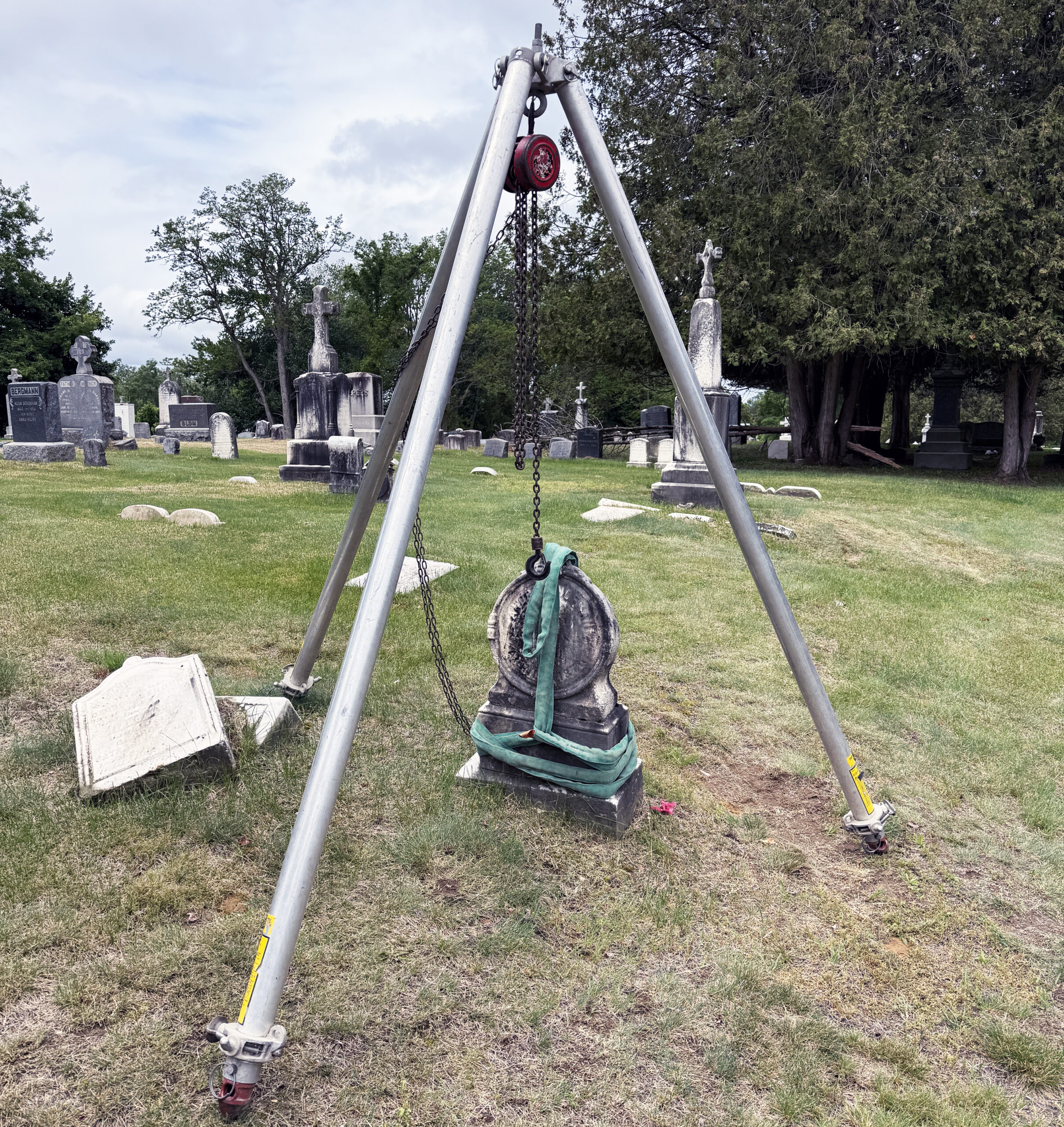
Can a Leaning Gravestone Be Straightened?
In many cases, yes. A leaning gravestone may be corrected through careful leveling and reset work when the cemetery rules, marker condition, stone type, base condition, and project scope allow it.
Proper correction usually involves more than simply pushing the stone upright. The memorial may need to be documented, carefully lifted, excavated, supported with appropriate base preparation, leveled, reset, and checked for stability.
If the marker is cracked, separated, broken, or unstable, repair and stabilization may need to be considered together with leveling. If the ground has settled or subsided, the support beneath the memorial must be addressed or the stone may lean again.
Related services: Gravestone Leveling & Reset | Headstone Repair & Stabilization
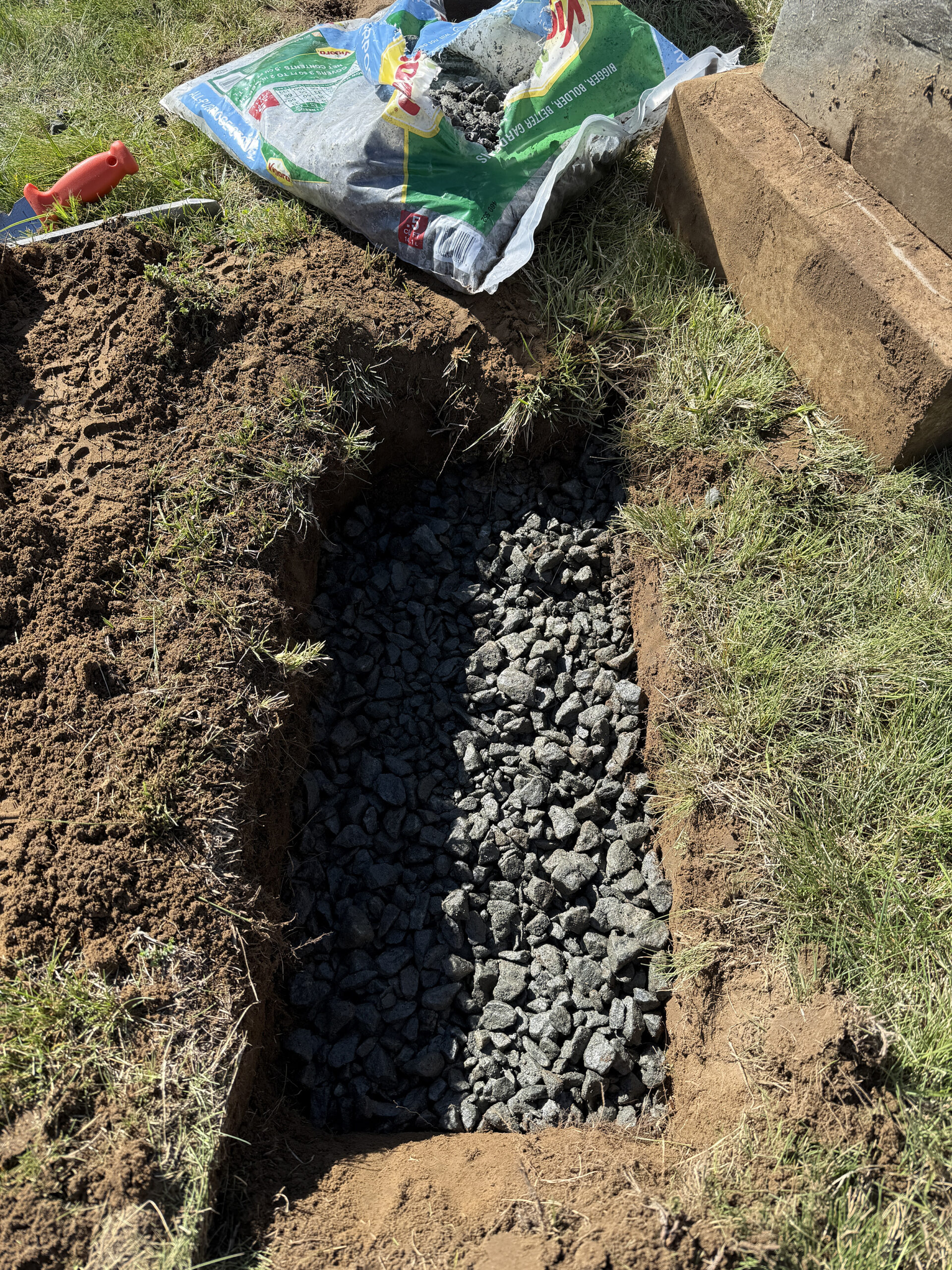
What Not to Do With a Leaning or Sunken Gravestone
A leaning or sunken gravestone can be fragile, unstable, or much heavier than it appears. Well-intentioned attempts to straighten a stone can damage the memorial, break the base, injure someone, or violate cemetery rules.
- Do not push or pull the stone upright by hand.
- Do not wedge rocks, bricks, wood, or loose objects under the memorial.
- Do not dig around the marker without cemetery approval.
- Do not fill a sunken area with random soil without understanding cemetery rules and drainage.
- Do not use concrete as a quick patch without understanding the memorial and cemetery setting.
- Do not glue or seal unstable joints without correcting base or support problems.
- Do not use pressure washing or harsh chemicals to clean first if the stone is unstable.
- Do not lean on the marker, sit on it, or allow children to climb near it.
The safest first step is documentation and evaluation. A written condition report can help the family understand what is visible before any corrective work begins.
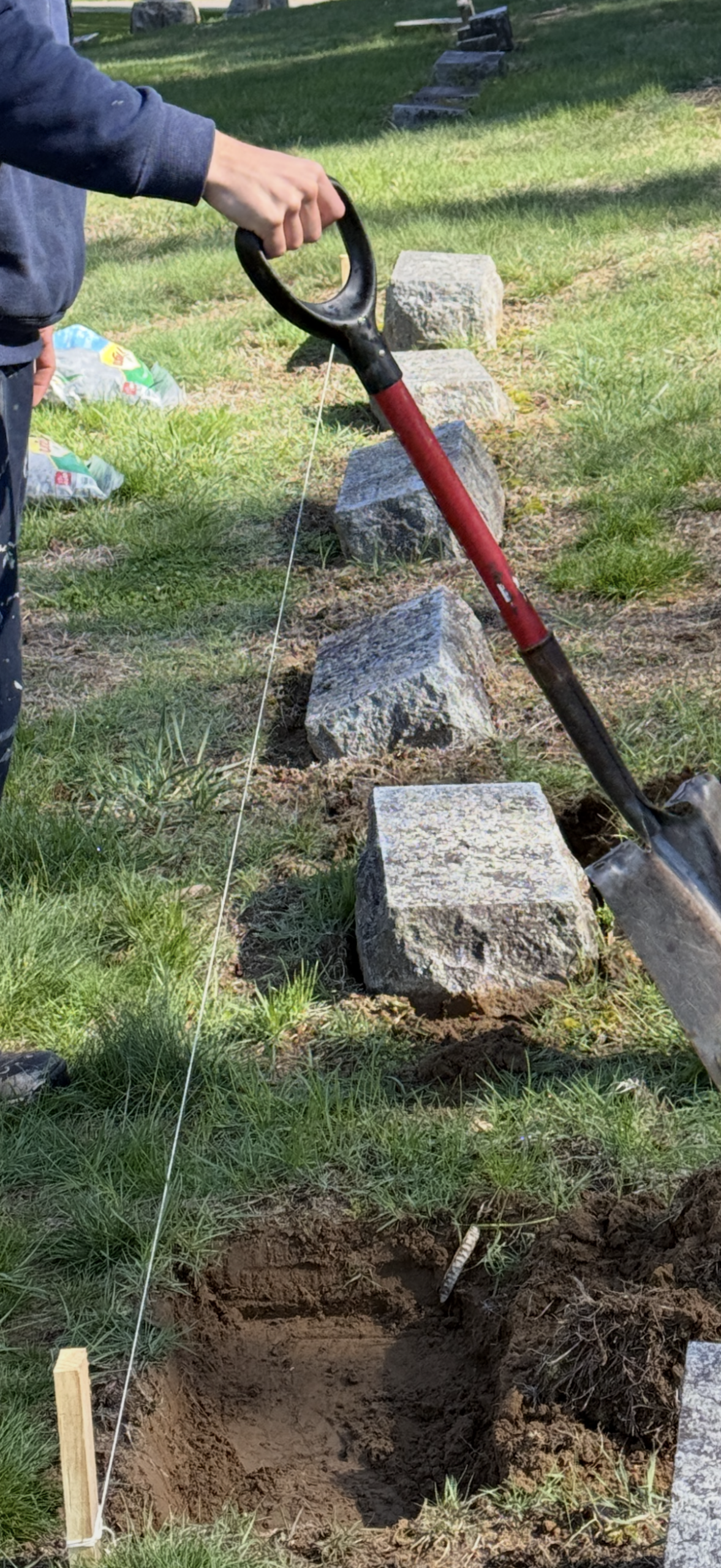
Why Documentation Matters Before Leveling or Resetting
Before a leaning or sunken gravestone is corrected, it should be documented. Photos help show the original condition, visible tilt, surrounding cemetery context, ground settlement, base condition, inscription visibility, nearby family markers, and any related concerns.
Documentation is especially important for out-of-town families who cannot visit the cemetery regularly. It gives relatives a clear record of what was found, what condition the memorial was in, and what work may be appropriate.
- Photos of the full memorial before work begins
- Close-up images of cracks, separation, base movement, sinking, or instability
- Images showing the lean from more than one angle
- Photos of visible grave settling, soil depression, or uneven ground
- Nearby plot and family marker context
- Written notes about visible condition concerns
- Before and after photos if approved work is completed
Related services: Cemetery Condition Reports | Family Memorial Documentation
How Gravestone Leveling and Reset Work Usually Helps
Gravestone leveling and reset work is designed to correct sunken, tilted, shifted, uneven, or unstable markers when the memorial is appropriate for that service. The goal is not to make an old cemetery look new. The goal is to restore safer support, improve presentation, reduce ongoing movement, and protect the memorial from worsening instability.
- Review the memorial and cemetery setting. Material, size, condition, access, ground condition, and cemetery rules matter.
- Document the visible condition. Photos and notes show why leveling or reset work may be needed.
- Evaluate sinking or subsidence. Soil depression, grave settling, drainage, and uneven support should be considered.
- Carefully prepare the base. Proper support beneath the marker is what helps prevent repeat settling.
- Reset the marker when appropriate. The memorial is positioned and leveled with care.
- Check stability and final presentation. After work, the family receives documentation.
Before & After Photo Documentation and a Written Gravesite Condition Report are always provided.
Out-of-Town Families Often Notice Leaning Stones Late
Many families do not know a gravestone is leaning or sinking until they visit after months or years away. Others discover the issue through a relative, cemetery office, photograph, genealogy visit, or holiday trip.
If you cannot visit regularly, current cemetery documentation can help you understand whether the memorial is leaning, sinking, cracked, stained, difficult to read, affected by grave settling, or in need of leveling, repair, or cleaning.
Helpful resource: Out-of-Town Family Cemetery Care
FAQ: Why Are Gravestones Leaning?
Why is my family gravestone leaning?
A family gravestone may lean because the soil settled, water softened the ground, freeze-thaw cycles shifted the base, tree roots moved the stone, grave subsidence affected the plot, or the original support under the memorial has failed over time.
Why do gravestones sink into the ground?
Gravestones sink when soil settles, water drains poorly, base material fails, frost moves the ground, or the marker was not supported evenly. Flat markers and older stones may become partly buried by grass, soil, and cemetery debris.
What is grave subsidence?
Grave subsidence is the sinking or settling of the ground over a burial plot. It can happen as loosened soil compacts, air pockets close, rainfall moves through the soil, and the grave naturally settles over time.
Can grave settling make a headstone lean?
Yes. If the ground settles unevenly beneath or around a memorial, one side of the stone or base may drop lower than the other, causing the marker to lean, rotate, or separate from its base.
Can a leaning gravestone fall over?
Yes. Some leaning gravestones are stable enough to monitor, but others can fall if the base is failing, the stone is cracked, the monument is heavy, or the lean has become severe. Do not touch or push an unstable marker.
Can a leaning gravestone be fixed?
Often yes, when the cemetery rules, stone condition, marker size, and project scope allow it. The correction may involve leveling, resetting, base preparation, stabilization, repair, or a combination of services.
Should I straighten a leaning gravestone myself?
No. Leaning stones can be heavy, fragile, unstable, or connected to deeper base and soil problems. Pushing, pulling, digging, or bracing the stone without proper evaluation can cause damage or injury.
Does Gravestone Revival provide documentation after leveling?
Yes. Before & After Photo Documentation and a Written Gravesite Condition Report are always provided for cemetery care projects.
Need Help With a Leaning or Sunken Gravestone?
If a family memorial is leaning, sinking, shifting, settling, or becoming unstable, Gravestone Revival can help document the condition and recommend whether gravestone leveling, resetting, repair, or stabilization may be appropriate.
Send the cemetery name, town, family surname, memorial photos if available, and what you are seeing at the gravesite.
Before & After Photo Documentation and a Written Gravesite Condition Report are always provided.