Headstone Repair & Gravestone Stabilization
Preservation-First Repair for Cracked, Broken, Separated, Leaning, Fallen, and Unstable Memorials
Gravestone Revival provides headstone repair and gravestone stabilization throughout Saratoga County, Montgomery County, and Fulton County, New York, for families, cemetery associations, churches, municipalities, and preservation groups responsible for damaged or unstable cemetery memorials.
Repair work may involve cracked headstones, broken tablets, separated bases, loose joints, fallen fragments, leaning memorials, unstable stones, failed older repairs, and memorials affected by age, freeze-thaw cycles, settling, erosion, root pressure, or impact damage.
Our approach is conservative and preservation-first. The goal is not to make an old memorial look brand new. The goal is to stabilize, protect, document, and respectfully improve the original memorial whenever appropriate.
Before & After Photo Documentation and a Written Gravesite Condition Report are always provided for cemetery care projects.
Helpful Resources: Cemetery Condition Reports | Gravestone Leveling & Reset | Gravestone Cleaning | Out-of-Town Family Cemetery Care
What Headstone Repair & Stabilization Can Include
Headstone repair is not one single service. Every memorial must be evaluated based on its stone type, age, condition, cemetery rules, setting, and how the damage occurred. Gravestone Revival focuses on careful repair, stabilization, and documentation while protecting original historic material whenever possible.
- Cracked headstone repair — careful stabilization support for visible cracks, separated sections, or weakened stone.
- Broken gravestone repair — assessment and repair planning for broken tablets, fragments, or detached sections.
- Base separation correction — support when a memorial has separated from its base or shifted out of alignment.
- Fallen marker documentation — visible condition reporting before repair, resetting, or stabilization decisions are made.
- Joint stabilization — support for failing joints, loose sections, or older repairs that no longer hold properly.
- Minor fragment repair — preservation-focused attention for smaller breaks, chips, or detached pieces when repair is appropriate.
- Repair plus reset work — combining repair, leveling, reset, and stabilization when the base or support has failed.
Repair and Leveling Often Work Together
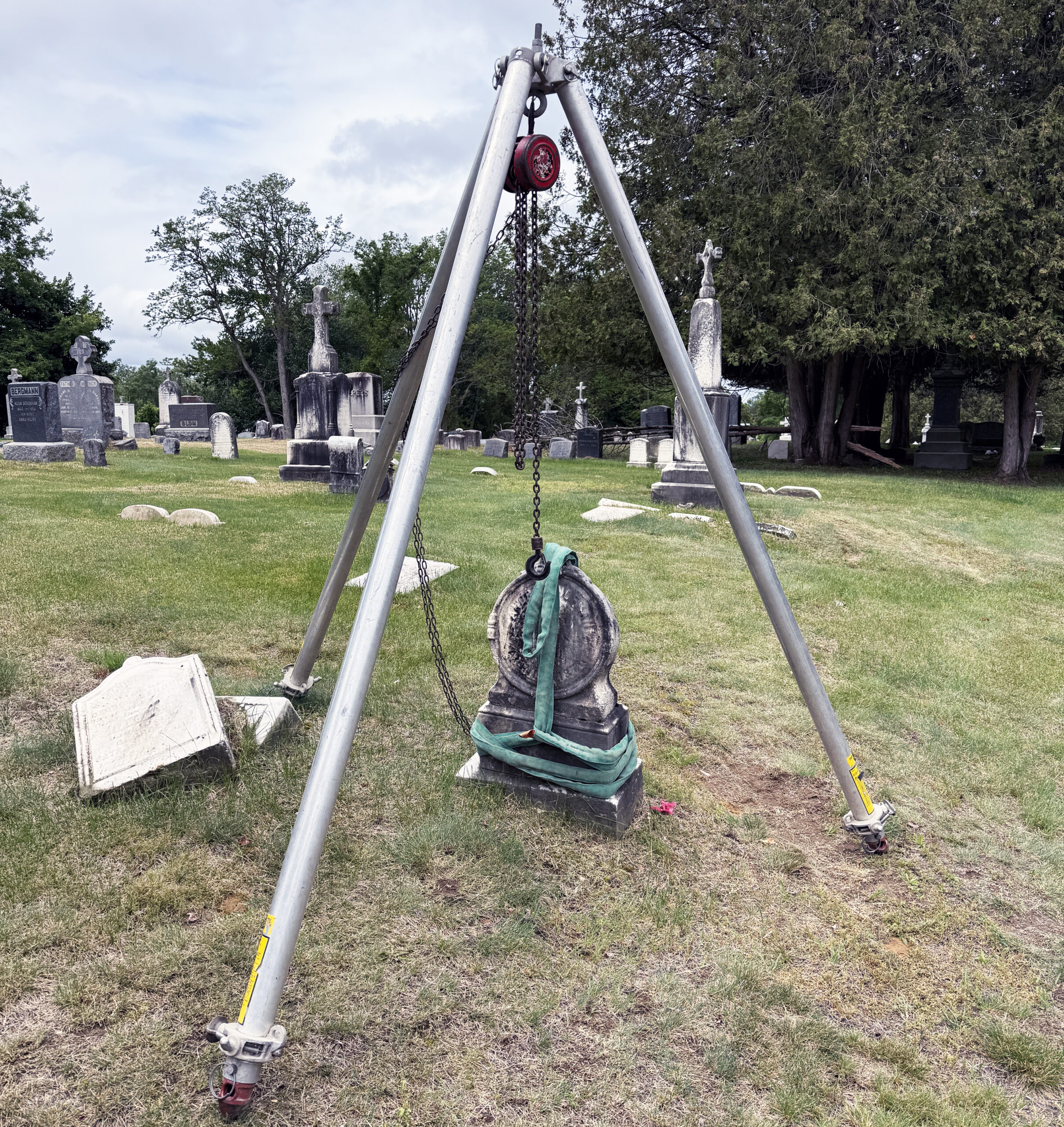
Many damaged headstones are not only cracked or separated. They may also be sinking, leaning, shifting, or no longer properly supported. When the base is uneven or unstable, repair alone may not be enough.
That is why headstone repair often connects directly with Gravestone Leveling & Reset. A memorial may need to be carefully reset, supported with an appropriate base, leveled, and stabilized before repair work can hold properly over time.
This repair-and-reset connection is especially common with smaller upright stones, slant markers, older family plot markers, sunken bases, and memorials affected by freeze-thaw movement in Upstate New York cemeteries.
Common Causes of Gravestone Damage
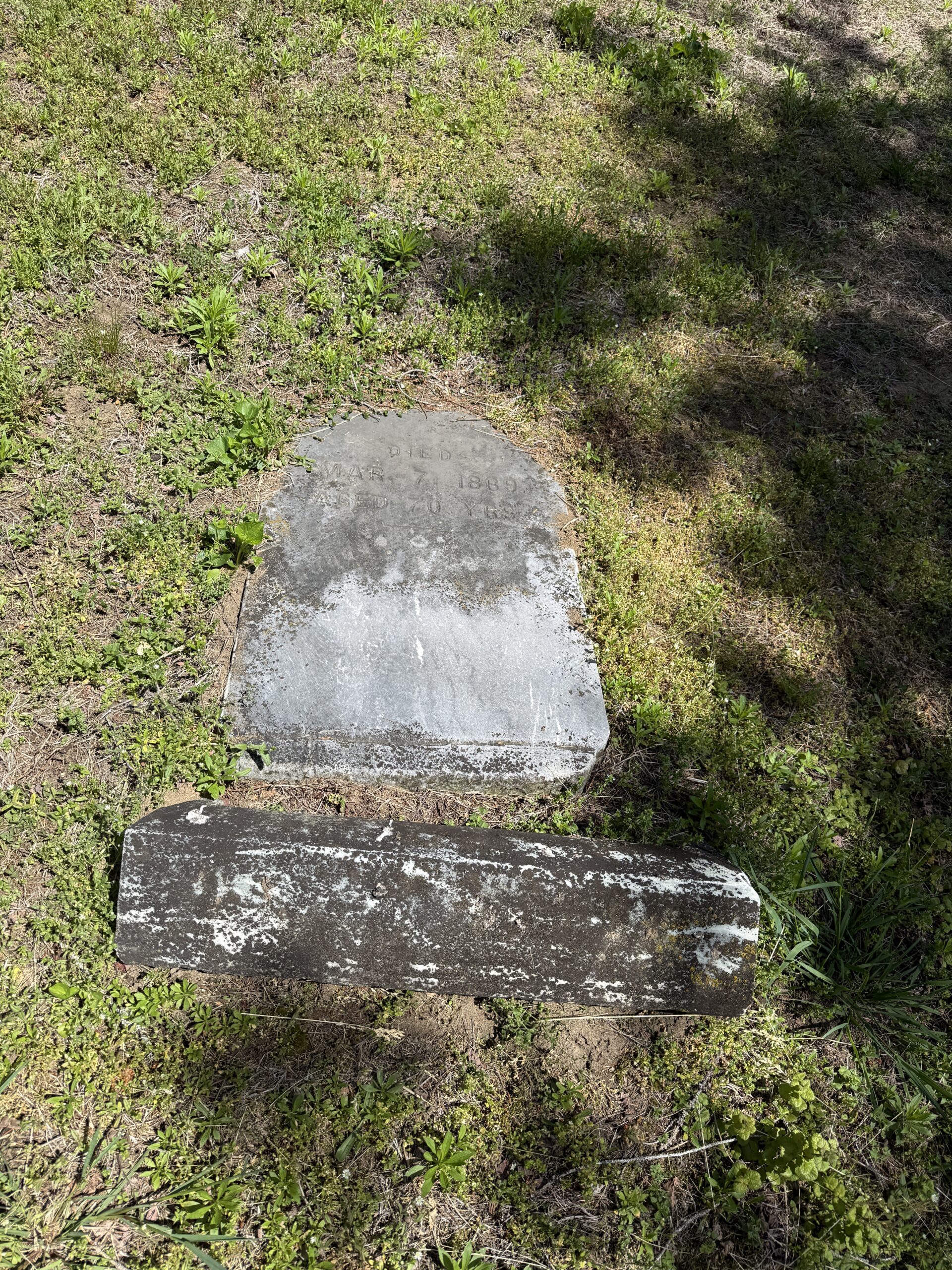
Gravestones and cemetery monuments can become damaged for many reasons. Some damage happens slowly over decades. Other damage may appear suddenly after winter, heavy rain, mower impact, root pressure, vandalism, or ground movement.
- Freeze-thaw cycles that shift soil, expand cracks, and move bases.
- Settling and erosion beneath the memorial or foundation.
- Failed older repairs using unsuitable adhesives, cement, or patching materials.
- Tree roots and soil movement that push, lift, or tilt stones.
- Mower or equipment impact near cemetery rows and plot edges.
- Age and weather exposure weakening joints, inscriptions, and stone surfaces.
- Improper resetting without a stable base or proper support material.
- Displaced fragments that were never properly documented or repaired.
Our Preservation-First Repair Approach
Gravestone Revival approaches repair work with restraint, documentation, and preservation in mind. The goal is to stabilize, protect, and respectfully improve the condition of the original memorial whenever repair is appropriate.
- Inspect first — we evaluate stone condition, cracking, movement, base support, and cemetery setting.
- Document before work begins — photos help families understand the condition and repair need.
- Stabilize the cause when possible — repair may need leveling, reset, or base support first.
- Use appropriate materials — repair materials must be selected carefully for the stone, condition, and cemetery setting.
- Avoid aggressive methods — no harsh chemicals, no pressure washing, and no unnecessary force.
- Preserve original material — whenever possible, the original memorial is protected rather than replaced.
- Communicate limits clearly — some memorials require further review, cemetery approval, or specialist support.
Repair, Documentation & Cemetery Condition Reports
Headstone repair often begins with documentation. A crack, break, fallen fragment, separated base, or unstable memorial may need visible condition observations before a family, cemetery board, church, municipality, or cemetery association decides what work is appropriate.
For that reason, repair and stabilization requests often pair naturally with Cemetery Condition Reports and Family Memorial Documentation. These records help families and decision-makers understand what is present, what appears damaged, and what next steps may be appropriate.
When Headstone Repair May Not Be Recommended
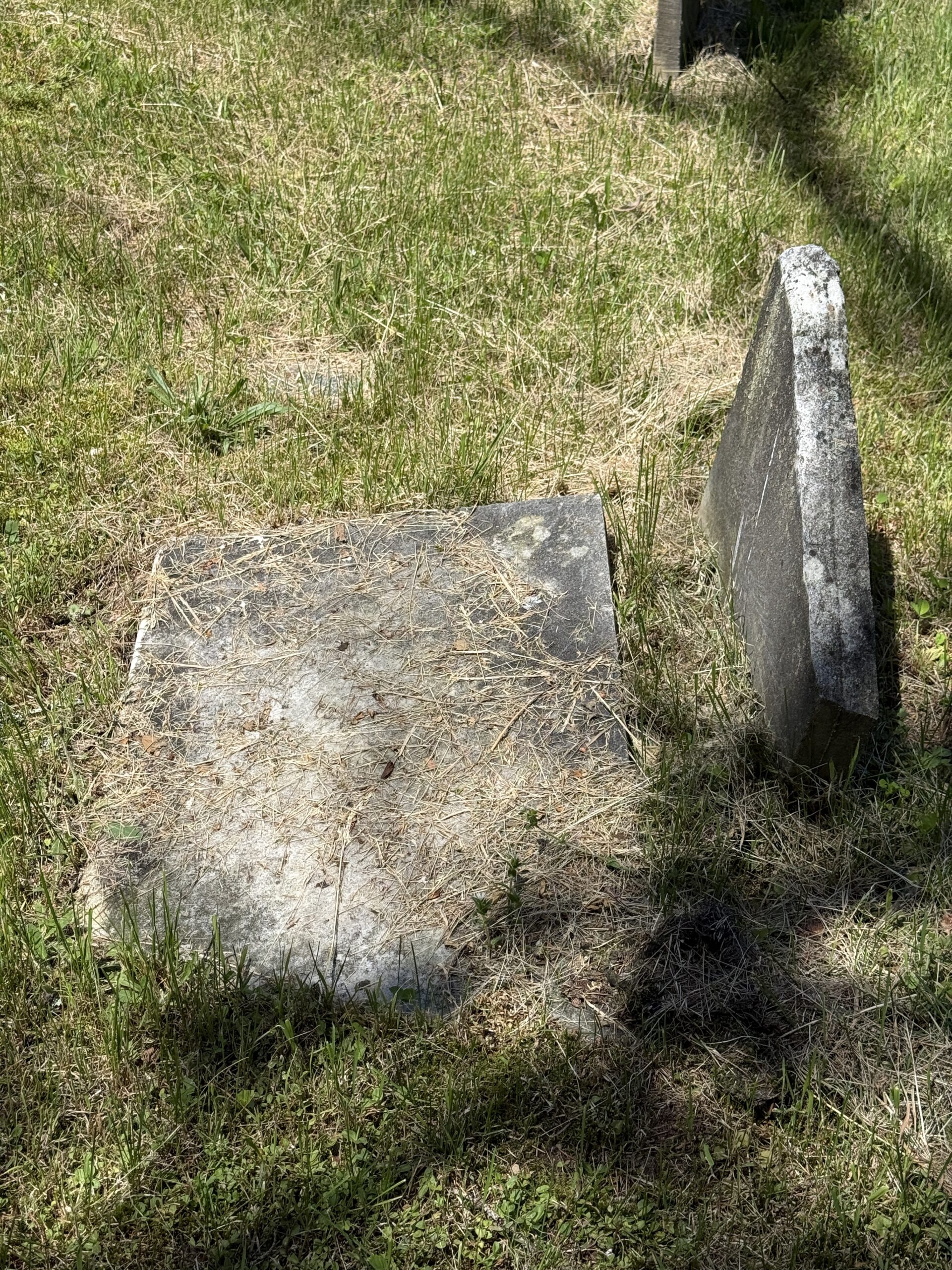
Not every damaged gravestone should be repaired immediately, and not every repair is appropriate. Some memorials require cemetery approval, monument company involvement, additional conservation review, specialized equipment, or a different long-term solution.
- The stone is severely crumbling, flaking, delaminating, or structurally unsound.
- The memorial is extremely large, heavy, or unsafe to move without specialized equipment.
- The cemetery requires approval before any repair, reset, or stabilization work.
- The stone is historically significant and requires specialized conservation review.
- Prior repairs have failed and need careful assessment before new work is attempted.
- The base or foundation problem must be corrected before repair can hold properly.
This honesty matters. The right answer is sometimes repair, sometimes leveling and reset, sometimes cleaning first, sometimes documentation only, and sometimes referral or additional evaluation.
Headstone Repair for Out-of-Town Families
Many headstone repair requests come from families who no longer live near the cemetery. A loved one’s memorial may be cracked, leaning, separated, broken, or unstable, but the family may not be able to inspect it regularly in person.
Gravestone Revival provides documented cemetery care so families can understand what is happening at the gravesite. Before-and-after photos and written condition notes help families review the work even when they live out of town.
Helpful starting points: Out-of-Town Family Cemetery Care | Family Resources | Family Memorial Documentation | Cemetery Condition Reports
For Cemeteries, Churches, Municipalities & Cemetery Associations
Headstone repair and gravestone stabilization may also be needed by cemetery boards, churches, municipalities, cemetery associations, and preservation groups responsible for older sections, veteran memorials, family plots, or historic cemetery areas with cracked, broken, fallen, separated, or unstable markers.
For larger cemetery needs, a Cemetery Condition Report may be the best first step before deciding which memorials need repair, leveling, reset work, cleaning, stabilization, or additional documentation.
Related Cemetery Care Services
Headstone repair often connects with several other cemetery care services. Families may request one service, but the memorial may need a combination of documentation, cleaning, leveling, reset, stabilization, or lettering work.
- Cemetery Condition Reports — visible condition documentation before repair decisions are made.
- Family Memorial Documentation — cemetery photography, inscription records, family plot context, and written documentation.
- Gravestone Leveling & Reset — for sunken, tilted, shifted, or uneven memorials.
- Gravestone Cleaning — preservation-first cleaning before or after repair when appropriate.
- Headstone Letter Repainting — for faded or hard-to-read inscriptions after cleaning or repair.
Service Areas for Headstone Repair
Gravestone Revival provides headstone repair, gravestone stabilization, leveling, reset, and cemetery care services throughout Saratoga County, Montgomery County, and Fulton County, NY.
County service pages: Saratoga County Cemetery Care | Montgomery County Cemetery Care | Fulton County Cemetery Care
Cemetery guides: Main Cemetery Guide | Saratoga County Cemetery Guide | Montgomery County Cemetery Guide | Fulton County Cemetery Guide
Cemetery directories: Saratoga County Cemetery Directory | Montgomery County Cemetery Directory | Fulton County Cemetery Directory
Headstone Repair FAQ
Can a cracked headstone be repaired?
Sometimes. It depends on the stone type, crack depth, age, condition, stability, cemetery rules, and whether the memorial is still structurally sound enough for repair or stabilization.
Is headstone repair the same as gravestone leveling and reset?
No. Repair focuses on cracks, breaks, separation, loose joints, or damaged sections. Leveling and reset focuses on correcting sinking, tilting, shifting, or uneven support. Many memorials need both services together.
Do you repair broken upright headstones?
Some broken upright headstones may be repairable, depending on size, weight, condition, cemetery rules, and the type of break. Heavier or severely damaged monuments may require additional specialized support.
Can you help if I live out of town?
Yes. Many headstone repair and stabilization requests come from out-of-town families. Photo documentation and written condition notes help families understand the cemetery care work even when they cannot visit in person.
Do cemeteries need to approve repair work?
Sometimes. Cemetery rules vary. Some cemeteries require permission before repair, reset, stabilization, cleaning, or plot work can begin. When approval is needed, that should be clarified before scheduling.
Do you use pressure washing during repair?
No. Gravestone Revival does not use pressure washing on gravestones. Repair and cleaning work is approached with preservation-first methods and appropriate restraint.
Do you provide photos after repair?
Yes. Before & After Photo Documentation and a Written Gravesite Condition Report are always provided for cemetery care projects.
Request Headstone Repair or Gravestone Stabilization
Tell us the cemetery name, town, memorial name if known, and what damage you are seeing. Photos are especially helpful for cracked stones, broken sections, separated bases, leaning memorials, fallen fragments, and stones that may also need leveling or reset work.
Before & After Photo Documentation and a Written Gravesite Condition Report are always provided for cemetery care projects.