Can a Gravestone Be Repaired?
In many cases, a gravestone can be repaired, stabilized, leveled, or reset. The right solution depends on the type of damage, the stone material, the condition of the base, cemetery rules, and whether the memorial is cracked, broken, fallen, separated, leaning, sunken, or unstable.
This guide explains common gravestone repair problems, when repair may be possible, when leveling or resetting may be needed, and why documentation should be completed before any cemetery repair work begins.
Gravestone Revival provides preservation-first cemetery care throughout Saratoga County, Montgomery County, and Fulton County, New York. Before & After Photo Documentation and a Written Gravesite Condition Report are always provided for cemetery care projects.
Quick Answer: Can Broken Headstones Be Fixed?
Many broken, cracked, fallen, separated, loose, leaning, or sunken headstones can be repaired or stabilized, but not every memorial needs the same solution. Some markers need repair, some need leveling and reset work, some need stabilization, and some should be documented before any work is attempted.
The safest first step is a careful condition review. A damaged gravestone should not be lifted, glued, pushed, pressure washed, or patched without understanding the stone, base, cemetery setting, and cause of the damage.
Common Gravestone Problems That May Be Repairable
Families usually begin asking about gravestone repair after seeing a visible problem at the cemetery. Some issues are obvious, such as a fallen marker. Others are more subtle, such as a separated base, a widening crack, or a monument that is slowly becoming unstable.
- Cracked headstones with visible surface or structural cracks
- Broken gravestones that have separated into pieces
- Fallen grave markers lying flat, displaced, or partially buried
- Separated bases where the stone and base no longer sit together correctly
- Loose upright stones that move, rock, or appear unstable
- Leaning memorials that may need leveling, reset work, or stabilization
- Sunken markers that have dropped below grade or become covered by grass and soil
- Displaced stone pieces that need documentation and preservation review
- Failed previous repairs involving old adhesives, concrete, pins, or patches
- Weather-related damage caused by long-term exposure, frost movement, drainage, or settlement
Can a Cracked Gravestone Be Repaired?
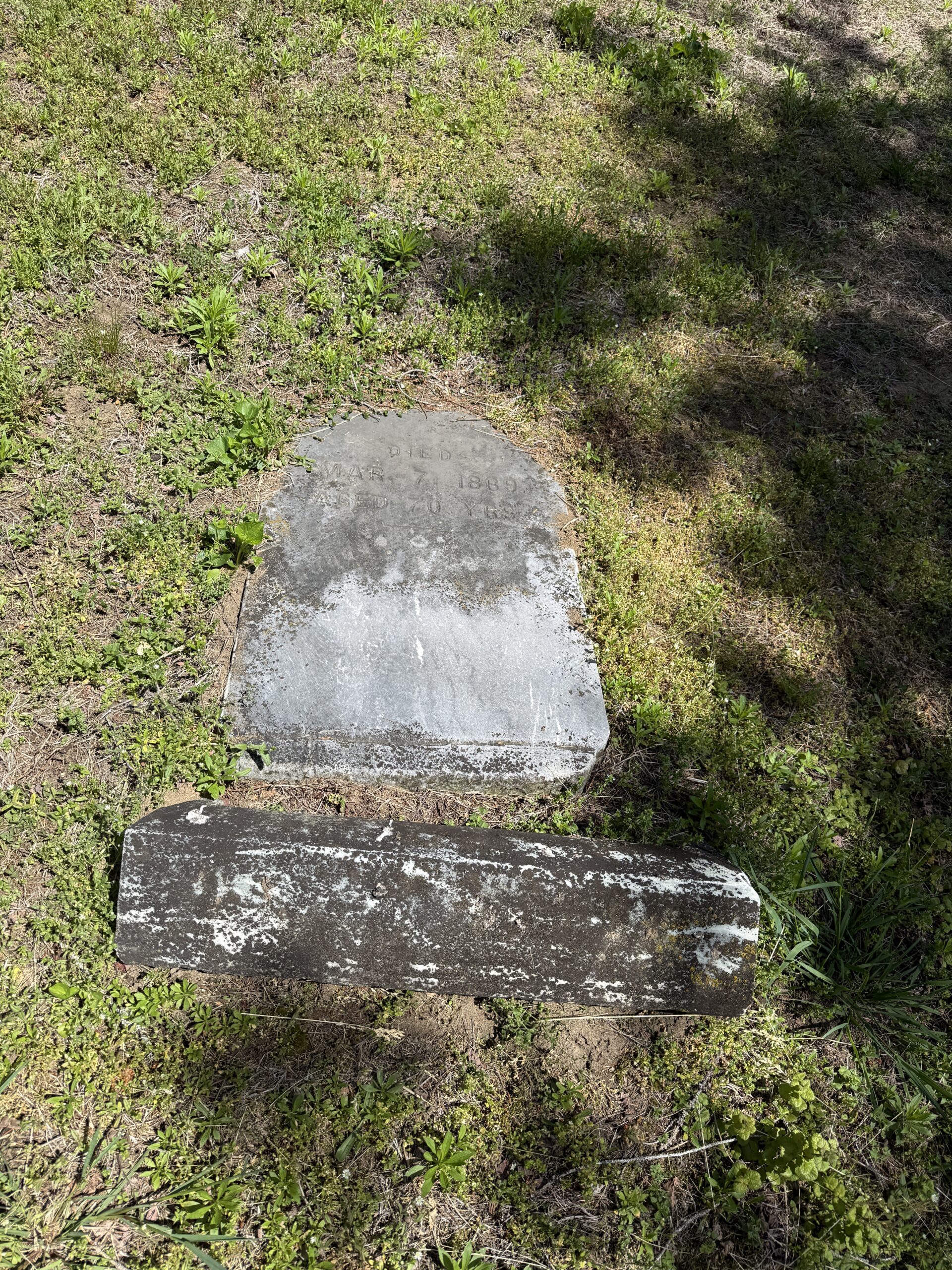
A cracked gravestone may be repairable, but the repair depends on the stone material, the depth and location of the crack, whether the crack is active, and whether the memorial is still stable. A small surface crack is different from a structural break through the stone.
Cracks near the base, joints, inscription area, or load-bearing sections need special attention. If the memorial is still moving, leaning, or settling, the underlying support issue may need to be corrected before repair work is considered.
Documentation is important because photographs show whether cracks are widening, whether pieces are separating, and whether the stone has other visible condition concerns.
Can a Broken Gravestone Be Put Back Together?
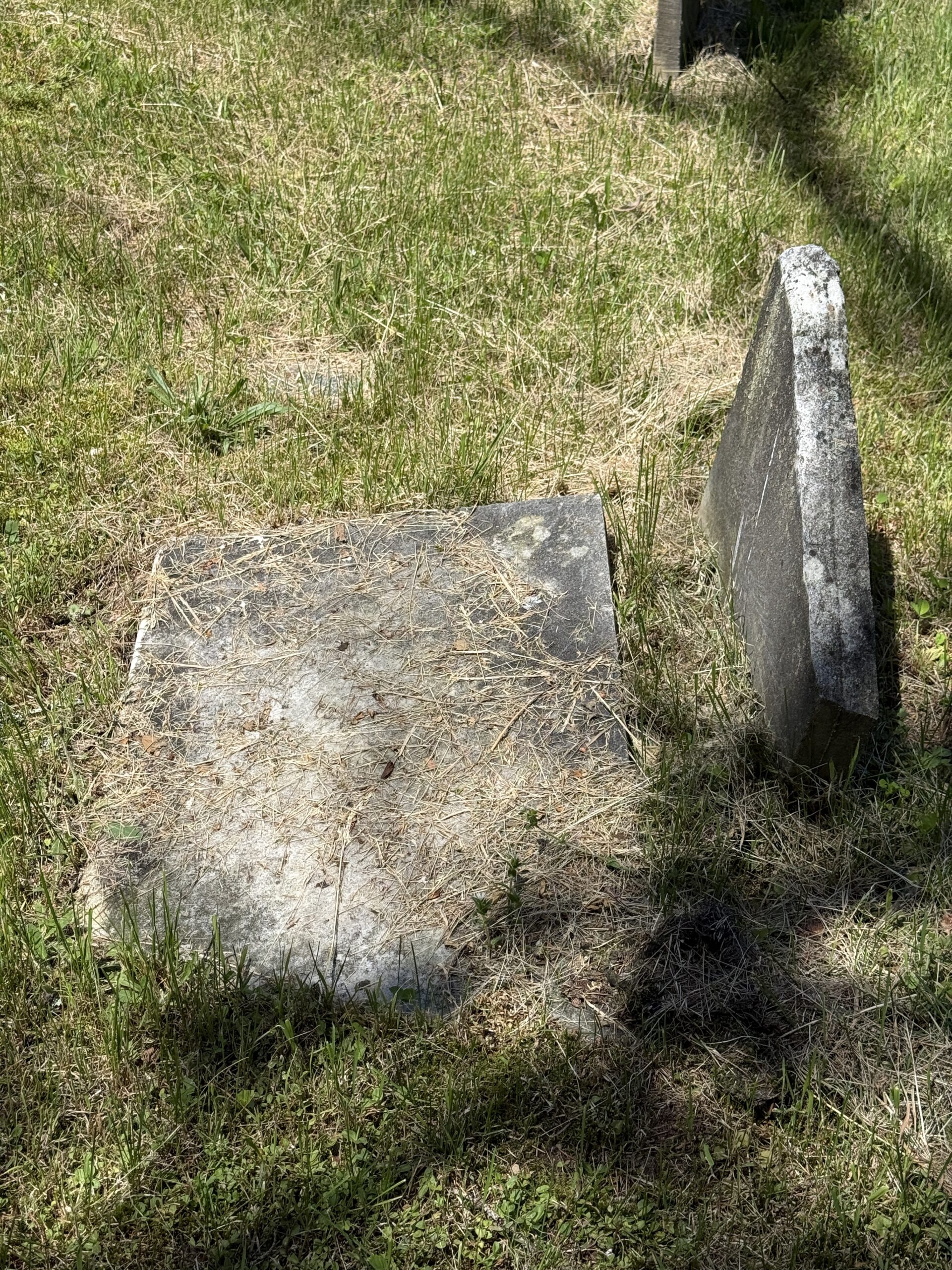
Some broken gravestones can be repaired or stabilized, but broken stone work requires careful judgment. The goal is not to hide every sign of age or make a historic memorial look new. The goal is to preserve the memorial, improve stability, protect the inscription, and prevent additional damage when possible.
A broken marker may need cleaning of joint surfaces, appropriate repair materials, stabilization, base correction, resetting, or other preservation-focused work. Quick patches, construction adhesives, and improper concrete repairs can create long-term problems and may make future preservation more difficult.
If a stone is broken into multiple pieces, those pieces should be documented before they are moved. Their position, orientation, inscription details, and relationship to the plot may matter.
Related service: Headstone Repair & Stabilization
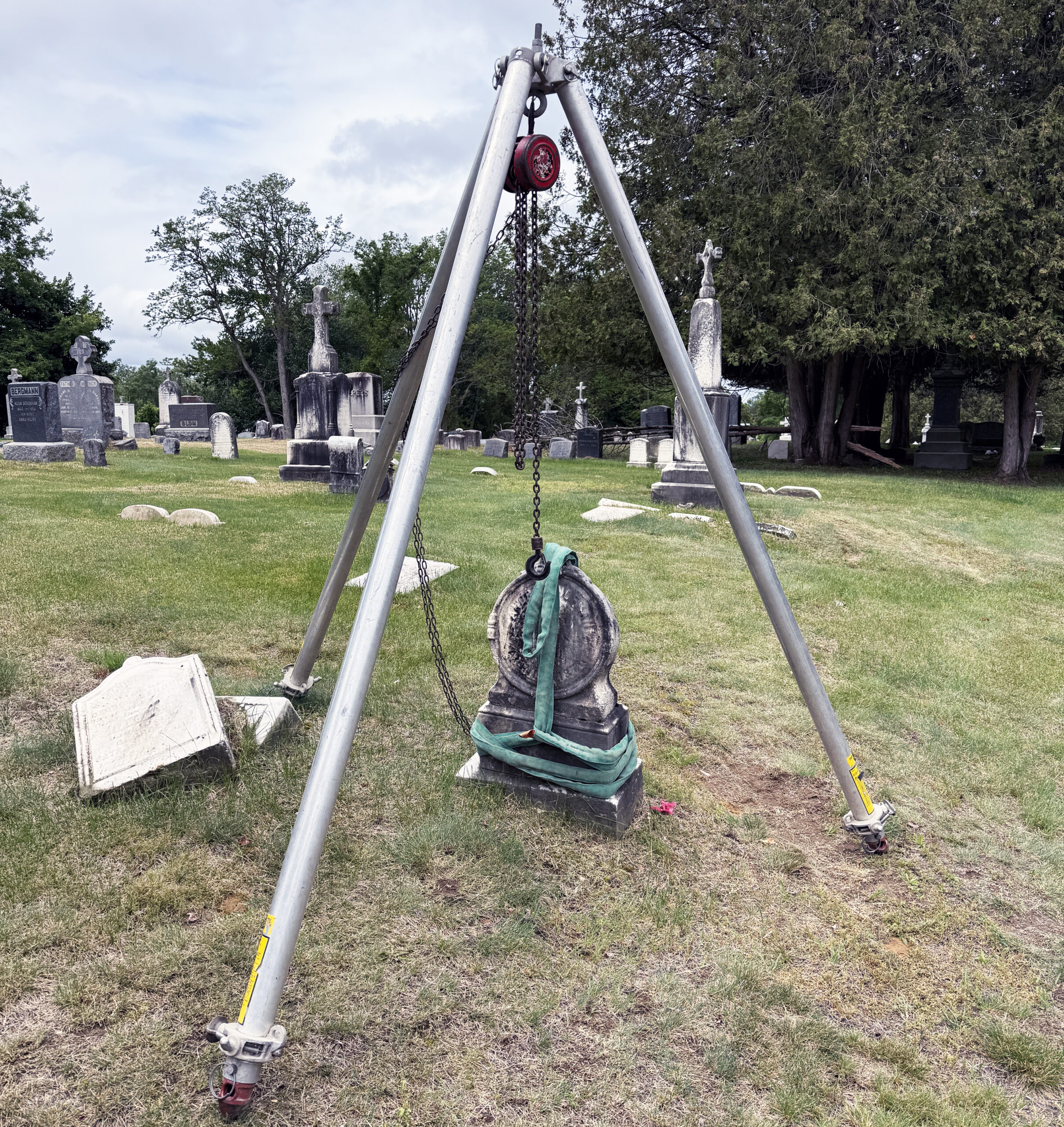
Can a Fallen Grave Marker Be Reset?
A fallen grave marker may be reset when the cemetery rules, stone condition, size, weight, and base conditions allow it. The cause of the fall matters. A marker may have fallen because of soil movement, a failed base, freeze-thaw cycles, root pressure, impact, age, or an earlier improper reset.
Resetting a fallen marker usually requires more than standing it back up. The base, ground, stone condition, and stability all need to be evaluated. If the same support problem remains, the marker may shift or fall again.
Related service: Gravestone Leveling & Reset
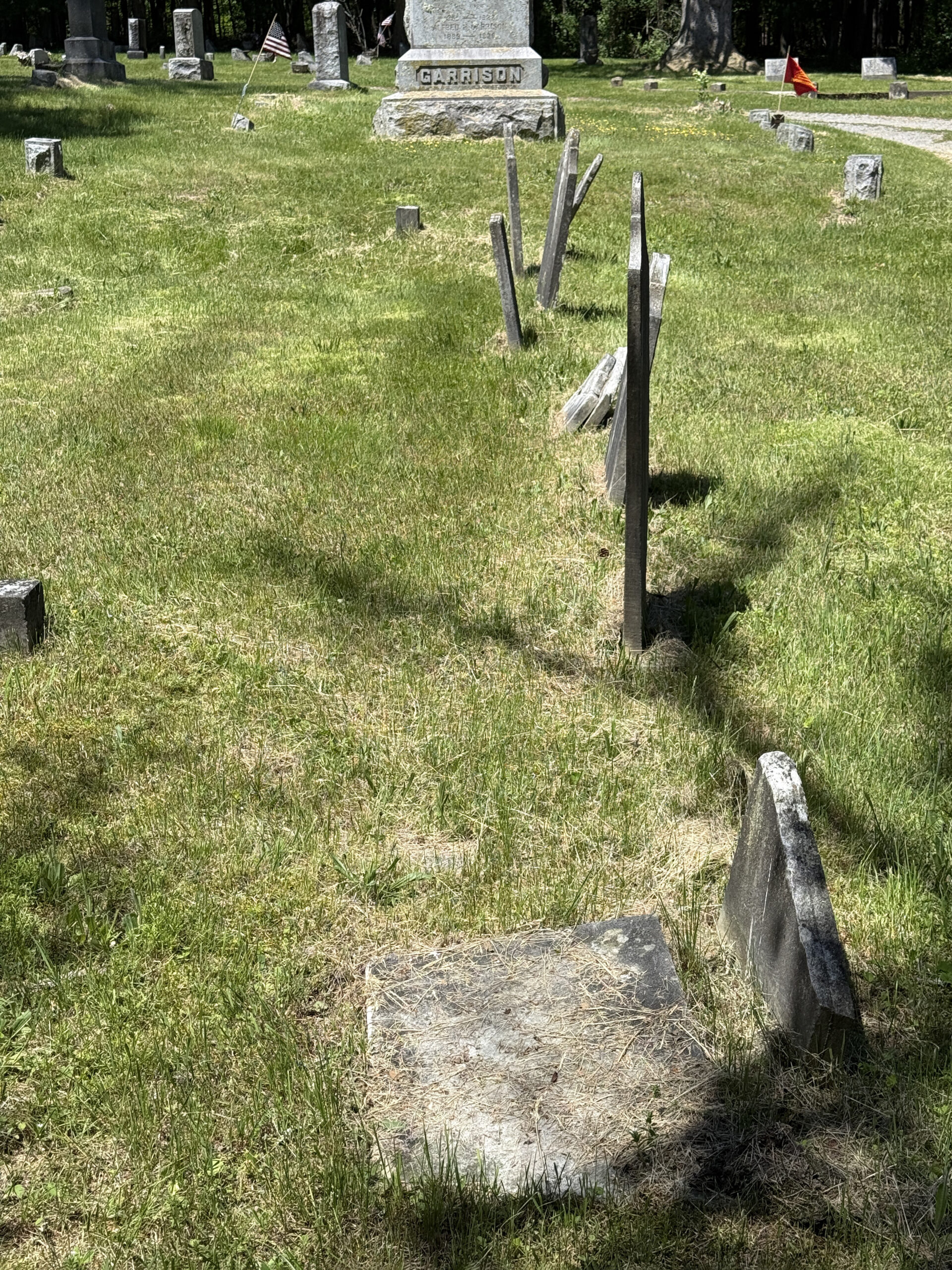
When Repair and Leveling Are Both Needed
Some gravestones need more than one type of service. A sunken marker may also be cracked. A leaning monument may also have a separated base. A broken marker may need repair before it can be safely reset.
This is why the visible problem should not be treated in isolation. A memorial that appears to need repair may actually need leveling, resetting, stabilization, or condition documentation first.
Related guide: Why Are Gravestones Leaning?
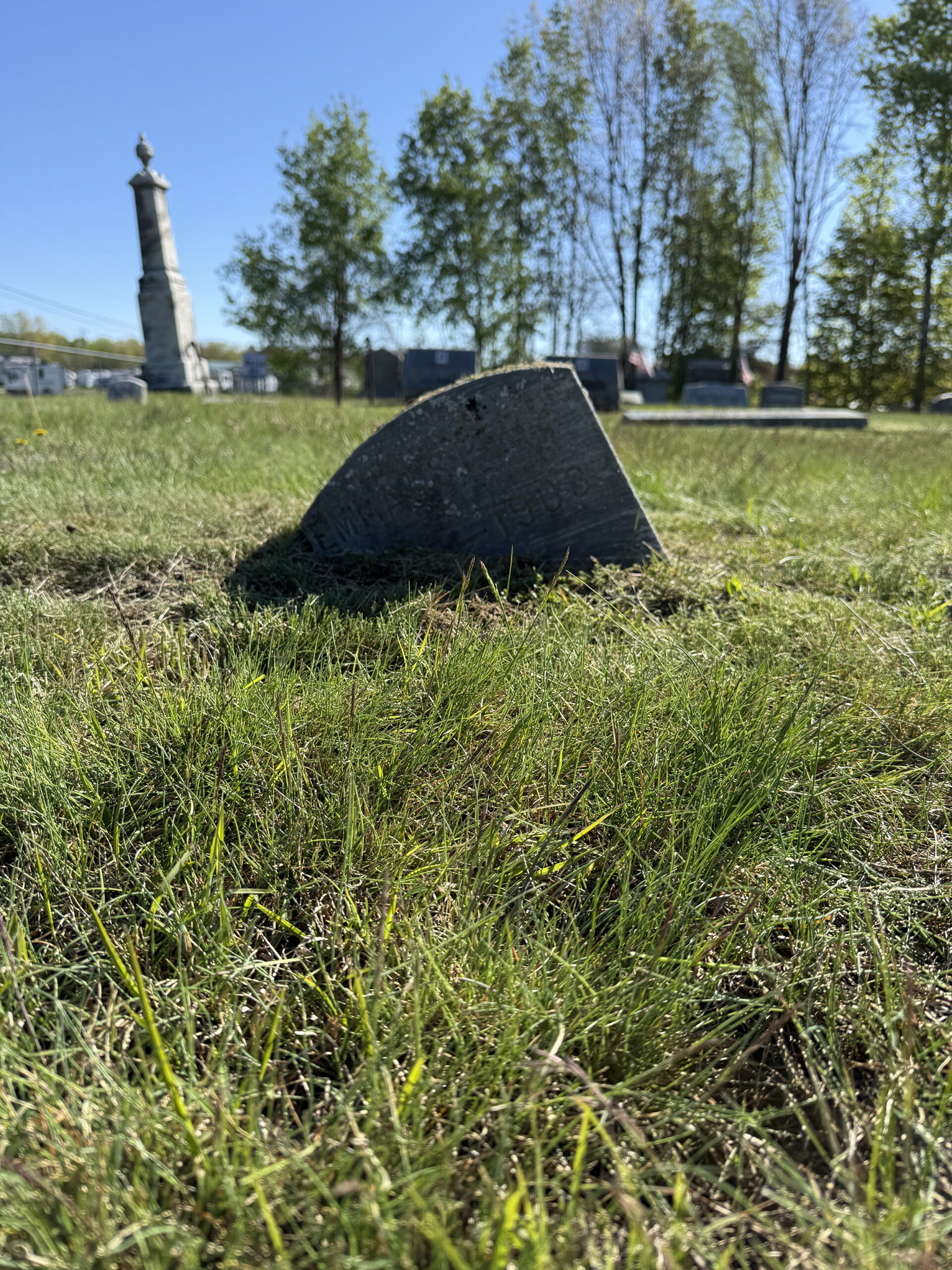
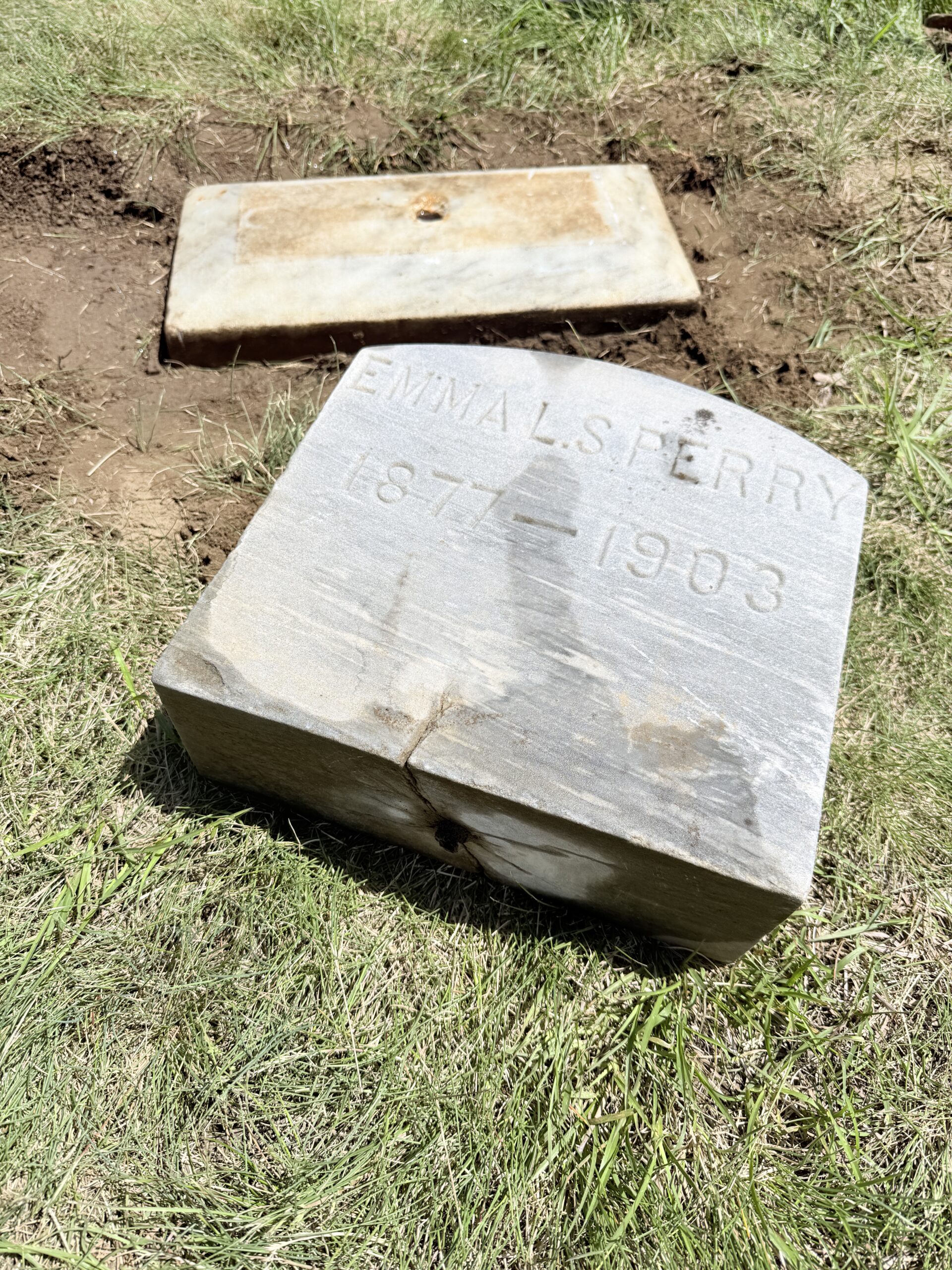
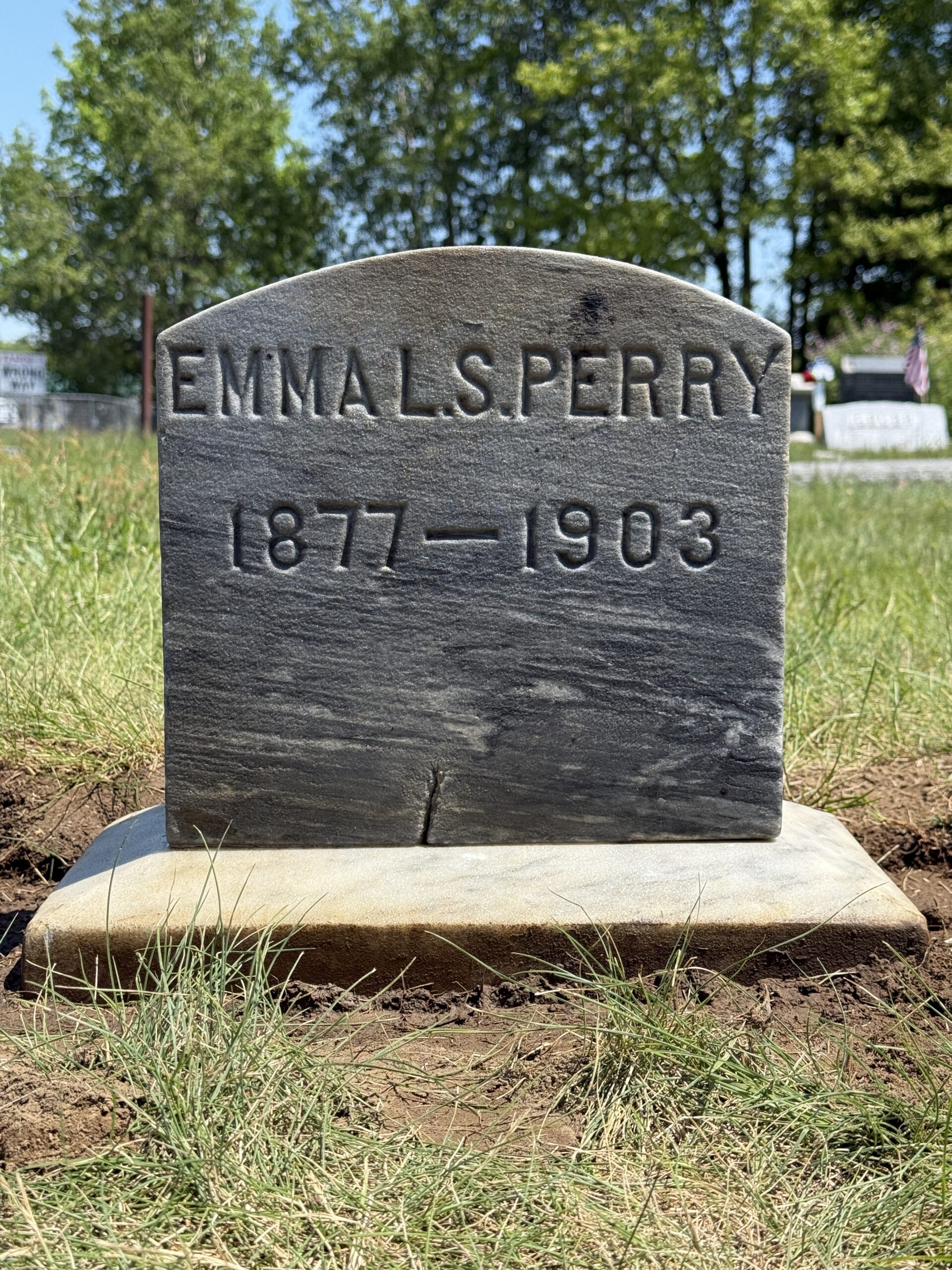
What Causes Gravestones to Need Repair?
Most cemetery repair problems develop over many years. Weather, age, ground movement, and old repairs can all contribute to cracking, separation, sinking, instability, and broken stone.
- Freeze-thaw cycles: Water freezes, expands, thaws, and shifts stone or soil over time.
- Soil settlement: Ground beneath the memorial compresses or drops unevenly.
- Poor drainage: Water collects around the base and weakens support.
- Tree root pressure: Roots can lift or push markers and bases.
- Age and weather exposure: Stone naturally weathers over decades.
- Impact damage: Equipment, falling limbs, storms, or accidents can damage memorials.
- Failed previous repairs: Old adhesives, concrete, pins, patches, or sealants can fail or trap moisture.
- Improper earlier installation: Inadequate support or base preparation can lead to repeat movement.
What Not to Do With a Damaged Gravestone
A damaged gravestone can be fragile, heavy, unstable, or historically important. Well-intentioned repairs can make the problem worse if the wrong materials or methods are used.
- Do not lift heavy stone pieces without proper equipment and evaluation.
- Do not use construction adhesive, caulk, or household glue on a cemetery memorial.
- Do not force separated pieces back together.
- Do not use pressure washing on cracked, broken, or unstable stone.
- Do not use bleach, acidic cleaners, wire brushes, or abrasive pads.
- Do not patch with concrete without understanding the stone and cemetery setting.
- Do not ignore instability, rocking, leaning, or separated bases.
- Do not assume an old repair was completed correctly.
Why Documentation Matters Before Repair Work
Documentation creates a record of the memorial’s condition before any work begins. This is especially important for historic headstones, veteran markers, family plots, out-of-town families, and memorials with cracks, separation, or missing pieces.
- Overall memorial condition
- Visible cracks and broken areas
- Displaced or missing stone pieces
- Base condition and settlement
- Stability concerns
- Inscription condition
- Nearby family plot context
- Before, during, and after photographs when work is completed
Related services: Cemetery Condition Reports | Family Memorial Documentation
How Gravestone Repair and Stabilization Help Protect Memorials
The goal of gravestone repair is not to erase age or make a historic memorial look new. The goal is to improve stability, reduce ongoing deterioration, protect the inscription, and help preserve the memorial for future family members.
Depending on the condition of the memorial, repair work may be combined with cleaning, leveling, resetting, stabilization, or documentation. A preservation-first approach starts with the least aggressive solution appropriate for the memorial.
Related services: Headstone Repair & Stabilization | Gravestone Cleaning
Out-of-Town Families Often Discover Damage Late
Many families do not know a gravestone is cracked, fallen, separated, or unstable until they visit after a long time away. Others discover damage through cemetery photos, a relative, a cemetery office, a genealogy visit, or an online memorial record.
Current cemetery documentation helps families understand what condition the memorial is in before deciding whether repair, stabilization, leveling, resetting, cleaning, or lettering work may be appropriate.
Helpful resource: Out-of-Town Family Cemetery Care
FAQ: Can a Gravestone Be Repaired?
Can a cracked gravestone be repaired?
Often yes. The correct repair depends on the type of stone, the severity of the crack, whether the stone is stable, and whether the crack is related to deeper base or movement problems.
Can a broken headstone be fixed?
Many broken headstones can be repaired or stabilized, but the repair should be preservation-focused and based on the stone’s condition, size, material, and cemetery setting.
Can a fallen grave marker be reset?
Often yes, when the cemetery rules, marker condition, size, weight, and base conditions allow it. Resetting should address the underlying support issue so the marker does not fall again.
Can a leaning gravestone be repaired?
Many leaning gravestones can be corrected through leveling, resetting, stabilization, repair, or a combination of services. The visible lean may be a symptom of deeper base movement.
Can old gravestones be restored?
Many historic memorials can benefit from preservation-first cleaning, repair, stabilization, leveling, resetting, and documentation when appropriate. The goal is preservation, not making the stone look new.
Should I repair a gravestone myself?
No. Damaged gravestones can be heavy, fragile, unstable, and historically important. Using the wrong materials or methods can cause more damage or create safety risks.
Does Gravestone Revival provide documentation after repair work?
Yes. Before & After Photo Documentation and a Written Gravesite Condition Report are always provided for cemetery care projects.
Need Help With a Damaged Gravestone?
If a family memorial is cracked, broken, fallen, separated, leaning, sunken, or unstable, Gravestone Revival can help document the condition and determine whether repair, stabilization, leveling, or resetting may be appropriate.
Send the cemetery name, town, family surname, memorial photos if available, and what you are seeing at the gravesite.
Before & After Photo Documentation and a Written Gravesite Condition Report are always provided.