What Causes Gravestones to Crack?
Gravestones crack because of freeze-thaw cycles, soil movement, settling foundations, trapped moisture, impact damage, tree roots, age, weathering, failed previous repairs, and stress on the stone or base.
A cracked headstone may be only a surface concern, or it may be a sign of deeper instability. The cause matters because a cracked gravestone may need documentation, cleaning, stabilization, repair, leveling, or reset work before the damage becomes worse.
Gravestone Revival provides preservation-first cemetery care throughout Saratoga County, Montgomery County, and Fulton County, New York. Before & After Photo Documentation and a Written Gravesite Condition Report are always provided for cemetery care projects.
Quick Answer: Why Do Headstones Crack?
Headstones crack when the stone, base, or ground beneath the memorial is stressed over time. Water can enter small openings, freeze, expand, and widen cracks. Soil can settle unevenly. Tree roots can push against bases. Previous repairs can fail. Impact from equipment, storms, or falling branches can also crack or break a memorial.
The safest first step is documentation. A cracked gravestone should not be glued, pushed, pressure washed, patched, or moved until the stone and surrounding cemetery conditions are reviewed.
Common Causes of Cracked Gravestones
- Freeze-thaw cycles: water enters small cracks, freezes, expands, and gradually widens the damage.
- Soil settlement: uneven support beneath a base can place stress on one side of the memorial.
- Grave subsidence: settling ground near a burial plot can cause shifting, leaning, sinking, and cracking.
- Tree roots: nearby roots can lift, push, or destabilize markers and bases.
- Poor drainage: standing water and damp soil can weaken support around the memorial.
- Impact damage: mowing equipment, falling branches, storms, vehicles, or vandalism can crack stone.
- Age and weathering: older marble, limestone, sandstone, slate, and granite can weaken over decades.
- Failed previous repairs: old adhesives, cement patches, pins, or improper resets can create stress points.
- Base movement: a shifting or separated base can transfer pressure into the stone above it.
- Material weakness: natural veins, bedding planes, or weathered stone layers can become fracture points.
Freeze-Thaw Damage Is a Major Cause in New York Cemeteries
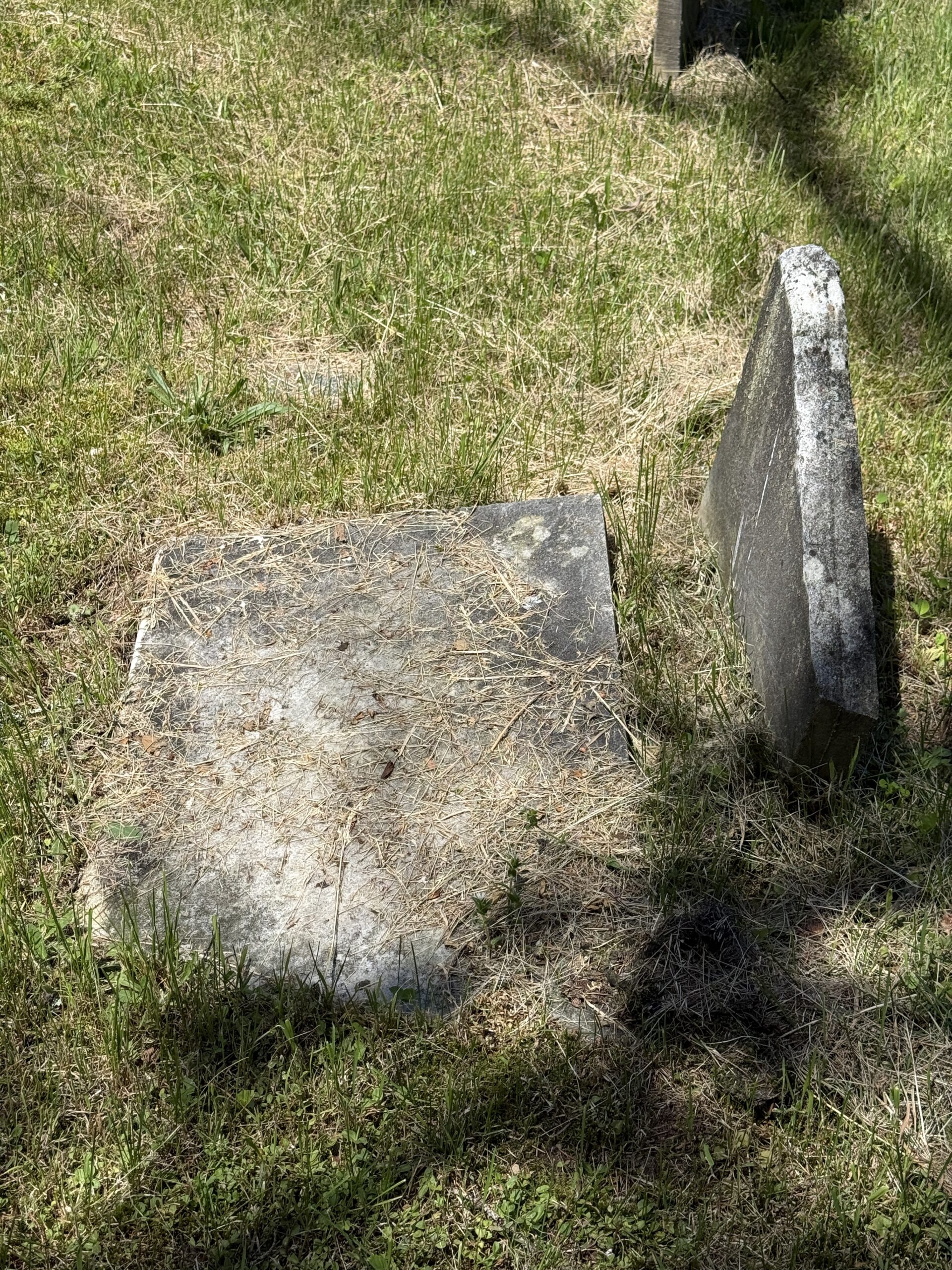
In Saratoga County, Montgomery County, and Fulton County, winter weather can be hard on cemetery memorials. Water enters small openings in the stone or around the base. When temperatures drop, that water freezes and expands. When it thaws, more water can enter the same opening.
Over many seasons, this cycle can widen small cracks, loosen joints, separate bases, and make older repairs fail. Freeze-thaw damage is especially concerning when the memorial already has surface cracks, open seams, biological growth, trapped moisture, or an unstable base.
Related guide: Why Are Gravestones Leaning?
Soil Movement and Settling Can Crack a Headstone
A gravestone depends on the support beneath it. If the soil, base, or bedding material settles unevenly, the memorial may begin to lean, sink, rotate, or separate. That movement can place stress on the stone and lead to cracking.
This is common with older markers, flat markers, small upright stones, and memorials in cemetery sections affected by drainage problems, frost movement, or grave subsidence.
If a crack appears together with leaning or sinking, the underlying support problem may need to be addressed before repair work is considered.
Related service: Gravestone Leveling & Reset
Impact Damage Can Crack or Break a Gravestone
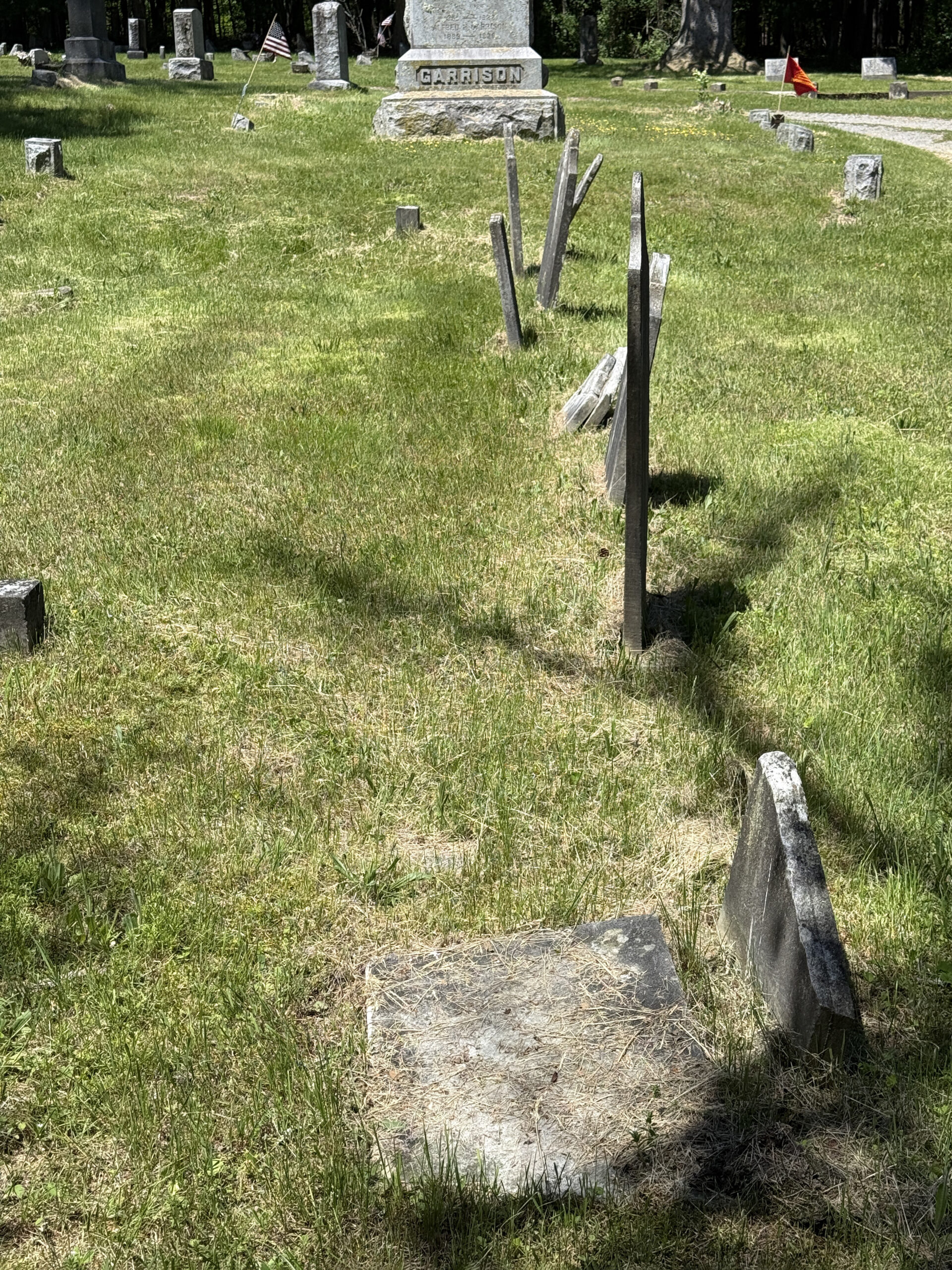
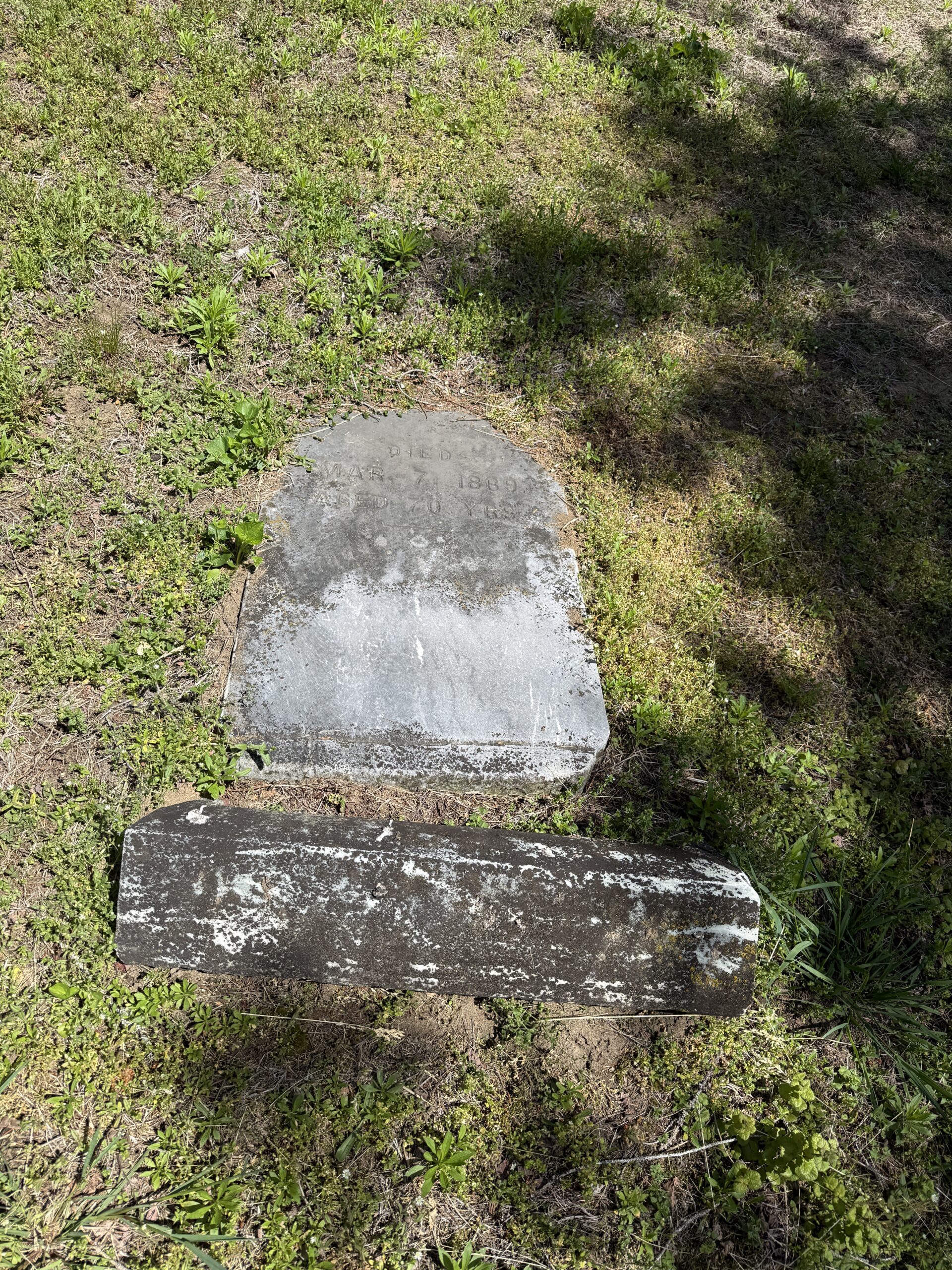
Some cracks happen because of a direct impact. Mowing equipment, cemetery maintenance equipment, falling limbs, storms, vehicles, or vandalism can chip, crack, displace, or break a grave marker.
Impact damage may be obvious, such as a fallen marker or broken corner. It may also be subtle, such as a hairline crack, loose base, shifted stone, or broken section hidden by grass, soil, or biological growth.
When impact damage is suspected, photographs and written condition notes are important before any repair or resetting work begins.
Failed Previous Repairs Can Make Cracking Worse
Old repairs are not always safe or stable. Some past repairs used hard cement, construction adhesives, metal pins, sealants, or patching materials that do not move the same way as the original stone. Over time, those repairs can trap moisture, fail, or create new stress points.
A failed repair can sometimes cause more damage than the original crack. This is why cracked gravestones should be reviewed carefully before more material is added.
Related guide: Can a Gravestone Be Repaired?
Stone Type Affects How Cracks Develop
Different gravestone materials crack, weather, and fail in different ways. The stone type matters when deciding whether cleaning, repair, stabilization, leveling, or documentation should happen first.
- Marble: can soften, sugar, erode, crack, or lose inscription detail over time.
- Granite: durable but still vulnerable to impact, base movement, failed joints, and lettering paint loss.
- Limestone: porous and more vulnerable to moisture, biological growth, and weathering.
- Sandstone: can layer, flake, absorb moisture, and break along bedding planes.
- Slate: can preserve lettering well but may split, delaminate, or break if stressed.
- Bronze markers: do not crack like stone, but their bases can shift, sink, separate, or become unstable.
When a Crack Is a Warning Sign
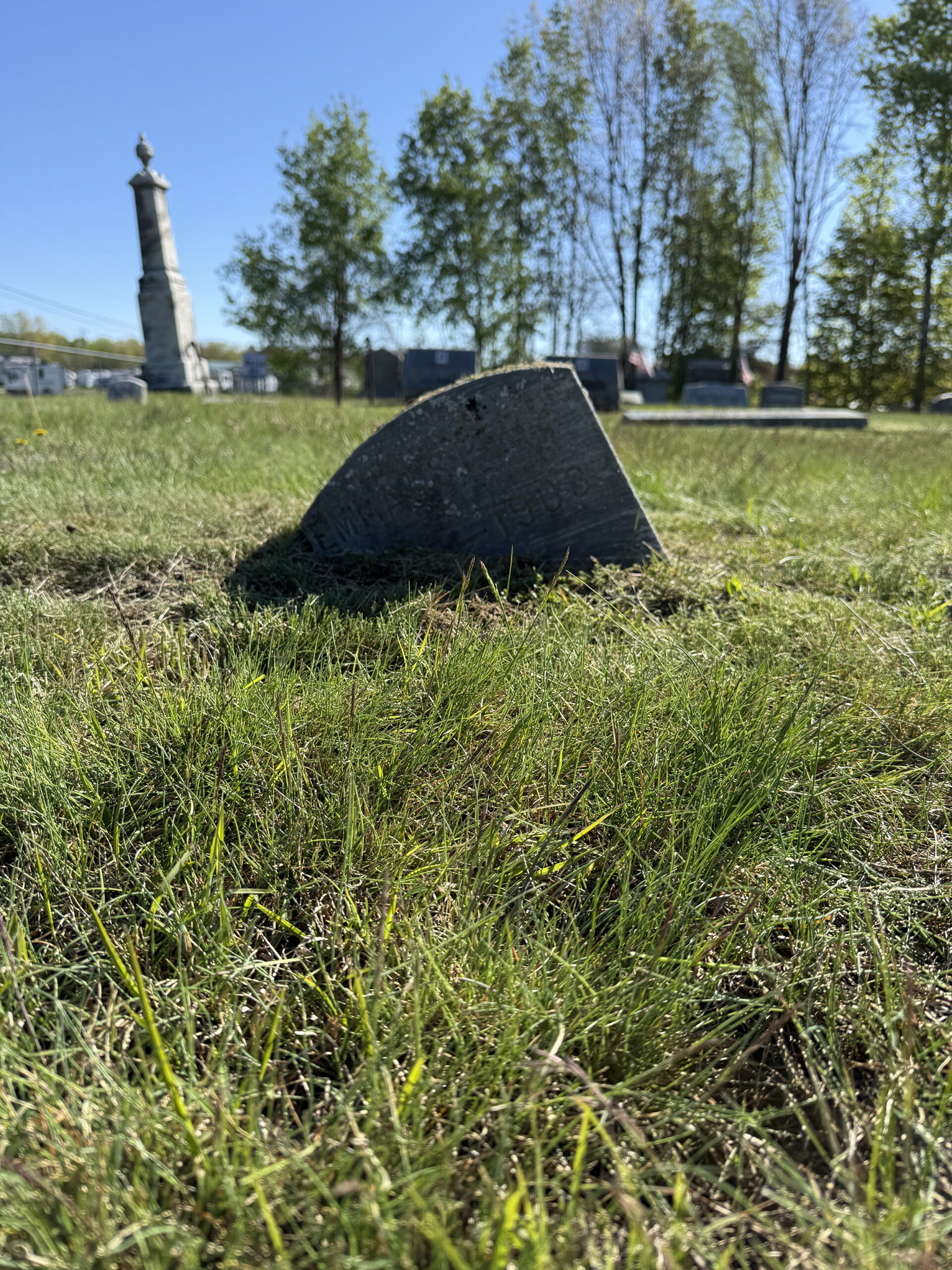
Some cracks are minor surface concerns. Others indicate that the memorial is unstable or actively moving. A crack should be taken seriously when it appears with other condition problems.
- The stone is leaning, rocking, or shifting.
- The base is separated, uneven, or sunken.
- The crack is widening or runs through the full stone.
- Pieces of the stone are loose, fallen, or displaced.
- Water collects around the crack or base.
- The inscription area is affected.
- Previous repairs are failing.
- The marker is near a walkway, road, or visitor area.
If any of these are present, a condition report or repair review may be appropriate.
What Not to Do With a Cracked Gravestone
A cracked gravestone can be fragile, unstable, historically important, or much heavier than it appears. Well-intentioned fixes can make the damage worse.
- Do not pressure wash a cracked gravestone.
- Do not use bleach, acidic cleaners, vinegar, or harsh chemicals.
- Do not fill cracks with household glue, caulk, cement, or construction adhesive.
- Do not push, pull, or straighten the stone by hand.
- Do not scrape, grind, or sand damaged areas.
- Do not move broken pieces before documenting their position.
- Do not assume an old repair was done correctly.
- Do not clean a cracked, flaking, or unstable stone without condition review.
Helpful guide: Pressure Washing Gravestones: Hidden Damage Explained
Can a Cracked Gravestone Be Repaired?
Many cracked gravestones can be repaired or stabilized, but the correct approach depends on the stone material, crack severity, memorial size, base condition, cemetery rules, and whether the stone is still moving.
Some cracks require stabilization. Some require repair materials appropriate for cemetery stone. Some require leveling or reset work first. Some should be documented and monitored before any repair is attempted.
The goal is preservation, not making an old memorial look new. Proper repair should protect the inscription, improve stability, and reduce the chance of additional damage.
Related service: Headstone Repair & Stabilization
Why Documentation Matters Before Repair Work
Before a cracked gravestone is repaired, cleaned, moved, leveled, or reset, the condition should be documented. Photos preserve what is visible now and help the family understand what is happening at the gravesite.
- Full memorial photographs
- Close-up crack photos
- Base and ground condition photos
- Inscription and symbol documentation
- Photos from multiple angles
- Nearby family plot context
- Notes about leaning, sinking, staining, or previous repairs
- Before and after photos if work is completed
Related services: Cemetery Condition Reports | Family Memorial Documentation
FAQ: What Causes Gravestones to Crack?
Why did my family headstone crack?
A family headstone may crack because of freeze-thaw cycles, soil settlement, base movement, moisture, age, tree roots, impact damage, or failed previous repairs.
Can cold weather crack a gravestone?
Yes. Water can enter small openings, freeze, expand, and widen cracks over time. This is a common concern in New York cemeteries with repeated winter freeze-thaw cycles.
Can a cracked gravestone be repaired?
Often yes, but the repair depends on the stone material, crack depth, base condition, cemetery rules, and whether the memorial is stable or still moving.
Is a cracked headstone dangerous?
It can be. If the stone is leaning, rocking, separated, broken, or near a visitor area, it may be unstable. Do not push, pull, or move it by hand.
Should I glue a cracked gravestone myself?
No. Household glue, caulk, cement, and construction adhesives can trap moisture, stain the stone, fail over time, or make future preservation more difficult.
Can pressure washing make cracks worse?
Yes. Pressure washing can force water into cracks, loosen fragile surfaces, remove lettering paint, and worsen existing damage. Gravestone Revival does not use pressure washing on cemetery memorials.
Need Help With a Cracked Gravestone?
If a family memorial is cracked, broken, fallen, separated, leaning, sunken, or unstable, Gravestone Revival can help document the condition and recommend whether repair, stabilization, leveling, or a cemetery condition report may be appropriate.
Send the cemetery name, town, family surname, memorial photos if available, and what kind of cracking or damage you are seeing.
Before & After Photo Documentation and a Written Gravesite Condition Report are always provided.