Notre Dame Cemetery Schuylerville NY Guide
Notre Dame Cemetery near Schuylerville, New York is a historic Catholic burial ground closely associated with the area’s French Catholic community. It is also commonly called the French Cemetery and is located along Burgoyne Road in the Town of Saratoga.
Gravestone Revival provides documented cemetery care at Notre Dame Cemetery for local families and out-of-town relatives who cannot visit regularly. Services may include professional gravestone cleaning, gravestone leveling and reset, headstone repair and stabilization, appropriate letter repainting, family plot care, family memorial documentation, and cemetery condition reports.
The cemetery contains older upright headstones, Catholic memorials, family monuments, obelisks, low grave markers, veteran memorials, and burial areas representing several generations of Schuylerville-area families. Each memorial must be evaluated individually before cleaning, leveling, repair, or stabilization work is recommended.
We use preservation-first methods with no harsh chemicals, no wire brushes, and no pressure washing. Before & After Photo Documentation and a Written Gravesite Condition Report are always provided.
About Notre Dame Cemetery
Notre Dame Cemetery is one of several established burial grounds near Schuylerville and Victory. Public cemetery references connect the cemetery with the former Notre Dame de Lourdes Church and identify it with the French Catholic families who became part of the area’s religious and community history.
The alternate name French Cemetery remains useful for burial research because family records, cemetery databases, historical notes, and local references may use either name. Families arranging cemetery care should confirm that their records refer to Notre Dame Cemetery rather than another Catholic cemetery in the Schuylerville area.
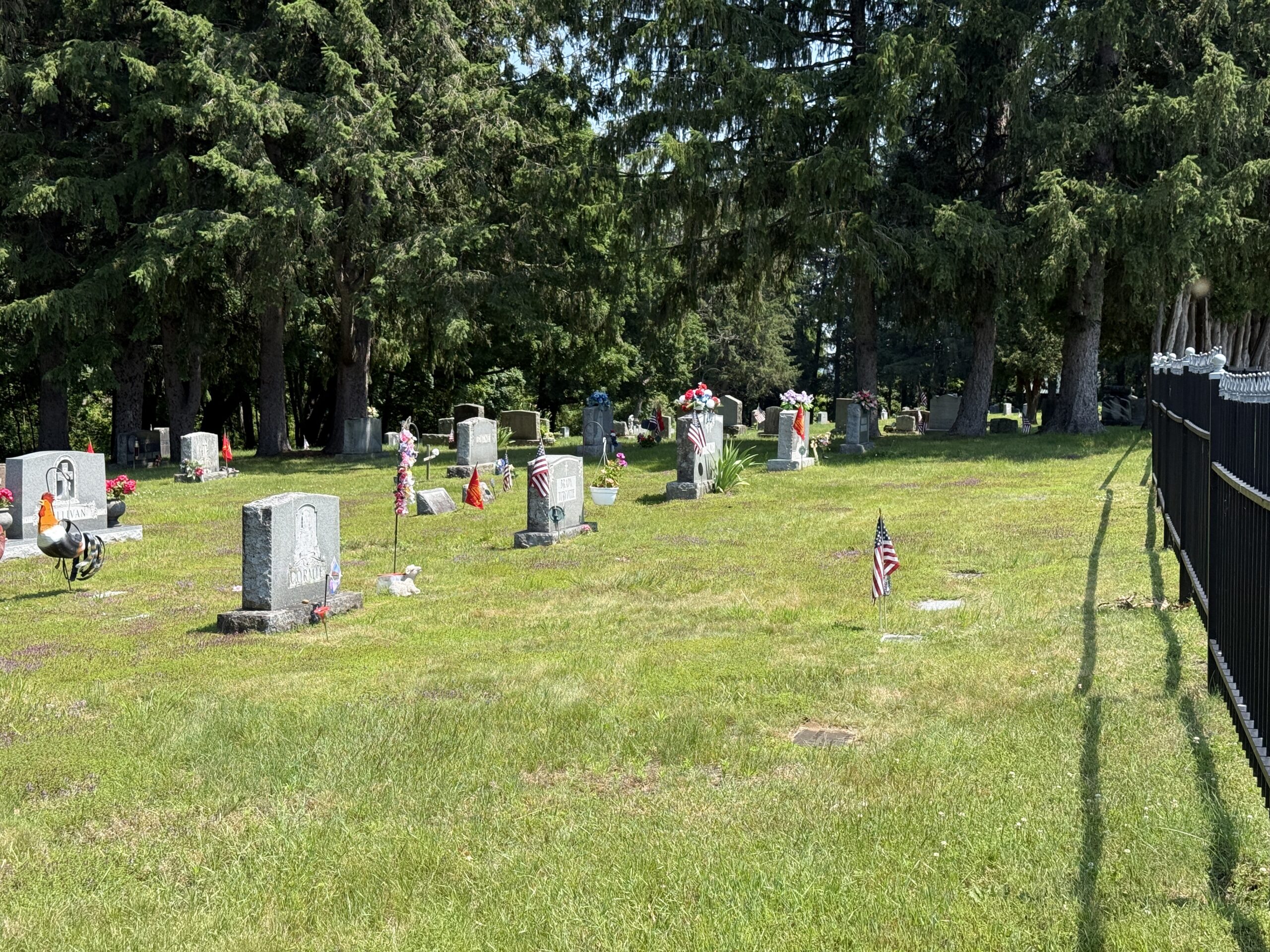
The roadside cemetery is enclosed in part by historic wrought-iron fencing and shaded by mature trees. Within the grounds are memorials of different ages, materials, sizes, and construction styles, creating a cemetery landscape that reflects multiple generations of local Catholic families.
Notre Dame Cemetery Highlights
- Primary name: Notre Dame Cemetery
- Alternate name: French Cemetery
- Historic church connection: Former Notre Dame de Lourdes Church
- Location: Burgoyne Road near Schuylerville, Saratoga County, New York
- Cemetery tradition: Catholic
- Cemetery character: Historic, wooded, roadside, and family-centered
- Memorial types: Upright marble and granite stones, family monuments, obelisks, Catholic memorials, veteran markers, and low grave markers
- Visible landscape features: Wrought-iron fencing, mature trees, shaded burial areas, and memorials from different periods
- Documented by Gravestone Revival: Yes, with original entrance and cemetery landscape photography
Historic Cemetery Landscape
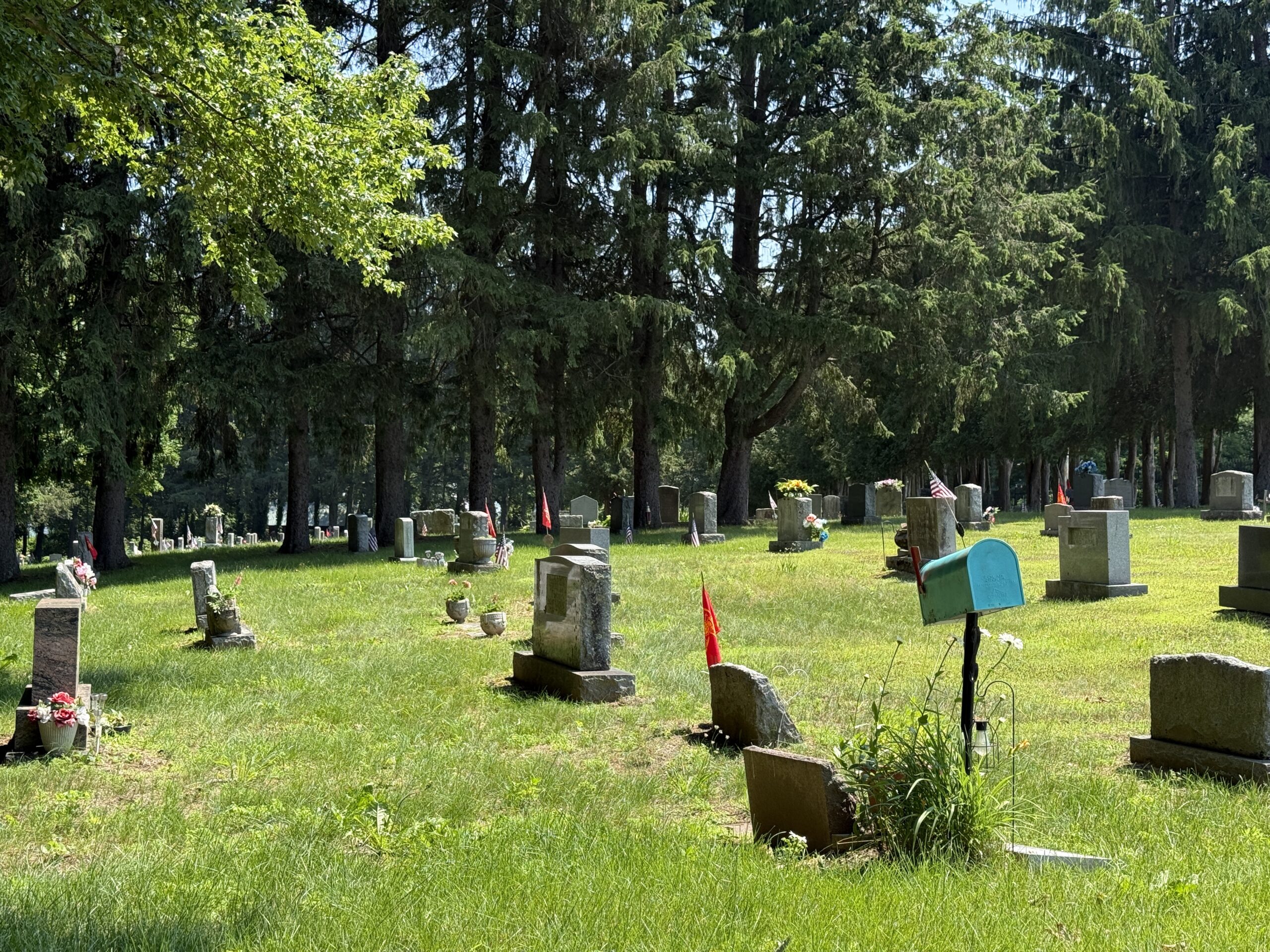
Notre Dame Cemetery has the varied appearance of a burial ground that developed over many decades. Older upright memorials stand beside later granite monuments, family stones, obelisks, low markers, and Catholic memorial designs.
Mature trees provide shade throughout portions of the cemetery and contribute to its quiet historic character. Shade can also allow memorial surfaces to remain damp longer after rainfall or morning dew, encouraging moss, algae, lichen, staining, and other biological growth.
The cemetery’s older memorials may also show ground settlement, leaning, weathered inscriptions, base movement, surface erosion, cracks, or previous repair work. The variety visible across the grounds makes individual evaluation important before cemetery care begins.
French Catholic Heritage
The French Cemetery name reflects Notre Dame Cemetery’s association with Schuylerville’s French Catholic community. Religious institutions often served as important gathering places for immigrant and locally established families, and their cemeteries became lasting records of family relationships, parish membership, cultural traditions, and community development.
Families researching ancestors here may encounter French surnames, Catholic symbols, crosses, devotional inscriptions, family monuments, and other memorial details connected with that heritage. Photographs of complete inscriptions and nearby family stones can be valuable additions to genealogy records.
Because parish names and administrative arrangements can change over time, researchers should search under Notre Dame Cemetery, French Cemetery, and Notre Dame de Lourdes when reviewing older records.
Memorial Conditions Families May Find Here
Memorial conditions can vary according to age, stone material, shade, drainage, foundation construction, previous repairs, and surrounding trees.
- Biological growth: Moss, algae, lichen, mildew, and organic buildup may darken memorials and obscure inscriptions.
- Surface staining: Rainwater, moisture, tree debris, soil splash, and shade may cause uneven gray, green, brown, or black staining.
- Leaning headstones: Frost movement, weak foundations, root activity, and ground settlement may cause upright stones to tilt.
- Sunken markers: Smaller upright and low memorials may settle into the surrounding grade.
- Cracks and separation: Older monuments may develop fractures, open joints, loose components, or displaced sections.
- Weathered inscriptions: Marble lettering and decorative carving may gradually lose definition.
- Previous repairs: Cement patches, adhesives, pins, mortar, and other earlier repair materials may still be visible.
- Faded recessed lettering: Memorials originally designed with painted lettering may lose contrast over time.
- Tree-related conditions: Roots, branches, shade, leaf litter, and falling debris may affect nearby memorials and plots.
A memorial that appears to need cleaning may also have movement, cracks, fragile surfaces, or previous repairs. Those conditions should be documented before any treatment is selected.
Common Reasons Families Contact Us
Families connected with Notre Dame Cemetery often need dependable local assistance because relatives have moved away, inscriptions have become difficult to read, or a family plot contains several memorials needing attention.
- A headstone is covered with staining, moss, algae, or lichen.
- An inscription or Catholic memorial symbol is difficult to see clearly.
- A memorial has sunk, shifted, tilted, or become unstable.
- A monument contains cracks, separated pieces, or failed previous repairs.
- Painted recessed lettering has faded on an otherwise eligible memorial.
- A family wants several related memorials reviewed during one cemetery visit.
- An out-of-town relative needs current cemetery and gravesite photographs.
- A descendant needs inscriptions and family relationships documented for genealogy.
- A veteran grave needs to be located and photographed.
- Cemetery care is needed before an anniversary, reunion, funeral visit, or family memorial date.
Cemetery Care Services at Notre Dame Cemetery
Families may request one or more of the following services, subject to memorial condition, family authorization, cemetery requirements, access, and project suitability.
- Professional Gravestone Cleaning — preservation-first cleaning for biological growth, staining, soil buildup, moss, algae, lichen, and reduced inscription readability.
- Gravestone Leveling & Reset — careful correction for suitable sunken, low, shifted, or leaning grave markers.
- Headstone Repair & Stabilization — preservation-focused assistance for cracked, separated, fallen, loose, or unstable memorials.
- Headstone Letter Repainting — contrast restoration for eligible memorials originally designed with painted recessed lettering.
- Family Plot Care — coordinated review and documented care for multiple memorials within a family burial area.
- Family Memorial Documentation — cemetery photographs, inscriptions, religious symbols, veteran details, and genealogy-friendly family records.
- Cemetery Condition Reports — current photographs, written condition observations, and recommended next steps.
Bronze grave marker cleaning is included under Professional Gravestone Cleaning.
Family Plot Care in a Catholic Cemetery
Family burial areas at Notre Dame Cemetery may contain memorials installed across several generations. A single plot can include an older central monument, individual upright stones, veteran markers, Catholic symbols, low grave markers, and later granite memorials.
A documented family plot review may include:
- Wide photographs showing the complete family burial area
- Individual photographs of each identifiable memorial
- Family surnames, inscriptions, dates, and relationships
- Catholic symbols, crosses, devotional inscriptions, and memorial artwork
- Veteran and military marker documentation
- Notes about staining, growth, leaning, sinking, cracking, separation, and previous repairs
- Observations about bases, ground conditions, trees, roots, and maintenance access
- Recommendations for cleaning, leveling, repair review, lettering, or continued monitoring
- Before-and-after photographs when approved work is completed
- A Written Gravesite Condition Report for family records
This broader approach helps families understand the condition of the entire burial area rather than receiving information about only one memorial.
Out-of-Town Family Cemetery Care
Many families with parents, grandparents, spouses, veterans, or ancestors buried at Notre Dame Cemetery now live outside Saratoga County or outside New York. Some have never visited the cemetery and need help identifying the correct memorial before deciding what care is needed.
- Confirmation that the correct cemetery and memorial have been located
- Current cemetery landscape and gravesite photographs
- Family plot overview images
- Inscription, surname, date, Catholic-symbol, and veteran documentation
- Visible condition notes for staining, growth, sinking, leaning, cracks, or separation
- Recommendations for appropriate cemetery care
- Before-and-after photographs following approved work
- A Written Gravesite Condition Report
Learn more about Out-of-Town Family Cemetery Care for families who cannot visit regularly.
Burial Research and Memorial Identification
Alternate cemetery names, parish changes, weathered inscriptions, and family spelling variations can make older Catholic burial records difficult to follow. Gathering multiple details before requesting cemetery care can make identification more reliable.
- Search under Notre Dame Cemetery, French Cemetery, and Notre Dame de Lourdes.
- Include the family surname and known French or English spelling variations.
- Provide approximate birth, death, or burial years.
- Include a spouse, parent, child, sibling, or nearby relative when known.
- Provide military branch, war, rank, or veteran information when applicable.
- Share obituaries, photographs, prayer cards, burial records, or family notes.
- Include nearby memorial names or visible cemetery landmarks when available.
Public research starting points include the Saratoga NYGenWeb Notre Dame Cemetery transcription and the Find a Grave Notre Dame Cemetery listing.
How Cemetery Service Works
- Send the cemetery and memorial details. Include Notre Dame Cemetery or French Cemetery, the memorial name, family surname, approximate dates, and location information if known.
- Tell us what you need. Cleaning, leveling, repair, stabilization, lettering, family plot care, documentation, or a condition report.
- We confirm the correct burial location. Alternate cemetery and parish names make accurate identification important.
- We evaluate the visible condition. Memorial material, age, cracks, stability, previous repairs, biological growth, shade, trees, and surrounding ground conditions affect what work may be appropriate.
- Permission is confirmed when required. Leveling, excavation, repair, stabilization, and soil disturbance may require cemetery authorization.
- Approved cemetery care is completed carefully. No harsh chemicals, no wire brushes, and no pressure washing are used.
- Documentation is provided. Before & After Photo Documentation and a Written Gravesite Condition Report are always included.
Helpful Memorial Preservation Guides
Nearby Schuylerville Cemetery Resources
Families researching cemeteries near Schuylerville and Victory may also find these active Gravestone Revival pages helpful:
Need Help at Notre Dame Cemetery?
Send the memorial name if known, family surname, approximate dates, burial details, and what you would like cleaned, leveled, repaired, stabilized, repainted, checked, or documented. Existing photographs, veteran information, obituaries, family notes, and nearby memorial names are helpful when available.
We can help document the current condition, locate the correct memorial, explain what cemetery care may be appropriate, and provide dependable local assistance for families who cannot visit regularly.
Preservation-first cemetery care. No pressure washing. Before & After Photo Documentation and a Written Gravesite Condition Report are always provided.