Why Is My Headstone Inscription Hard to Read?
A headstone inscription becomes hard to read because of biological growth, staining, worn engraving, faded original paint, weather exposure, sunken markers, bronze oxidation, flat marker exposure, pressure washing damage, or damage from a fallen or broken stone.
Many families, genealogists, and people researching family history first notice the problem during a cemetery visit: the name, dates, symbols, or family inscription are no longer clear. Sometimes the lettering is still there but hidden. Other times the original contrast has worn away over decades.
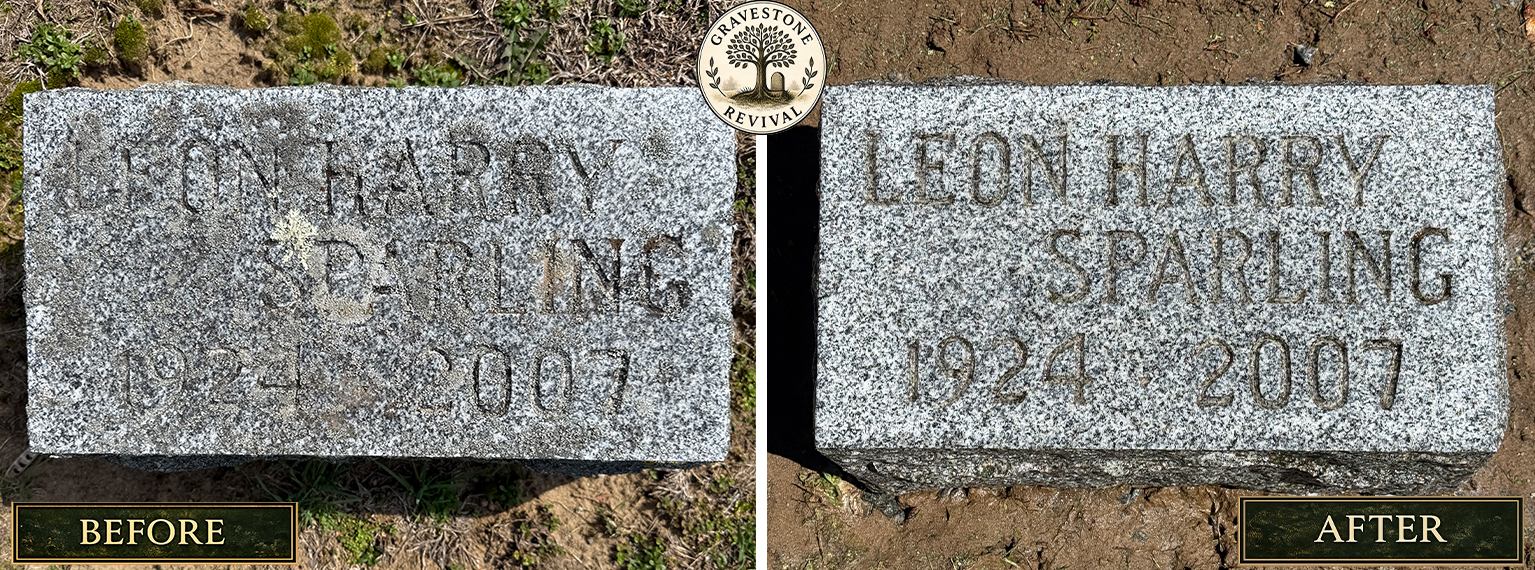
Gravestone Revival provides preservation-first cemetery care throughout Saratoga County, Montgomery County, and Fulton County, New York. Before & After Photo Documentation and a Written Gravesite Condition Report are always provided for cemetery care projects.
Quick Answer: Why Can’t I Read the Writing on a Gravestone?
Gravestone writing becomes difficult to read when the inscription loses contrast or becomes covered. Common causes include lichen, moss, algae, black staining, dirt, grass overgrowth, worn paint, eroded lettering, bronze oxidation, sunken markers, weather exposure, fallen stones, broken stones, and previous improper cleaning.
The safest first step is documentation. Clear photos, angled light, and written condition notes can help determine whether cleaning, letter repainting, leveling, repair, or a cemetery condition report may be appropriate.
Common Reasons Headstone Inscriptions Become Hard to Read
- Biological growth: lichen, moss, algae, and organic buildup can grow across names, dates, symbols, and carved lettering.
- Black staining and discoloration: staining can reduce contrast and make letters blend into the stone surface.
- Original paint has worn away: many engraved letters were once painted or filled for contrast. Over time, weather, sun, rain, snow, and cleaning damage can remove that contrast.
- Harsh pressure washing damage: pressure washing can chip away old paint, weaken fragile surfaces, and make already-faded lettering even harder to read.
- Flat marker exposure: flat headstones and bronze markers sit closer to grass, soil, mower debris, sun, rain, snow, and standing moisture.
- Sunken markers: inscriptions can become hidden when the marker sinks below grade or grass grows over the lettering.
- Bronze oxidation: bronze markers can darken, fade, oxidize, or lose contrast between the raised lettering and background.
- Weathered stone: marble, sandstone, limestone, slate, and older materials can slowly lose sharp carved detail.
- Fallen or broken stones: a marker lying on the ground is more exposed to moisture, soil contact, freeze-thaw movement, and physical damage.
- Cracks, flaking, or spalling: stone damage can interrupt lettering or remove parts of the inscription entirely.
Original Painted Lettering Can Wear Away Over Time
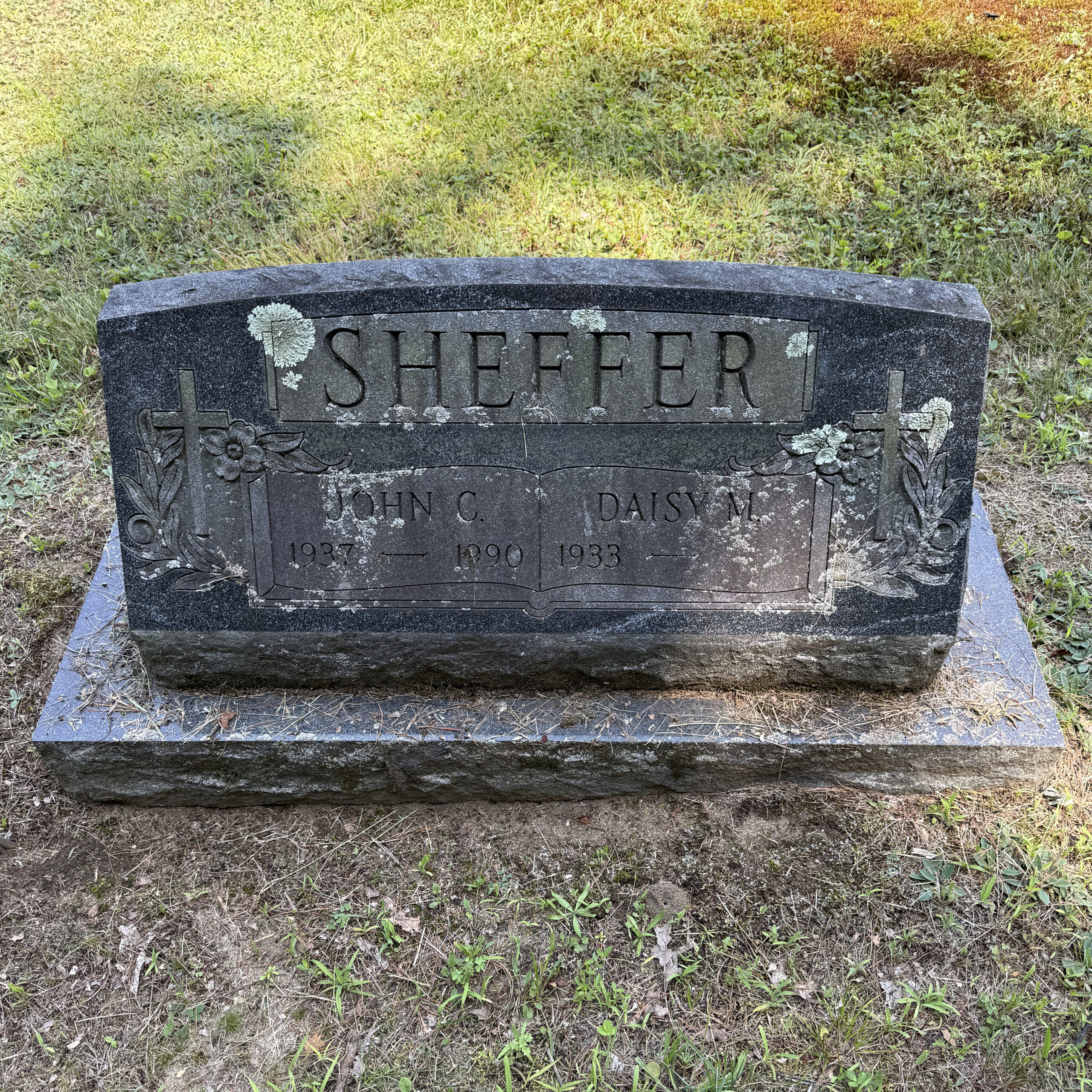
Many modern granite headstones and some older markers have engraved lettering that was originally painted, darkened, or filled to make the inscription easier to read. Over years of weather exposure, that original contrast can fade, chip, peel, or disappear.
Once the original paint or fill wears away, the letters may still be carved into the stone but become difficult to see from a distance. This is especially common on polished granite, dark stone, shallow engraving, and markers exposed to direct sun, winter weather, and repeated moisture.
Pressure washing can make this worse. High pressure can remove loose paint from recessed letters, chip weakened fill, and reduce the contrast that once made the inscription readable.
Related service: Headstone Letter Repainting
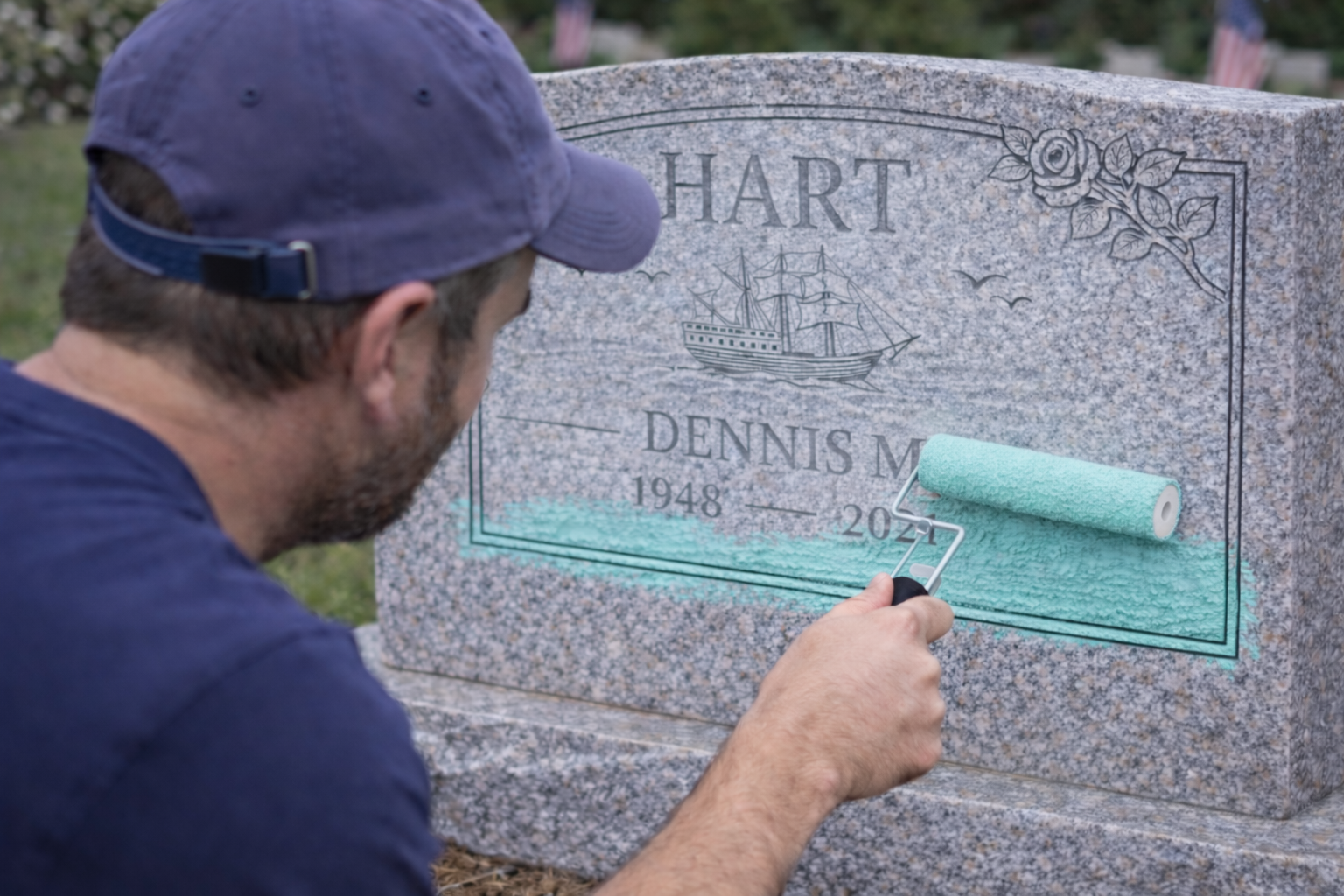
When Headstone Letter Repainting May Help
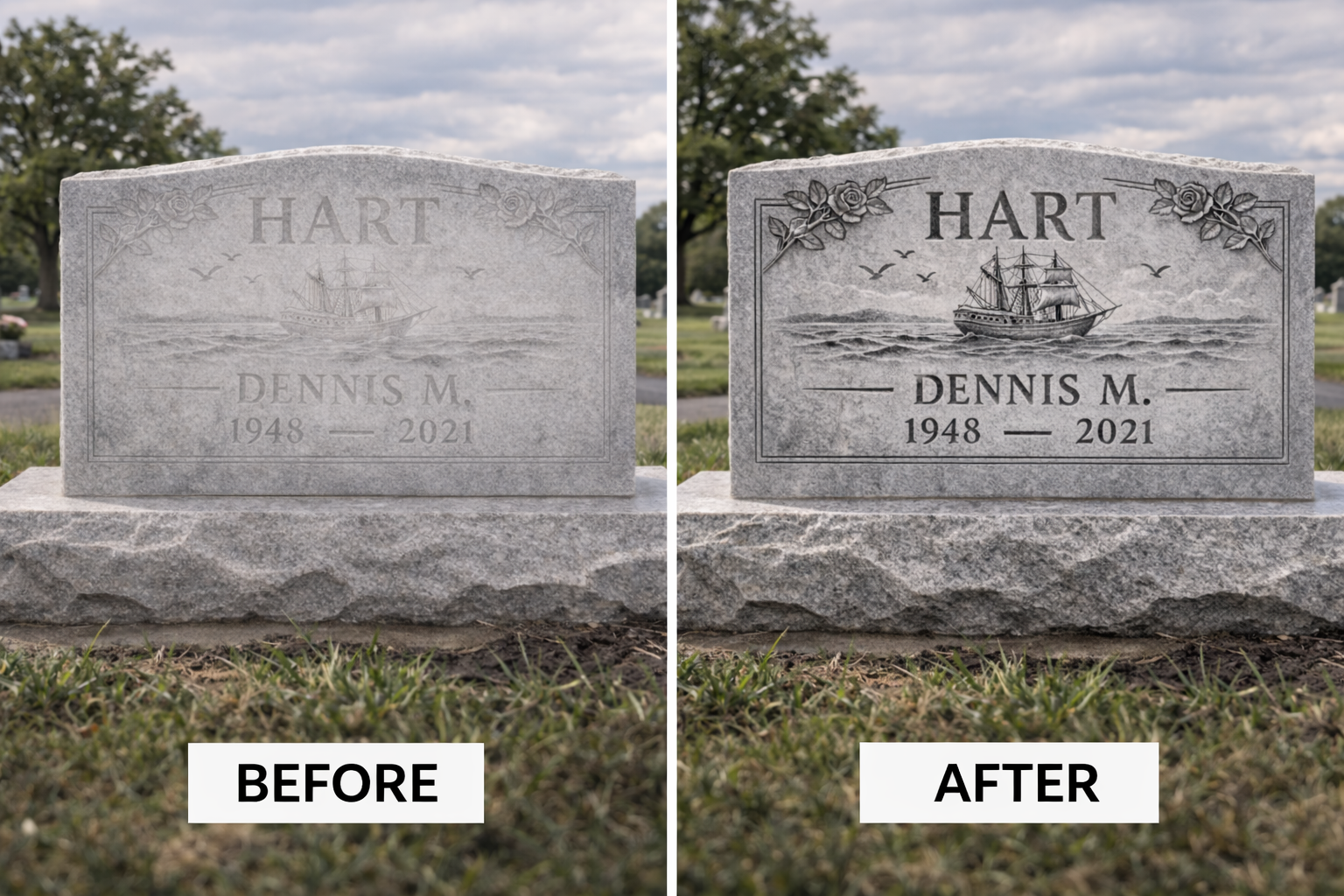
Headstone letter repainting may help when the engraving is still present but the original contrast has faded. This is common when painted lettering has worn away or when the inscription was originally designed to be read with a painted fill.
Letter repainting is not right for every memorial. It should not be used to invent missing letters, cover damaged stone, hide deterioration, or alter the inscription. The existing carved lettering must be clear enough to follow accurately.
Before repainting, the memorial should be reviewed for stone condition, cemetery rules, inscription clarity, surface stability, and whether cleaning or documentation should happen first.
Flat Headstones and Bronze Markers Can Become Hard to Read Faster
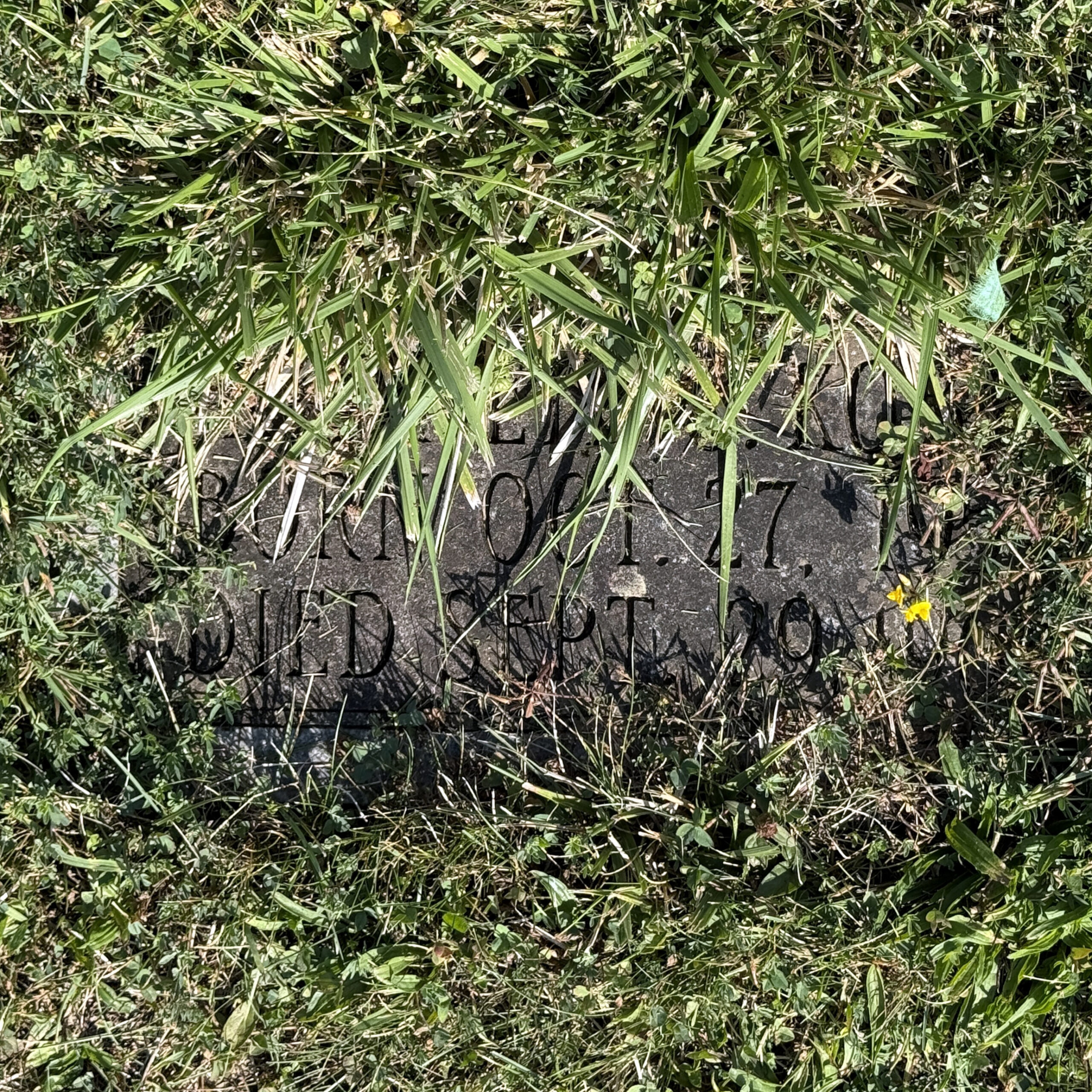
Flat headstones and bronze grave markers are often more exposed to ground-level conditions than upright monuments. They collect moisture, grass clippings, soil, pollen, leaves, mower debris, snow, and standing water. Because they face upward, they are also exposed directly to sun, rain, and freeze-thaw cycles.
On flat granite markers, soil and biological growth can collect inside engraved letters. On bronze markers, oxidation and surface dulling can reduce the contrast between raised lettering and the background. Over time, names and dates may become harder to read even when the marker itself is not broken.
Flat markers may also sink below grade. Once grass begins to grow over the edges, the inscription area can become partly hidden and more difficult to photograph or document.
Related service: Gravestone Leveling & Reset
Broken or Fallen Headstones Can Lose Readability
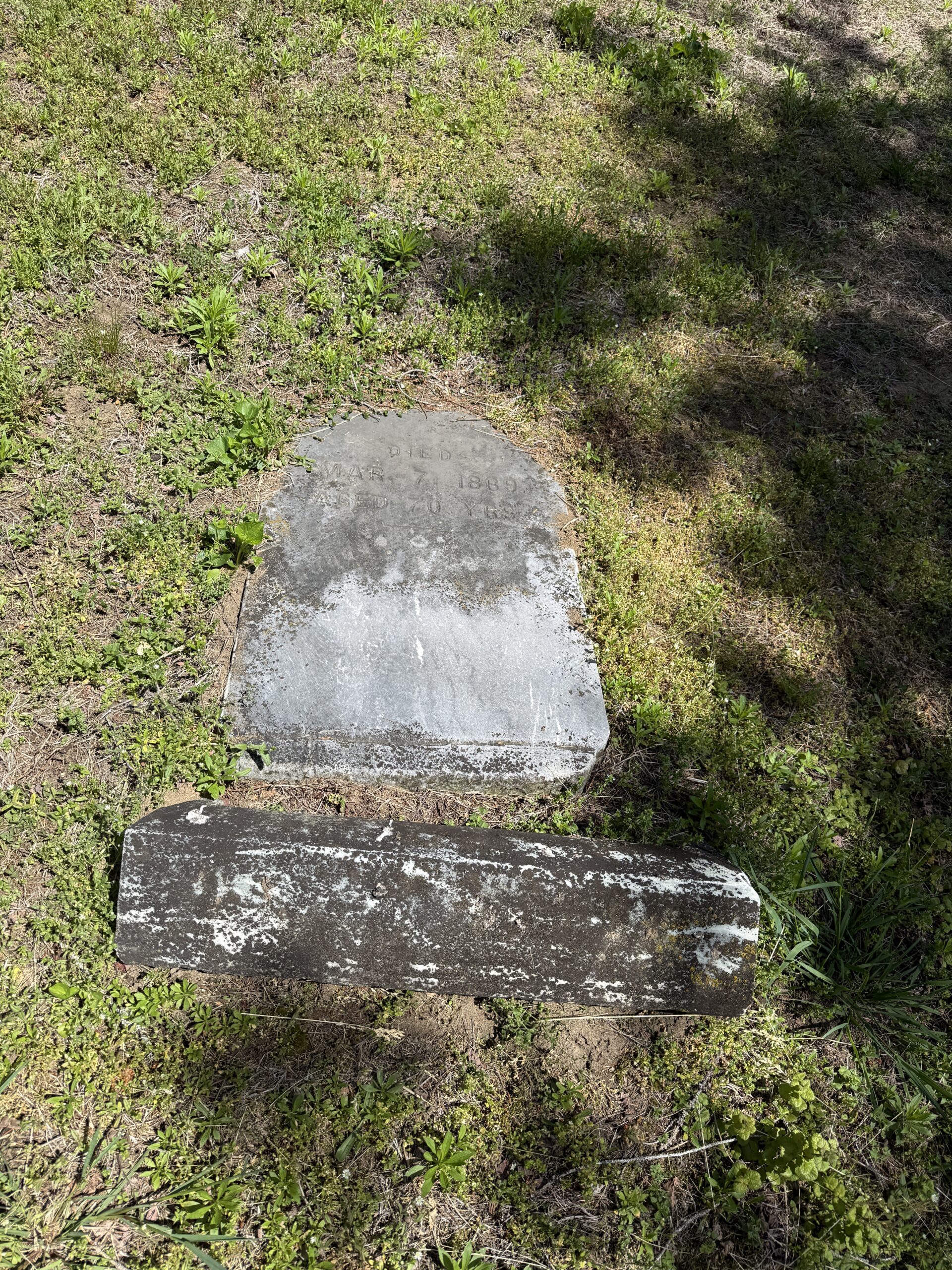
A broken or fallen headstone may become hard to read because it is lying on the ground, exposed to moisture, soil, leaves, biological growth, and repeated freeze-thaw movement. A fallen stone can also crack, chip, flake, or lose pieces of the inscription.
When a marker is broken or displaced, it should be documented before anyone attempts to move it. The position of the pieces, visible lettering, family plot context, symbols, and inscription details may all matter.
Related services: Headstone Repair & Stabilization | Cemetery Condition Reports
Safe Ways to Read Faded or Eroded Headstone Letters
If you are trying to read an old headstone inscription for family history, genealogy research, cemetery documentation, or personal remembrance, use non-invasive methods first. The goal is to improve visibility without adding anything to the stone or damaging the surface.
Never use shaving cream, chalk, flour, powders, paint, wax, markers, charcoal, wire brushes, or abrasive rubbing. These can enter stone pores, leave residue, stain fragile material, or damage weathered surfaces.
The Mirror Method for Reading Old Headstones
The mirror method uses reflected light to create shadows inside shallow or worn lettering. This can make a faded inscription easier to see without touching the stone.
- Visit when there is available sunlight, but avoid harsh glare directly on polished stone.
- Stand to one side of the headstone, not directly in front of it.
- Use a hand mirror to reflect sunlight across the face of the marker at a low angle.
- Move the mirror slowly until the light skims across the inscription rather than hitting it straight on.
- Watch for shadows forming inside the carved letters.
- Photograph the inscription while the shadows are visible.
- Take several photos from slightly different angles.
This method is especially helpful on older stones where the inscription is shallow, worn, or difficult to see under normal daylight. It is also useful for genealogists trying to confirm dates, initials, or family names without rubbing the stone.
Use care around fragile stones. Do not lean the mirror against the marker, press on the stone, or step on nearby graves.
The Flashlight Method for Reading Worn Inscriptions
The flashlight method works best when natural light is too flat, too bright, or coming from the wrong direction. A flashlight can create side-lighting that reveals shallow carved letters through shadow.
- Use a bright handheld flashlight or phone light.
- Hold the light to the side of the inscription, not straight in front of it.
- Angle the light low across the stone surface so shadows form inside the letters.
- Move the light slowly from left to right, then from right to left.
- Try lighting from above, below, and both sides.
- Take photos each time the lettering becomes clearer.
- Review the images later and compare them side by side.
This method can work well on cloudy days, shaded cemetery sections, upright marble tablets, older granite markers, and inscriptions that only appear readable from certain angles.
Do not scratch, scrape, wet, chalk, or rub the inscription to “help” the flashlight. The light should do the work, not physical pressure.
Photography Tips for Hard-to-Read Gravestone Inscriptions
Good cemetery photography can make a difficult inscription easier to study later. This is important for families, genealogists, cemetery historians, and out-of-town relatives trying to confirm names and dates.
- Photograph the entire memorial first so the inscription has context.
- Take close-up photos of the name, dates, symbols, and epitaph.
- Take photos from straight on and from both side angles.
- Use angled light when possible to create shadows inside lettering.
- Take several images instead of relying on one photo.
- Photograph nearby family markers and plot layout.
- Do not alter the stone to make the photo easier.
For very worn inscriptions, photos from different angles can sometimes reveal letters that are invisible in a straight-on image.
Related service: Family Memorial Documentation
When Cleaning May Improve Inscription Readability
Preservation-first cleaning may help when the inscription is hidden by biological growth, staining, soil, grass overgrowth, or surface buildup. In those cases, the lettering may still be intact beneath the buildup.
Cleaning should be gentle and appropriate for the stone. The goal is not to make an old memorial look new. The goal is to improve readability, document the inscription, and reduce harmful buildup without damaging the marker.
Related service: Gravestone Cleaning
When Leveling, Resetting, or Repair May Be Needed First
Sometimes the inscription is hard to read because the marker is sunken, tilted, fallen, cracked, or unstable. In those cases, cleaning or repainting may not be the first step. The memorial may need condition documentation, repair, stabilization, leveling, or resetting before the inscription can be fully reviewed.
This is common with flat markers below grade, older stones lying on the ground, broken headstones, and monuments affected by soil settlement or freeze-thaw movement.
Related services: Gravestone Leveling & Reset | Headstone Repair & Stabilization
What Not to Do With a Hard-to-Read Headstone
- Do not use pressure washing to force the inscription clean.
- Do not use bleach, vinegar, acidic cleaners, or household chemicals.
- Do not use wire brushes, metal tools, sandpaper, or abrasive pads.
- Do not scrape or dig into worn lettering.
- Do not use shaving cream, chalk, flour, powders, wax, or paint to make letters stand out.
- Do not repaint lettering unless the marker is appropriate for repainting.
- Do not clean a cracked, unstable, flaking, or severely weathered stone without condition review.
Helpful guide: Pressure Washing Gravestones: Hidden Damage Explained
Why Documentation Matters Before Any Work Begins
Before cleaning, repainting, leveling, repair, or stabilization work begins, the memorial should be documented. This preserves what is visible now and gives the family a clear record of the inscription and marker condition.
- Full memorial photographs
- Close-up inscription photos
- Photos taken from different angles
- Documentation of names, dates, symbols, and epitaphs
- Notes about biological growth, staining, fading, sinking, cracking, or damage
- Family plot and nearby marker context
- Before and after documentation if cemetery care work is completed
Related services: Family Memorial Documentation | Cemetery Condition Reports
FAQ: Hard-to-Read Headstone Inscriptions
Why is the writing on my family headstone hard to read?
Headstone writing becomes hard to read because of biological growth, staining, worn engraving, faded paint, pressure washing damage, sun exposure, weathering, sinking, bronze oxidation, or damage to the stone.
Can cleaning make a headstone inscription easier to read?
Often yes, when the lettering is hidden by dirt, biological growth, staining, or surface buildup. Cleaning should be preservation-first and should not involve pressure washing or harsh chemicals.
Can faded headstone lettering be repainted?
Sometimes. Letter repainting may help when the engraved lettering is still clear and the marker is appropriate for repainting. It is not the right solution for every headstone.
How can I read a worn gravestone without damaging it?
Use safe, non-contact methods such as angled photography, the mirror method, or the flashlight method. Avoid chalk, shaving cream, flour, rubbing, scraping, or wire brushes.
What if the inscription is worn away?
If the inscription is severely worn, angled light and careful photography may reveal remaining details. Cleaning or repainting cannot recreate lettering that is no longer visible.
Do bronze grave markers become hard to read?
Yes. Bronze markers can oxidize, darken, fade, collect debris, or lose contrast between raised lettering and the background, especially when exposed to sun, moisture, grass, and cemetery maintenance conditions.
Does Gravestone Revival provide inscription documentation?
Yes. Gravestone Revival provides cemetery photography, inscription documentation, family memorial documentation, condition reports, and before and after documentation when cemetery care work is completed.
Need Help Reading or Documenting a Family Headstone?
If a family headstone inscription is hard to read, Gravestone Revival can help document the memorial and recommend whether cleaning, letter repainting, leveling, repair, or a cemetery condition report may be appropriate.
Send the cemetery name, town, family surname, memorial photos if available, and what you are trying to read or document.
Before & After Photo Documentation and a Written Gravesite Condition Report are always provided.