Professional Gravestone Cleaning & Memorial Preservation
Preservation-First Gravestone Cleaning for Granite, Marble, Sandstone, Slate, Limestone, and Bronze Memorials
Gravestone Revival provides professional gravestone cleaning and memorial preservation throughout Saratoga County, Montgomery County, and Fulton County, New York, using careful methods for granite, marble, sandstone, slate, limestone, and bronze grave markers.
Our goal is not to make an old memorial look brand new. The goal is to safely reduce biological growth, improve readability, document visible condition, and respectfully preserve the original memorial using appropriate methods for the material, age, inscription depth, and cemetery setting.
We clean upright headstones, flat markers, slant markers, family memorials, historic cemetery stones, veteran markers, and bronze grave markers. Bronze markers may also receive protective wax when appropriate as part of the cleaning process.
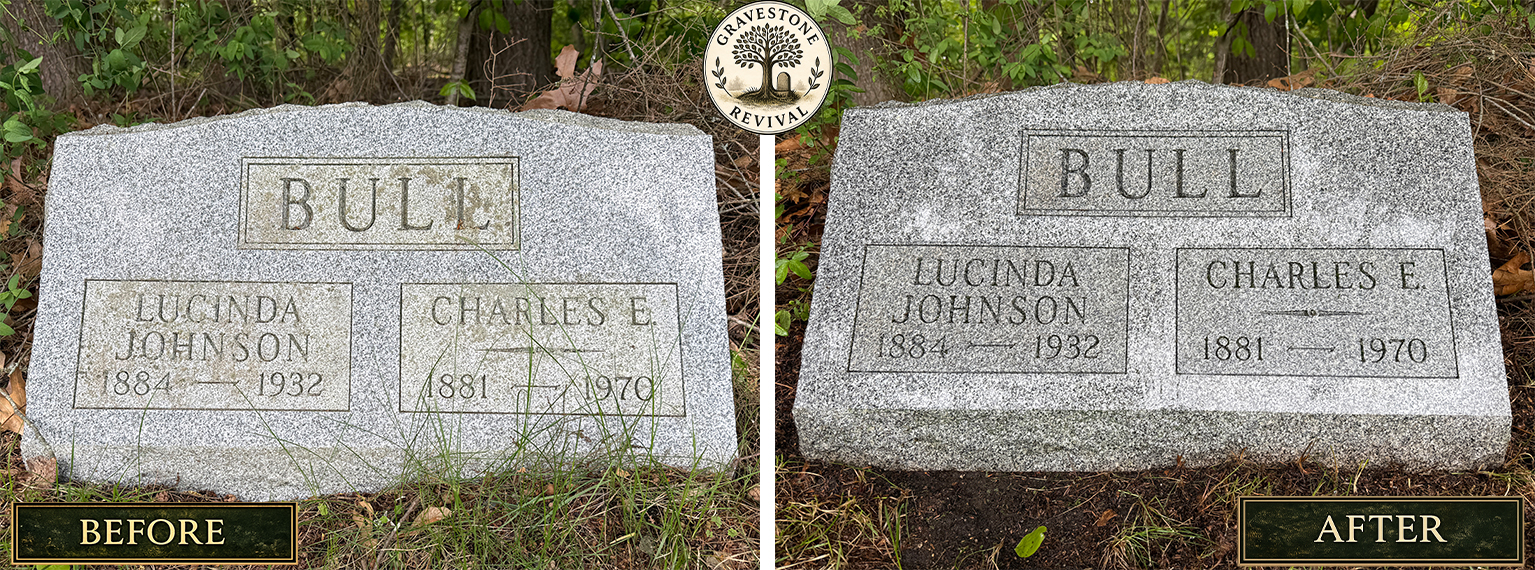
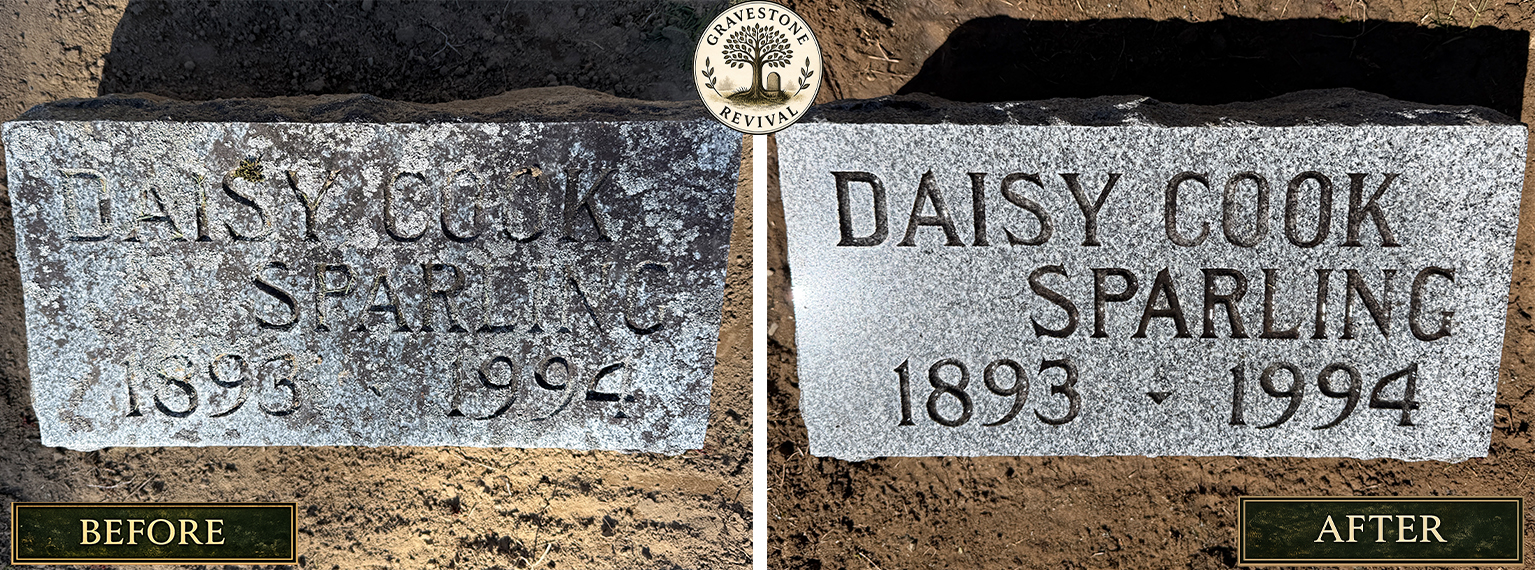
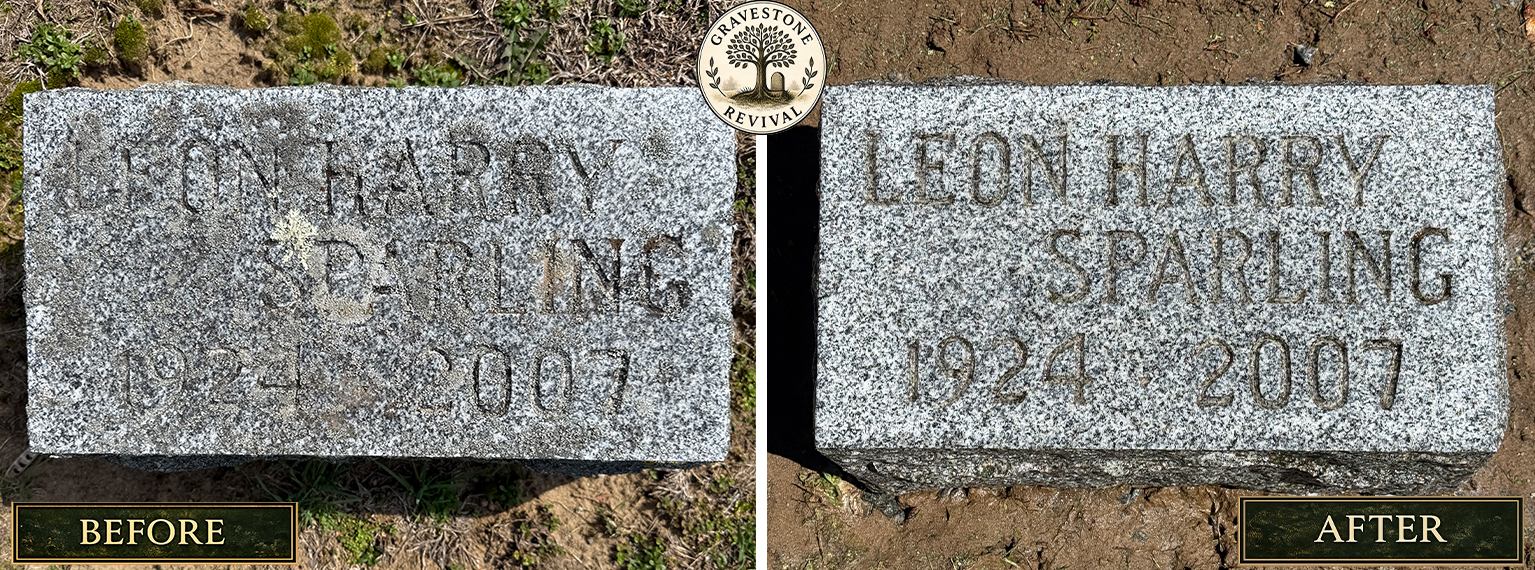
Before & After Photo Documentation and a Written Gravesite Condition Report are always provided for cemetery care projects.
Helpful Resources: Family Resources | Cemetery Condition Reports | Why Pressure Washing Damages Gravestones | Out-of-Town Family Cemetery Care
Why Professional Gravestone Cleaning Matters
Professional gravestone cleaning is preservation work, not cosmetic resurfacing. Moss, lichen, algae, mildew, soil buildup, and biological staining can hold moisture against a memorial, obscure names and dates, and make inscriptions difficult for families to read.
A careful cleaning can improve readability, reduce biological growth, and restore respectful presentation while still protecting the original stone or bronze surface. Older marble, sandstone, slate, limestone, and fragile historic markers require restraint. Bronze grave markers require a different approach than stone memorials.
Our standard is simple: Do No Harm. Gravestone Revival does not use pressure washing, bleach, harsh acids, wire brushes, grinders, abrasive pads, or aggressive methods on cemetery memorials.
Memorial Types & Materials We Clean
Different memorial materials require different cleaning decisions. Gravestone Revival evaluates the material, age, condition, inscription depth, biological growth, staining, and stability before recommending cleaning.
Granite Headstones
Granite is common in modern cemeteries and often responds well to careful cleaning when biological growth, soil buildup, or environmental staining is present.
Marble Headstones
Marble memorials are often older and more vulnerable to weathering. Cleaning must be controlled, gentle, and preservation-focused.
Sandstone Memorials
Sandstone can be fragile and highly absorbent. It should never be treated aggressively or cleaned as if it were modern polished granite.
Slate Headstones
Slate appears in many older cemeteries and may preserve inscriptions well, but edges, surfaces, and historic carving details still require careful handling.
Limestone Memorials
Limestone can be vulnerable to erosion and surface loss. Cleaning decisions must consider long-term preservation, not just immediate appearance.
Bronze Grave Markers
Bronze grave markers are cleaned as part of professional gravestone cleaning. When appropriate, protective wax may be applied after cleaning to improve presentation and help protect the bronze surface.
Bronze Grave Marker Cleaning & Protective Wax
Bronze grave markers are not a separate category of cemetery care. They are one type of memorial that requires a different cleaning approach than stone. Bronze markers may show oxidation, staining, dullness, biological growth, soil buildup, or loss of contrast over time.
When a bronze grave marker is a good candidate, Gravestone Revival can clean the marker and apply protective wax when appropriate. This is completed as part of professional gravestone cleaning, with the same documentation-first approach used for stone memorials.
Bronze marker care may be especially helpful for veteran markers, flat bronze cemetery markers, family memorial plaques, and bronze memorials that have become difficult to read or visually neglected.
Our Gravestone Cleaning Process
- Visual inspection of memorial material, age, stability, and visible condition
- Assessment of biological growth, staining, readability, cracks, sinking, or surface concerns
- Review of cemetery setting, access, and care limitations
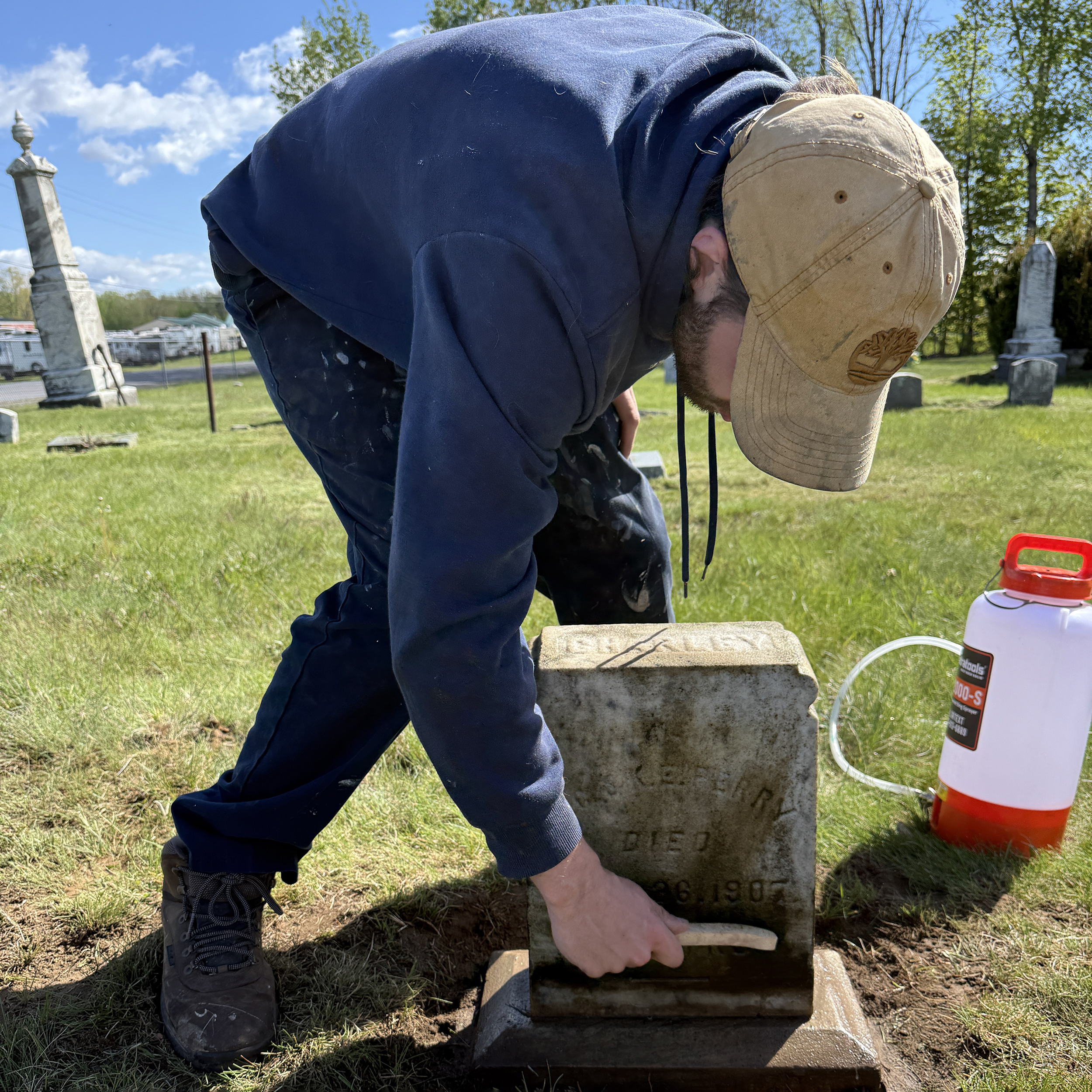
- Gentle hand cleaning using appropriate tools and preservation-first methods
- Careful reduction of moss, lichen, algae, mildew, soil, and surface buildup where appropriate
- Bronze marker cleaning and protective wax when appropriate
- Controlled rinsing and final presentation review
- Before & After Photo Documentation
- Written Gravesite Condition Report
Common Conditions We Address
Gravestone cleaning may help improve memorials affected by biological growth, staining, and readability loss. Results vary by material, age, condition, shade, moisture, exposure, and how long the buildup has been present.
- Moss, lichen, algae, mildew, and biological growth
- Soil buildup, grass staining, and environmental residue
- Reduced inscription visibility
- Dark staining caused by moisture-retaining growth
- Dirty or weathered granite memorials
- Older marble, sandstone, slate, and limestone memorials requiring extra care
- Bronze grave markers with dullness, oxidation, or surface buildup
- Family plot memorials that need documentation before additional care decisions
Documented Gravestone Cleaning Examples
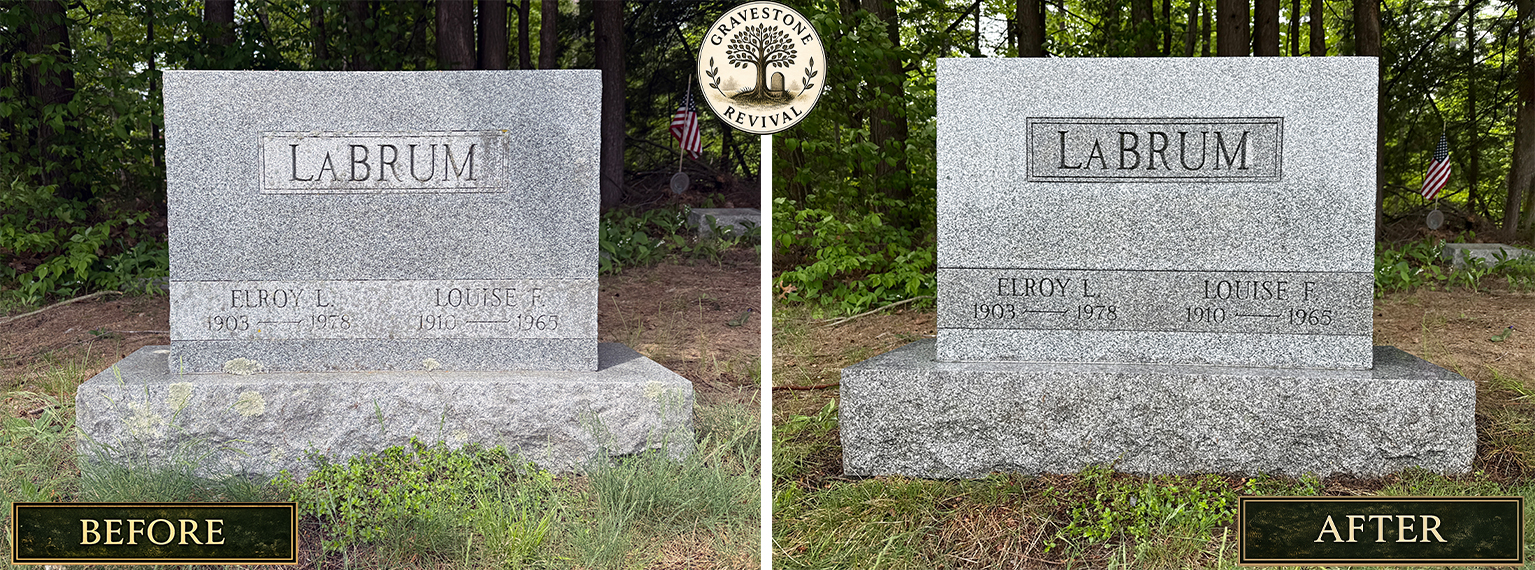
The examples below show real gravestone cleaning projects completed by Gravestone Revival using preservation-focused cemetery cleaning methods. Results vary by stone material, age, staining depth, exposure, and biological growth.
Why Some Gravestones Continue Improving After Cleaning
Some biological cleaning solutions continue working after the initial cemetery visit. Depending on material, shade, moisture, biological growth, staining, and environmental exposure, a memorial may continue improving gradually over time.
Deep embedded staining, lichen residue, dark biological shadows, and environmental discoloration may lighten naturally in the weeks and months following treatment. This is common in shaded cemeteries, wooded sections, and older memorials exposed to long-term moisture retention.
Some memorials show immediate visible improvement. Others improve more slowly. Some permanent weathering may remain because preservation should never mean damaging the memorial to force an unrealistic result.
Cleaning Often Reveals Additional Preservation Needs
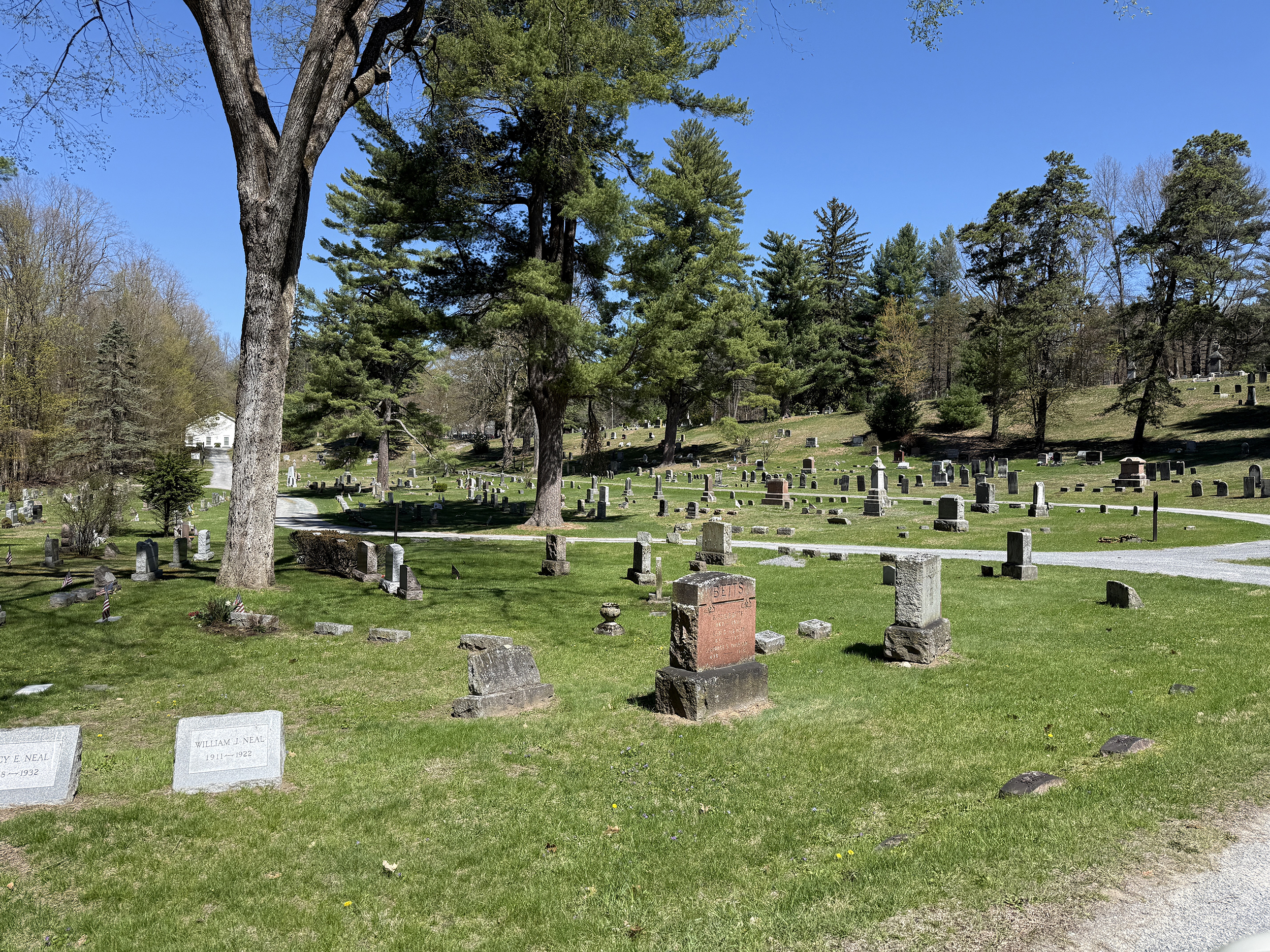
Once biological growth and staining are reduced, families can often see the memorial more clearly. Cleaning may reveal faded lettering, cracks, separation, sunken bases, bronze oxidation, plot overgrowth, instability, or family plot concerns that were harder to notice before.
Related preservation services: Gravestone Leveling & Reset | Headstone Repair & Stabilization | Headstone Letter Repainting | Cemetery Condition Reports
Gravestone Cleaning for Out-of-Town Families
Many gravestone cleaning requests come from out-of-town families who cannot regularly visit a loved one’s grave. Cleaning can be scheduled before a family visit, meaningful date, genealogy trip, cemetery visit, or larger preservation request.
After service, families receive before-and-after photos and a written gravesite condition report so they can see what was completed and understand any additional concerns such as sinking, cracking, fading lettering, bronze marker condition, or stability issues.
Helpful starting points: Out-of-Town Family Cemetery Care | Family Resources | Family Memorial Documentation | Cemetery Condition Reports
Gravestone Cleaning for Cemeteries, Churches & Cemetery Associations
Gravestone cleaning is not limited to individual family requests. Cemetery boards, churches, municipalities, cemetery associations, and preservation groups may need professional cleaning, documentation, or condition observations for older sections, veteran memorials, family plots, or individual markers of concern.
For larger cemetery needs, a Cemetery Condition Report may be the best first step before deciding which memorials need cleaning, leveling, repair, stabilization, letter repainting, or additional documentation.
Service Areas for Professional Gravestone Cleaning
Gravestone Revival provides professional gravestone cleaning and memorial preservation throughout Saratoga County, Montgomery County, and Fulton County, New York. Saratoga County remains our original core service area, with expanded cemetery care coverage throughout Montgomery County and Fulton County.
County service pages: Saratoga County Cemetery Care | Montgomery County Cemetery Care | Fulton County Cemetery Care
Cemetery guides: Main Cemetery Guide | Saratoga County Cemetery Guide | Montgomery County Cemetery Guide | Fulton County Cemetery Guide
Cemetery directories: Saratoga County Cemetery Directory | Montgomery County Cemetery Directory | Fulton County Cemetery Directory
Frequently Asked Questions About Gravestone Cleaning
Do you clean bronze grave markers?
Yes. Bronze grave markers are cleaned as part of professional gravestone cleaning. When appropriate, protective wax may also be applied after cleaning to improve presentation and help protect the bronze surface.
Do you clean marble, granite, sandstone, slate, and limestone memorials?
Yes. Gravestone Revival cleans multiple memorial materials, including granite, marble, sandstone, slate, limestone, and bronze. Each material is evaluated before work begins so the cleaning approach matches the memorial’s condition.
Is pressure washing safe for gravestones?
No. Pressure washing can erode stone, damage inscriptions, force water into cracks, and accelerate deterioration, especially on older or weathered memorials. Gravestone Revival does not use pressure washing on gravestones.
Will cleaning make a gravestone look brand new?
No. The goal is preservation, biological growth reduction, improved readability, and respectful presentation. Permanent staining, erosion, discoloration, and age-related wear may remain.
Why do some stones improve after the visit?
Some preservation-safe biological cleaning solutions continue working after application. Depending on the material, biological growth, shade, moisture, and cemetery conditions, additional improvement may appear over weeks or months.
Can cleaning be paired with leveling, repair, or letter repainting?
Yes. Many families pair gravestone cleaning with gravestone leveling and reset, headstone repair and stabilization, headstone letter repainting, family memorial documentation, or a cemetery condition report.
Can you clean a gravestone for a family who lives out of town?
Yes. Many gravestone cleaning requests come from out-of-town families. Before-and-after photos and a written gravesite condition report are provided so families can see what was completed even when they cannot visit in person.
Do you provide documentation after the work is done?
Yes. Before & After Photo Documentation and a Written Gravesite Condition Report are always provided for cemetery care projects.
Request Professional Gravestone Cleaning
Tell us the cemetery name and town, the memorial name if known, the memorial material if you know it, and what you would like improved. Photos are especially helpful for cleaning requests, especially when biological growth, staining, bronze oxidation, cracks, sinking, or faint lettering are visible.
Before & After Photo Documentation and a Written Gravesite Condition Report are always provided for cemetery care projects.