DIY Gravestone Care & Cemetery Preservation Guide
Safe, Preservation-First Guidance for Families Who Want to Care for a Loved One’s Gravestone the Right Way
This DIY gravestone care guide helps families understand safe cemetery preservation basics before cleaning, decorating, maintaining, or requesting professional cemetery care.
Gravestone Revival believes education matters. Many gravestones are damaged by good intentions, including harsh cleaners, wire brushes, aggressive scraping, and pressure washing. This guide explains what is safer, what to avoid, and when it is better to hire a professional.
Important: This guide is educational. Always follow cemetery rules, avoid risky methods, and stop if a stone appears fragile, cracked, flaking, unstable, or historically significant.
Start Here: Safe Gravestone Care Basics
Before touching any gravestone, look carefully at the material and condition. A newer granite marker can usually tolerate more gentle maintenance than an older marble, sandstone, slate, or damaged memorial. If a stone is cracking, flaking, leaning, crumbling, or unstable, do not clean it until it has been assessed.
- Use the gentlest method first — water, patience, and soft tools are usually the safest starting point.
- Avoid harsh cleaners — bleach, acidic cleaners, household chemicals, and abrasive products can damage stone.
- Avoid aggressive tools — wire brushes, metal scrapers, stiff abrasive pads, and power tools can permanently scar memorials.
- Never pressure wash gravestones — pressure washing can damage stone surfaces, inscriptions, joints, and already weakened memorials.
- Respect cemetery rules — every cemetery may have its own cleaning, flower, decoration, and maintenance policies.
DIY Gravestone Care Topics
Use these guides to learn safe, preservation-first cemetery care methods. As the DIY library expands, each topic will connect to deeper step-by-step guidance and recommended tools we personally use or trust.
How to Clean a Gravestone Safely
Learn the safe first steps for inspecting, wetting, gently brushing, rinsing, and documenting a gravestone without using damaging methods.
Coming next: step-by-step cleaning guide.
What Not to Use on Gravestones
Understand why bleach, vinegar, household cleaners, wire brushes, pressure washing, and abrasive tools can create permanent damage.
Recommended Tools & Supplies
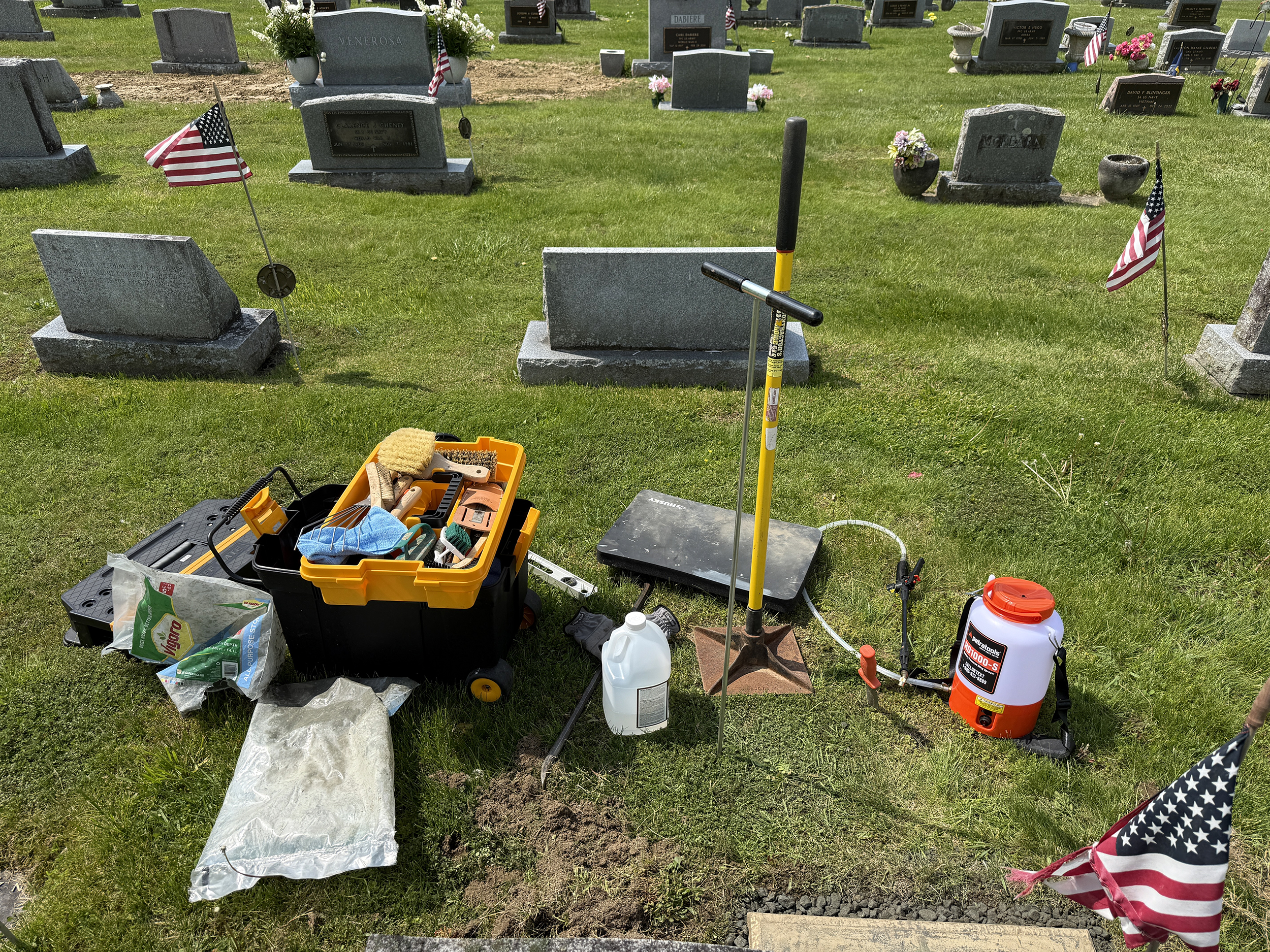
View the brushes, cloths, bottles, gloves, and cemetery care supplies we use or recommend for preservation-first work.
Why Pressure Washing Damages Gravestones
Pressure washing may look effective at first, but it can force water into cracks, open stone pores, erode softened surfaces, damage inscriptions, loosen joints, and accelerate future deterioration. This is especially risky on older marble, sandstone, limestone, slate, and already weathered memorials.
For that reason, Gravestone Revival does not use pressure washing on gravestones. We use preservation-first methods that prioritize the long-term condition of the memorial.
Products We Use & Recommend
Recommended products should support preservation education, not replace it. Every product listed on Gravestone Revival should be something we use, trust, or believe is appropriate for safe cemetery and gravestone care.
Product recommendations will be organized by purpose, including soft brushes, non-ionic cleaners, spray bottles, microfiber cloths, gloves, kneeling pads, plot maintenance tools, and bronze marker care supplies.
Affiliate Disclosure
As an Amazon Associate, Gravestone Revival earns from qualifying purchases at no additional cost to you. We only recommend products we genuinely use, trust, or believe are appropriate for safe cemetery and gravestone care.
When to Hire a Professional
DIY care may be appropriate for simple, stable, modern markers in good condition. Professional help is usually better when a gravestone is old, fragile, badly stained, sunken, tilted, unstable, bronze, historically significant, or located in a cemetery with strict rules.
- The memorial is broken, cracked, flaking, damaged, vandalized, fallen, leaning, or unstable.
- The stone is very old or historically significant.
- There is heavy biological growth, staining, or unreadable lettering.
- The marker has sunk, shifted, or become uneven.
- The family wants before-and-after documentation and a written condition report.
- The family lives out of town and cannot regularly visit the cemetery.
Professional Gravestone Cleaning → | Gravestone Leveling & Reset → | Professional Headstone Repair
Professional Cemetery Care Services
Gravestone Revival provides preservation-first cemetery care throughout Saratoga County, Fulton County, and Montgomery County, NY.
DIY Gravestone Care FAQ
Can I clean a gravestone myself?
Sometimes, yes. DIY cleaning may be appropriate for stable, modern stones in good condition. Avoid cleaning if the stone is cracked, flaking, unstable, very old, or historically significant.
What should I never use on a gravestone?
Avoid bleach, vinegar, household cleaners, wire brushes, metal scrapers, abrasive pads, power tools, and pressure washing. These can damage stone surfaces and inscriptions.
What tools are safer for gravestone care?
Soft brushes, clean water, microfiber cloths, gentle spray bottles, gloves, and appropriate preservation-safe cleaners are usually safer than harsh chemicals or abrasive tools.
Do product links on this site earn commissions?
As an Amazon Associate, Gravestone Revival earns from qualifying purchases at no additional cost to you. We only recommend products we genuinely use, trust, or believe are appropriate for safe cemetery and gravestone care.