Dunning Street Cemetery Malta NY Guide
Dunning Street Cemetery in Malta, New York is a historically important rural cemetery containing generations of local family memorials and some of the town’s oldest surviving gravestones. It is also known as Dunning Street Rural Cemetery.
Gravestone Revival provides documented cemetery care at Dunning Street Cemetery for local families and out-of-town relatives who cannot visit regularly. Services may include professional gravestone cleaning, gravestone leveling and reset, headstone repair and stabilization, appropriate letter repainting, family plot care, family memorial documentation, and cemetery condition reports.
Because this is a historic cemetery containing older marble, sandstone, granite, multi-piece monuments, and early upright headstones, every memorial should be evaluated individually before cleaning, leveling, repair, or stabilization work is recommended.
We use preservation-first methods with no harsh chemicals, no wire brushes, and no pressure washing. Before & After Photo Documentation and a Written Gravesite Condition Report are always provided.
About Dunning Street Cemetery
Dunning Street Cemetery is a historic burial ground in the Town of Malta and an important surviving record of the community’s early families. Its alternate name, Dunning Street Rural Cemetery, reflects the landscaped rural cemetery tradition in which burial grounds were designed as quiet, tree-filled places for remembrance.
The cemetery contains memorials representing different periods of local history. Older upright stones stand among larger family monuments, obelisks, low markers, veteran memorials, and later granite headstones. Together, these graves preserve family names, inscriptions, military service, religious symbolism, and community relationships spanning multiple generations.
Dunning Street Cemetery is more than a list of burial locations. Its stones, family groupings, historic landscape, fencing, trees, and surviving inscriptions collectively document part of Malta’s development and local identity.
Dunning Street Cemetery Highlights
- Primary name: Dunning Street Cemetery
- Alternate name: Dunning Street Rural Cemetery
- Location: Dunning Street in Malta, Saratoga County, New York
- Cemetery character: Historic rural cemetery with mature trees and memorials from several periods
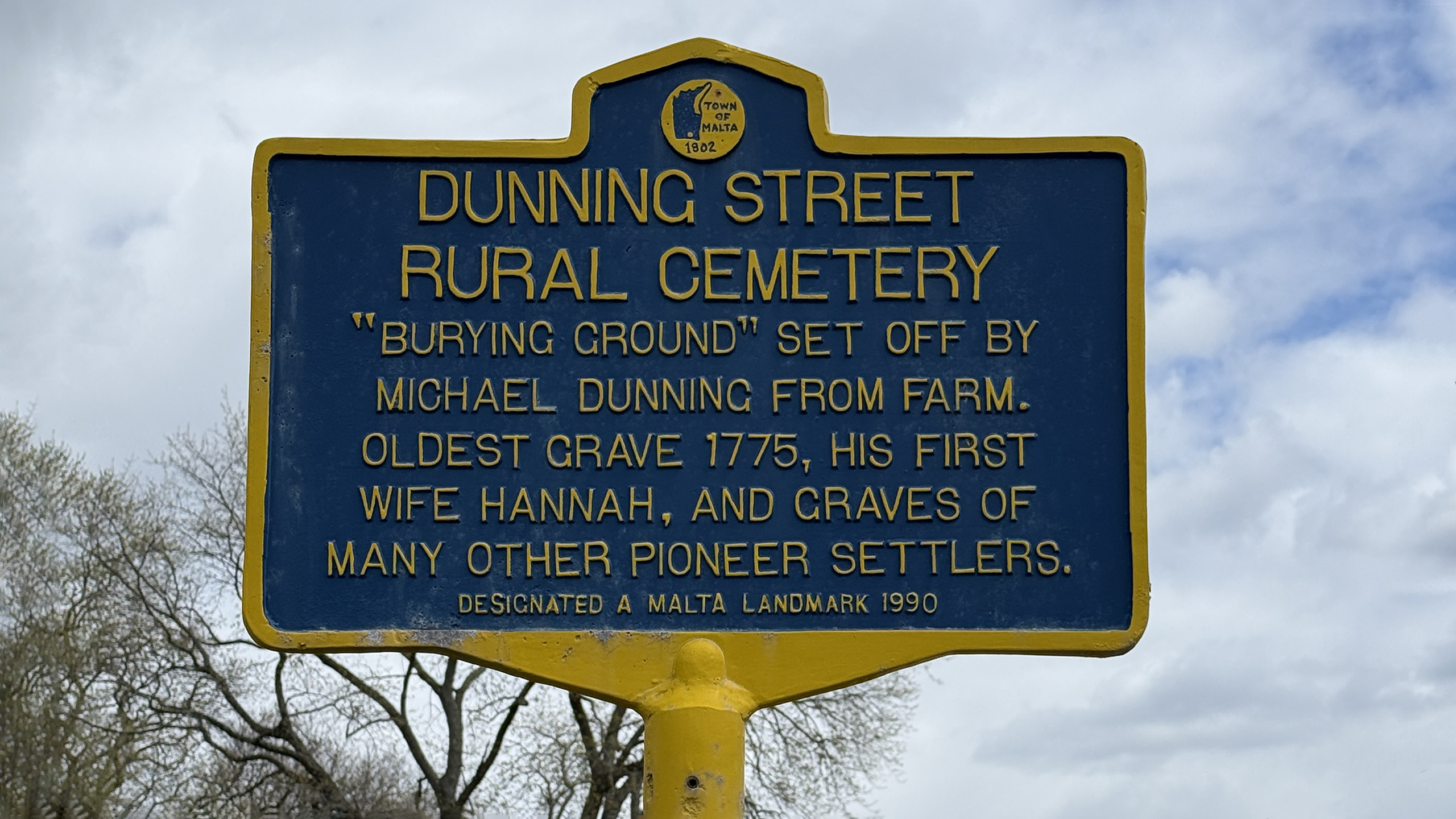
- Historic recognition: The cemetery grounds display signage documenting their recognized historic importance
- Memorial types: Early upright headstones, marble and granite markers, family monuments, obelisks, veteran memorials, and low grave markers
- Family-history value: Multi-generation family plots, historic surnames, military records, and surviving inscriptions
- Onsite information: Posted cemetery rules and regulations are displayed at the grounds
- Documented by Gravestone Revival: Yes, with original historic-marker, landscape, recognition-sign, and cemetery-rules photography
Historic Rural Cemetery Landscape
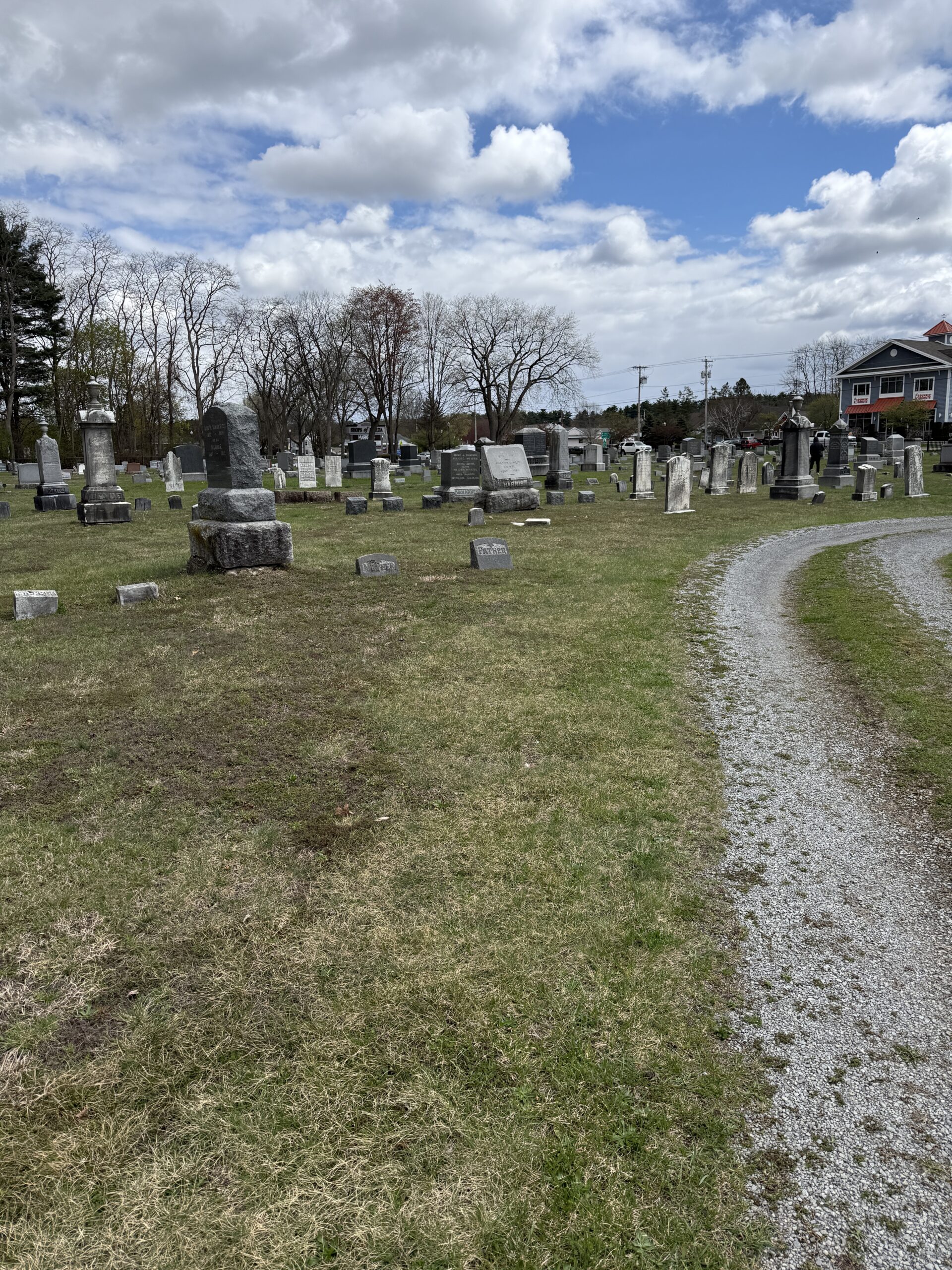
The cemetery landscape includes mature trees, shaded burial areas, open lawn, upright headstones, larger monuments, and family plots representing different stages of the cemetery’s development.
Many of the older stones have been exposed to more than a century of rain, snow, frost, soil movement, moisture, tree debris, biological growth, and seasonal temperature changes. Some memorials remain upright and legible, while others may show staining, erosion, leaning, sinking, cracking, separation, or evidence of previous repairs.
Shade from mature trees contributes to the cemetery’s historic character but can also allow stone surfaces to remain damp longer. This can encourage moss, algae, lichen, mildew, and dark biological staining on older marble and other porous memorial materials.
Recognized Historic Importance
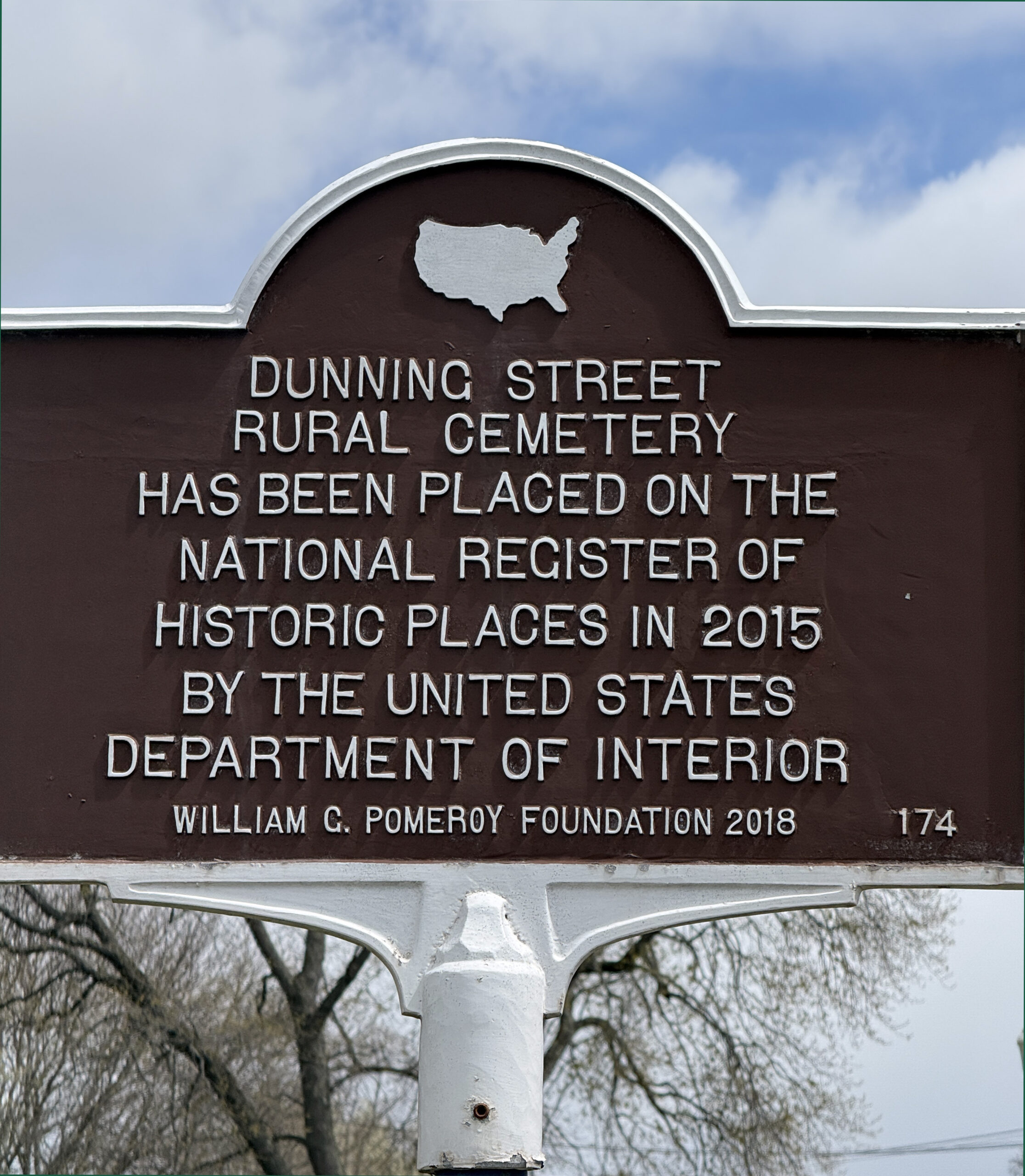
Onsite signage records the recognized historic importance of Dunning Street Rural Cemetery. This recognition reflects the cemetery’s value as a surviving burial landscape connected with Malta’s early families, community development, historic memorial art, and local burial traditions.
Historic recognition does not mean that every stone is in the same condition or requires the same treatment. Older memorials may be fragile even when they appear solid from a distance. Marble can develop sugaring and surface loss, sandstone may separate in layers, and multi-piece monuments may contain weak joints or hidden movement.
Cleaning and repair decisions should therefore be based on the individual memorial’s material, condition, age, construction, stability, previous repairs, and cemetery requirements.
Posted Cemetery Rules and Regulations
Dunning Street Cemetery has detailed rules and regulations posted at the grounds. Families, visitors, genealogists, contractors, and anyone arranging cemetery work should review the current posted notices before placing items, disturbing soil, beginning monument work, or planning family plot improvements.
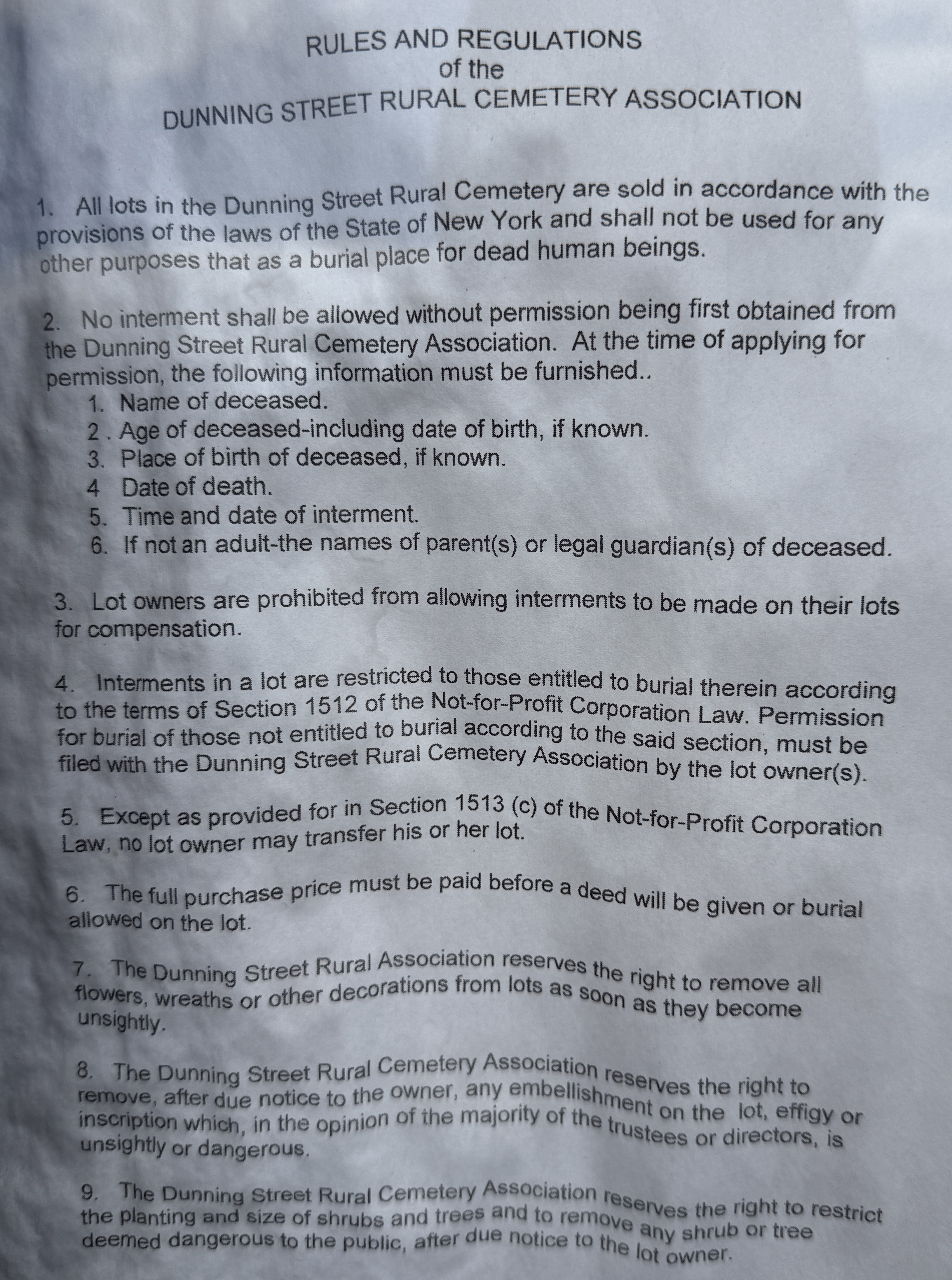
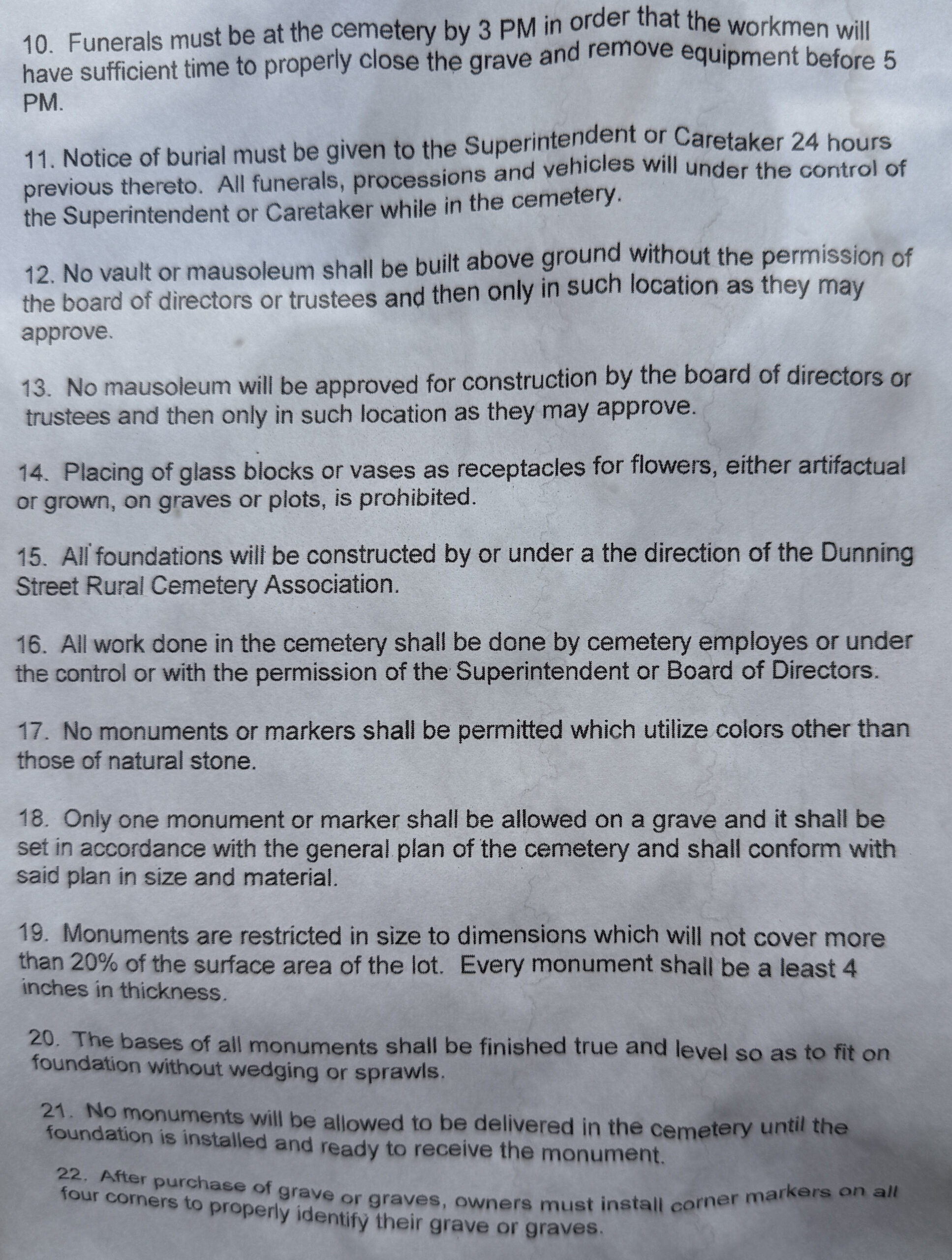
The photographs above document the rules visible when the cemetery was visited. Cemetery policies, contact information, seasonal dates, and authorization requirements can change. Families should rely on the most current signs and instructions posted at the cemetery before taking action.
Work involving lifting, excavation, monument movement, resetting, foundations, structural repair, stabilization, or soil disturbance may require advance permission. Gravestone Revival confirms applicable authorization requirements before beginning work that extends beyond surface cleaning and documentation.
Memorial Conditions Families May Find Here
The cemetery’s age, mature vegetation, historic memorial materials, and seasonal ground movement can create a wide range of preservation concerns.
- Biological growth: Moss, algae, lichen, mildew, and organic buildup may cover inscriptions and carved details.
- Surface erosion: Older marble, sandstone, and other historic materials can gradually lose carved detail and surface strength.
- Dark staining: Moisture, shade, tree debris, environmental exposure, and soil splash can discolor memorial surfaces.
- Leaning stones: Frost, ground settlement, root activity, and aging foundations may cause upright stones to tilt.
- Sunken markers: Smaller headstones and low markers may settle below the surrounding grade.
- Cracks and separation: Older stones and multi-piece monuments may develop fractures, open joints, loose components, or displacement.
- Failed previous repairs: Cement, mortar, adhesives, metal pins, and earlier repair materials may deteriorate or damage surrounding stone.
- Weathered inscriptions: Names, dates, epitaphs, and decorative carvings may become difficult to read.
- Tree-related conditions: Roots, shade, falling branches, leaf litter, and prolonged dampness may affect nearby memorials.
- Family plot concerns: Several related memorials may have different materials and preservation needs within one burial area.
A memorial that looks dirty may also be cracked, unstable, separating, or weakened by previous repairs. Visible condition documentation should come before treatment.
Common Reasons Families Contact Us
- An older gravestone is darkened by lichen, moss, algae, or staining.
- A family inscription has become difficult to read or photograph.
- A memorial has sunk, shifted, tilted, or become unstable.
- A monument is cracked, separated, fallen, loose, or affected by a failed previous repair.
- A family wants a historic memorial evaluated before deciding what work is safe.
- Several related headstones within one family plot need to be documented together.
- An out-of-town relative needs current photographs and written condition information.
- A descendant needs inscriptions, family relationships, and veteran details recorded for genealogy.
- A family wants cemetery care completed before an anniversary, reunion, or memorial visit.
- A family needs help understanding whether cemetery authorization may be required.
Cemetery Care Services at Dunning Street Cemetery
Families may request one or more of the following services, subject to memorial condition, family authorization, cemetery requirements, access, and project suitability.
- Professional Gravestone Cleaning — preservation-first cleaning for biological growth, staining, moss, algae, lichen, soil buildup, and reduced inscription readability.
- Gravestone Leveling & Reset — careful correction for suitable sunken, low, shifted, or leaning grave markers.
- Headstone Repair & Stabilization — preservation-focused assistance for cracked, separated, fallen, loose, or unstable memorials.
- Headstone Letter Repainting — contrast restoration for eligible memorials originally designed with painted recessed lettering.
- Family Plot Care — coordinated review and documented care for multiple memorials within a family burial area.
- Family Memorial Documentation — cemetery photographs, inscriptions, historic details, veteran information, and genealogy-friendly family records.
- Cemetery Condition Reports — current photographs, written condition observations, and recommended next steps.
Bronze grave marker cleaning is included under Professional Gravestone Cleaning.
Family Plot Care in a Historic Cemetery
A family burial area at Dunning Street Cemetery may contain memorials installed decades apart and made from different materials. One plot might include an early marble headstone, a family obelisk, later granite markers, veteran memorials, footstones, and stones showing previous repairs.
A documented family plot review may include:
- Wide photographs showing the complete family burial area
- Individual photographs of each identifiable memorial
- Names, dates, inscriptions, epitaphs, symbols, and family relationships
- Veteran and military marker documentation
- Notes about staining, growth, erosion, leaning, sinking, cracking, and separation
- Documentation of previous repairs and visible monument movement
- Observations about trees, roots, shade, drainage, foundations, and surrounding ground conditions
- Recommendations for cleaning, leveling, repair review, stabilization, or continued monitoring
- Before-and-after photographs when approved work is completed
- A Written Gravesite Condition Report for family records
This allows family members to understand the complete burial area and prioritize the memorials requiring the most immediate attention.
Out-of-Town Family Cemetery Care
Many families with parents, grandparents, spouses, veterans, or ancestors buried at Dunning Street Cemetery no longer live in Malta or Saratoga County. Some descendants have never visited the cemetery and need help locating the correct memorial before deciding what care is appropriate.
- Confirmation that the correct cemetery and memorial have been located
- Current cemetery and gravesite photographs
- Family plot overview images
- Complete inscription, date, symbol, and veteran documentation
- Visible condition notes for staining, growth, erosion, sinking, leaning, cracks, or separation
- Documentation of previous repairs and surrounding ground conditions
- Recommendations for appropriate cemetery care
- Before-and-after photographs following approved work
- A Written Gravesite Condition Report
Learn more about Out-of-Town Family Cemetery Care for families who cannot visit regularly.
Burial Research and Memorial Identification
Older cemetery records, weathered inscriptions, repeated family names, remarriages, and spelling variations can make memorial identification difficult. Gathering several pieces of information before requesting cemetery care can make the search more reliable.
- Search under both Dunning Street Cemetery and Dunning Street Rural Cemetery.
- Include the complete family surname and known spelling variations.
- Provide approximate birth, death, or burial years.
- Include the names of spouses, parents, children, siblings, or nearby relatives.
- Provide military branch, war, rank, or veteran details when applicable.
- Share obituaries, photographs, burial records, family notes, or cemetery screenshots.
- Include nearby memorial names, family monuments, or visible landmarks when known.
Historic cemetery research is often most successful when online records are compared with onsite inscriptions, family documents, cemetery records, and photographs of nearby stones.
How Cemetery Service Works
- Send the cemetery and memorial details. Include Dunning Street Cemetery, the memorial name, family surname, approximate dates, and location information if known.
- Tell us what you need. Cleaning, leveling, repair, stabilization, lettering, family plot care, documentation, or a condition report.
- We confirm the correct burial location. Nearby names, family relationships, photographs, and inscriptions can help identify the correct memorial.
- We evaluate the visible condition. Stone type, age, surface strength, cracks, stability, previous repairs, ground movement, shade, roots, and biological growth affect what work may be appropriate.
- Permission is confirmed when required. Leveling, excavation, monument movement, repair, stabilization, foundations, and soil disturbance may require cemetery authorization.
- Approved cemetery care is completed carefully. No harsh chemicals, no wire brushes, and no pressure washing are used.
- Documentation is provided. Before & After Photo Documentation and a Written Gravesite Condition Report are always included.
Helpful Memorial Preservation Guides
Nearby Malta Cemetery Resources
Families researching burial grounds in Malta and the surrounding area may also find these active Gravestone Revival pages helpful:
Need Help at Dunning Street Cemetery?
Send the memorial name if known, family surname, approximate dates, burial details, and what you would like cleaned, leveled, repaired, stabilized, repainted, checked, or documented. Existing photographs, veteran information, obituaries, family notes, and nearby memorial names are helpful when available.
We can help document the current condition, locate the correct memorial, explain what cemetery care may be appropriate, and provide dependable local assistance for families who cannot visit regularly.
Preservation-first cemetery care. No pressure washing. Before & After Photo Documentation and a Written Gravesite Condition Report are always provided.