Corinth Catholic Cemetery Corinth NY Guide
Gravestone Revival provides professional gravestone cleaning, leveling and reset, headstone repair and stabilization, appropriate letter repainting, family plot care, and documented cemetery services at Corinth Catholic Cemetery in Corinth, New York.
We help local families and out-of-town relatives care for parents, grandparents, spouses, veterans, children, ancestors, and several generations of memorials within Catholic family burial plots.
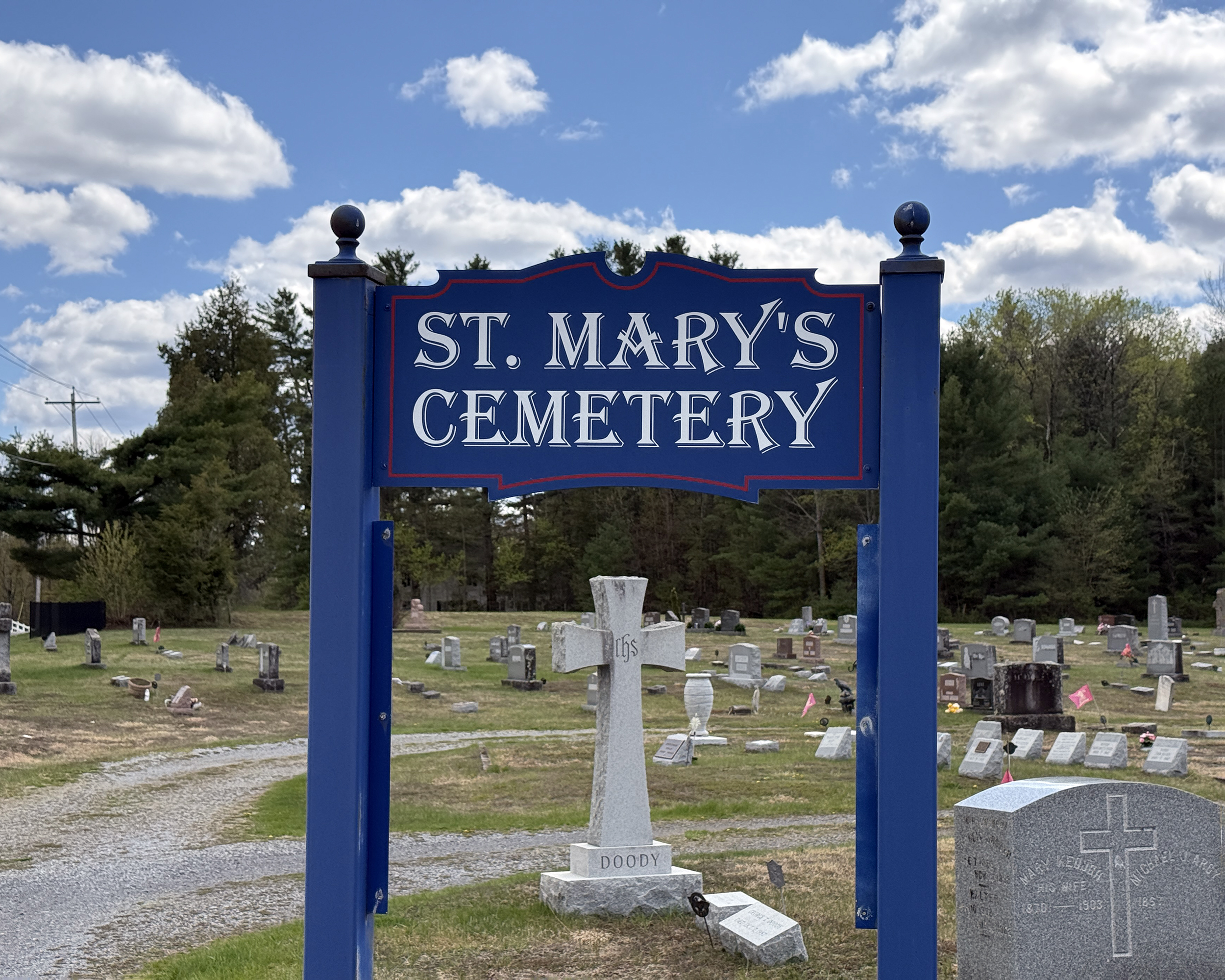
Corinth Catholic Cemetery is also commonly identified as Saint Mary’s Cemetery or St. Mary’s Cemetery. Families researching burial records or requesting cemetery care should use all three names when necessary and confirm the Corinth, New York location.
Every memorial is evaluated individually. We use preservation-first methods with no harsh chemicals, no wire brushes, and no pressure washing. Before & After Photo Documentation and a Written Gravesite Condition Report are always provided.
Does Your Family Have a Memorial at Corinth Catholic Cemetery?
Families often contact Gravestone Revival after noticing that a loved one’s memorial is dirty, sinking, leaning, cracked, unstable, or difficult to read. Others live outside Corinth and need current photographs and written condition information before deciding what cemetery care may be appropriate.
- A parent’s or grandparent’s gravestone is covered with lichen, moss, algae, mildew, or dark staining.
- A flat or low marker has sunk beneath grass, thatch, or accumulated soil.
- An upright headstone, cross, or family monument is leaning, shifted, loose, or visibly unstable.
- A memorial has cracked, separated, fallen, or developed open joints.
- A previous cement, mortar, adhesive, or metal repair has failed.
- A family name, date, prayer, epitaph, veteran inscription, or religious symbol has become difficult to read.
- Painted recessed lettering has faded on an otherwise eligible granite memorial.
- Several related memorials within a Catholic family plot need coordinated inspection and care.
- An out-of-town family needs an onsite cemetery visit and current condition update.
- A funeral, burial, graveside service, anniversary, reunion, or family visit is approaching.
A documented cemetery visit can help determine whether the next step should be cleaning, leveling, repair, stabilization, letter repainting, family plot care, memorial documentation, continued monitoring, or confirmation with the appropriate cemetery or parish representative.
Cemetery Care Services at Corinth Catholic Cemetery
The appropriate service depends on the memorial material, age, stability, construction, visible condition, family authorization, cemetery requirements, and proposed project.
Professional Gravestone Cleaning
Preservation-first cleaning for lichen, moss, algae, mildew, biological growth, environmental staining, soil buildup, and reduced inscription readability. Appropriate bronze-marker care is included within this service when suitable.
Explore Professional Gravestone Cleaning →
Headstone Repair & Stabilization
Preservation-focused assistance for cracked, broken, separated, loose, leaning, fallen, displaced, or unstable memorials following an individual condition review.
Explore Headstone Repair & Stabilization →
Gravestone Leveling & Reset
Careful correction for suitable sunken, tilted, shifted, uneven, or low grave markers when the memorial condition, surrounding ground, cemetery requirements, and project scope make resetting appropriate.
Explore Gravestone Leveling & Reset →
Headstone Letter Repainting
Contrast restoration for eligible granite memorials originally designed with painted recessed lettering when names, dates, prayers, epitaphs, or military information have faded.
Explore Headstone Letter Repainting →
Not every memorial needs immediate physical treatment. Some stones should first be documented, monitored, or referred to cemetery management before cleaning, excavation, monument movement, or structural work is considered.
About Corinth Catholic Cemetery and St. Mary’s Cemetery
Corinth Catholic Cemetery is a long-established Catholic burial ground serving Corinth and surrounding Saratoga County families. Depending on the record, sign, database, or family reference, it may be called Corinth Catholic Cemetery, Saint Mary’s Cemetery, or St. Mary’s Cemetery.
The cemetery is one of Corinth’s important community burial places and complements the broader local burial history represented by Corinth Rural Cemetery and other nearby cemeteries.
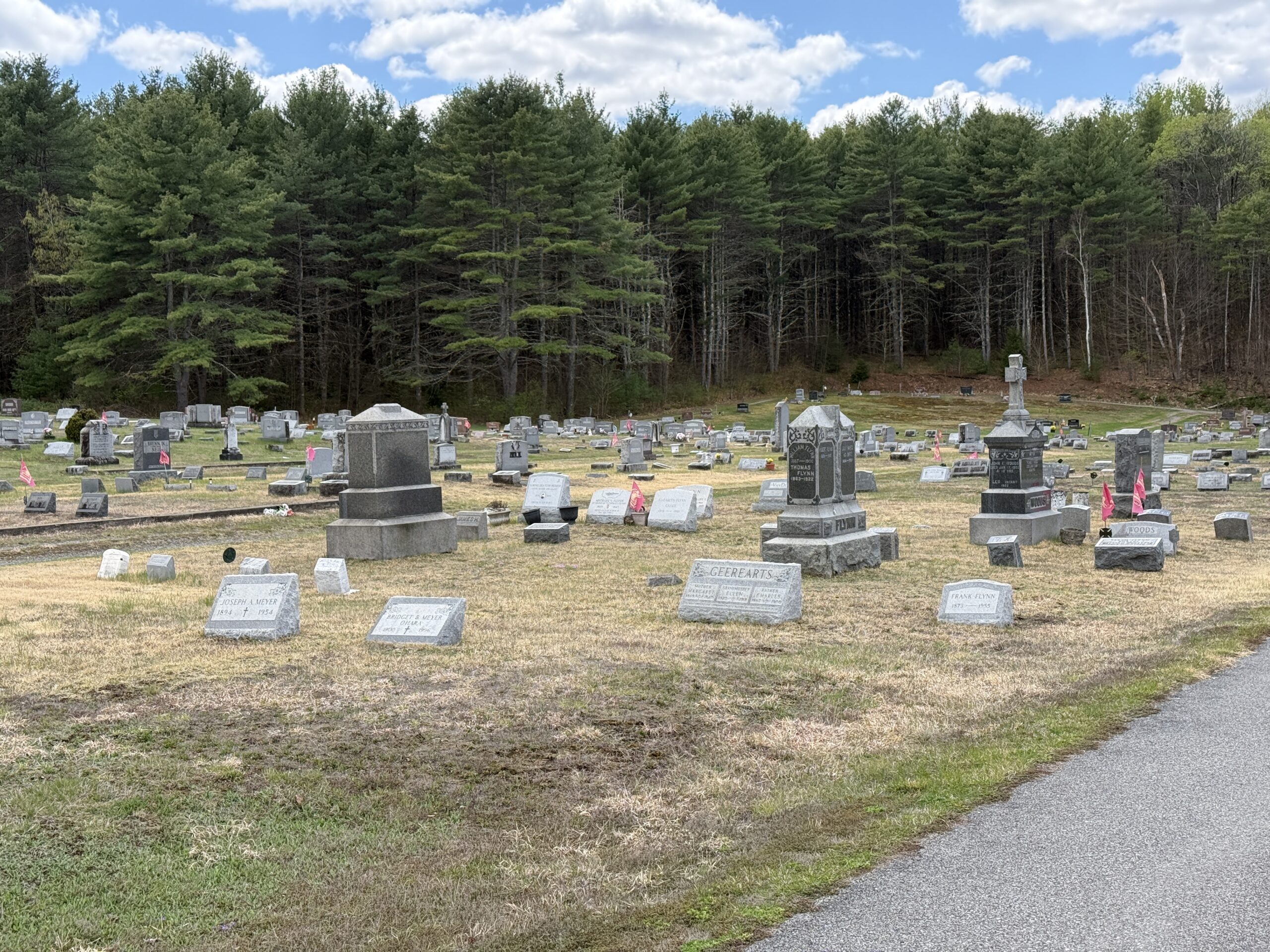
The cemetery landscape contains upright headstones, Catholic family monuments, individual markers, crosses, spouse memorials, low markers, veteran graves, bronze markers, and later granite monuments. Memorials located near one another may still differ greatly in age, material, foundation construction, weathering, and preservation needs.
Mature trees, areas of sun and shade, moisture, seasonal leaf debris, drainage, soil settlement, and repeated freeze-and-thaw cycles can influence biological growth, staining, inscription readability, sinking, leaning, and monument stability.
For present-day families, these memorials represent parents, grandparents, spouses, children, veterans, clergy, ancestors, and several generations of relatives whose burial places may still require careful documentation and preservation-focused cemetery care.
Catholic Memorials, Symbols, and Family Burial Traditions
Catholic cemetery memorials may include crosses, crucifixes, rosaries, praying hands, Sacred Heart imagery, Marian symbols, angels, religious inscriptions, Latin phrases, and references to prayer, resurrection, eternal rest, or family faith.
These details can be important to the identity and meaning of the memorial. Cleaning, repair, and documentation should preserve carved symbols, delicate lettering, applied features, photographs, plaques, and other original design elements whenever possible.
- Crosses and crucifix designs
- Images or symbols associated with the Virgin Mary
- Rosaries, praying hands, angels, or sacred imagery
- Religious prayers, epitaphs, and Latin inscriptions
- Parish, clergy, religious-order, or sacramental references
- Veteran emblems and military inscriptions
- Porcelain portraits or attached memorial photographs
- Family monuments containing several related burials
Photographs and written documentation can preserve these religious and family details even when weathering, biological growth, or inscription loss has made them harder to see.
Professional Gravestone Cleaning at Corinth Catholic Cemetery
A cemetery memorial should not be cleaned only because it appears dark, green, stained, or weathered. The memorial material, surface condition, cracks, joints, inscription depth, biological growth, previous repairs, religious details, attached features, and surrounding conditions must be evaluated first.
Professional cleaning may help remove or reduce moss, algae, lichen, mildew, biological growth, environmental staining, soil deposits, leaf staining, bird residue, and buildup that makes a family name, date, prayer, epitaph, religious symbol, or veteran inscription difficult to read.
- The memorial is photographed before cleaning.
- The material and visible surface condition are reviewed.
- Cracks, loose sections, open joints, previous repairs, and attached features are documented.
- Flags, containers, decorations, veteran markers, portraits, and nearby stones are protected.
- Appropriate preservation-safe cleaners and hand tools are selected.
- The memorial is photographed after approved service.
- The family receives before-and-after images and written condition notes.
Older marble memorials may have softened surfaces, weakened inscriptions, cracks, delamination, or previous repairs that require additional caution. Not every stain or biological growth should be removed aggressively.
Families seeing green, black, white, or crusted growth can review Why Is Stuff Growing on My Headstone?.
Pressure washing can damage weakened stone, inscriptions, religious carvings, joints, attached details, and previous repairs. Pressure Washing Gravestones: Hidden Damage Explained explains why high-pressure cleaning is not used.
Sunken, Low, and Leaning Memorials
Soil settlement, grave subsidence, drainage, frost movement, erosion, roots, monument weight, and aging foundations can cause markers to sink, tilt, shift, or lean. Low markers and footstones may gradually disappear beneath grass and accumulated soil.
A low or leaning memorial should be documented before anyone digs, pulls, lifts, pries, wedges, or adds soil around it. Moving a stone without understanding its construction and surroundings can cause additional damage or conflict with cemetery requirements.
- How far the memorial has sunk, leaned, or shifted
- Whether the memorial and any cross or upper section remain stable
- The condition of the base and supporting foundation
- Whether roots, drainage, erosion, or soft ground are present
- Whether the memorial is cracked or structurally weakened
- Whether nearby markers or burial features may be affected
- What excavation and base preparation may be required
- What family and cemetery authorization is necessary
Learn more through Why Is My Gravestone Sinking? and Why Are Gravestones Leaning?.
Cracked, Broken, or Unstable Memorials
Historic upright tablets, crosses, multi-piece family monuments, monument bases, and memorials exposed to generations of New York winters may develop fractures, separation, open joints, loose components, movement, or failed previous repairs.
A repair recommendation should not be based only on the visible break. Memorial material, monument weight, break pattern, base condition, previous repair materials, surface stability, religious carvings, attached features, and direction of movement all affect what may be appropriate.
- Cracked marble or granite headstones
- Broken or separated cross components
- Separated family monument sections
- Loose or displaced memorial pieces
- Open joints between monument sections
- Movement between a memorial and its base
- Fallen headstones or detached pieces
- Failed cement, mortar, adhesive, or metal repairs
- Large monuments showing settlement or instability
Some memorials may be candidates for repair or stabilization. Others may require monitoring, cemetery review, or specialized conservation. Families can review What Causes Gravestones to Crack? for an explanation of common damage factors.
Faded and Difficult-to-Read Inscriptions
Names, dates, family relationships, prayers, epitaphs, veteran information, and religious symbols may become difficult to read because of biological growth, staining, shallow carving, surface erosion, soil buildup, lighting, or faded inscription paint.
Cleaning should normally be considered before letter repainting. Removing biological growth and surface deposits may restore readability without changing the memorial’s original appearance.
Letter repainting is limited to eligible granite memorials originally designed with painted recessed lettering. It is not appropriate for naturally weathered marble inscriptions, raised lettering, fragile religious carvings, cracks, or areas where original stone has been lost.
Families trying to understand reduced readability can review Why Is My Headstone Inscription Hard to Read?.
Preparing a Catholic Family Plot Before a Funeral or New Burial
When a new burial is planned within an established Catholic family plot, relatives may discover that older memorials surrounding the burial space are stained, covered with biological growth, leaning, sinking, damaged, or difficult to read.
Gravestone Revival can review existing family memorials before a funeral Mass, burial, committal service, graveside prayer, memorial gathering, anniversary, reunion, or family visit.
- Current photographs of the complete Catholic family burial area
- Cleaning of appropriate existing family gravestones
- Review of low, sunken, leaning, or unstable markers
- Documentation of crosses, religious symbols, portraits, cracks, or failed repairs
- Review of faded inscriptions and eligible painted lettering
- Identification of work that may require cemetery authorization
- Before-and-after photographs following approved cemetery care
- A Written Gravesite Condition Report for the family
Include the scheduled funeral, burial, committal, or family-visit date when requesting an estimate. Weather, ground conditions, memorial condition, cemetery requirements, and authorization can affect what may be completed before the gathering.
Family Plot Care at Corinth Catholic Cemetery
A Catholic family burial area may contain a central monument, individual headstones, paired spouse markers, crosses, veteran memorials, footstones, low markers, bronze markers, and later burials added over several generations.
Inspecting only one memorial may leave a family without a clear understanding of the complete plot. Our Family Plot Care service can coordinate the review and documentation of several related memorials during one cemetery visit.
- Wide photographs showing the complete family burial area
- Individual photographs of each identifiable memorial
- Names, dates, family relationships, prayers, epitaphs, and symbols
- Catholic, veteran, military, religious-order, fraternal, and organizational information
- Identification of marble, granite, bronze, and other memorial materials
- Observations about staining, growth, sinking, leaning, cracking, or separation
- Documentation of crosses, portraits, plaques, bases, roots, shade, and drainage
- Recommendations for cleaning, leveling, repair, stabilization, lettering, or monitoring
- Before-and-after photographs following approved work
- A Written Gravesite Condition Report for family records
Cemetery Care for Out-of-Town Families
Many people with parents, grandparents, spouses, children, veterans, clergy, or ancestors buried at Corinth Catholic Cemetery now live outside Corinth, outside Saratoga County, or outside New York.
Distance can make it difficult to know whether a memorial is clean, readable, upright, stable, damaged, or partly hidden by grass. It can also make preparing a family plot before a funeral or burial especially difficult.
Out-of-Town Family Cemetery Care provides a dependable local cemetery visit for families who need accurate visual information before deciding what to do next.
- Confirmation that the correct cemetery and memorial were located
- Current photographs of the gravesite and complete memorial
- Close-up photographs of inscriptions, crosses, portraits, and religious details
- Family plot overview photographs
- Condition notes for staining, growth, sinking, leaning, cracks, or failed repairs
- Nearby spouse, child, veteran, clergy, and family memorial documentation
- Recommendations for appropriate cemetery care or monitoring
- Before-and-after documentation following approved work
- A Written Gravesite Condition Report
Burial Research and Memorial Identification
The Corinth Catholic Cemetery, Saint Mary’s Cemetery, and St. Mary’s Cemetery names can complicate burial research. Repeated family names, weathered inscriptions, incomplete databases, and plots containing several related memorials may create additional uncertainty.
- Search under Corinth Catholic Cemetery, Saint Mary’s Cemetery, and St. Mary’s Cemetery.
- Confirm that the record refers to Corinth, New York.
- Provide the complete family name and known spelling variations.
- Include approximate birth, death, funeral, or burial dates.
- Provide the names of spouses, parents, children, siblings, or nearby relatives.
- Include parish, Catholic, veteran, military, funeral-home, or religious-order information.
- Share obituaries, funeral cards, Mass cards, burial records, genealogy notes, or photographs.
- Include nearby memorial names, roadway details, trees, crosses, or other cemetery landmarks.
- Provide section, lot, row, or plot information when available.
Public research starting points include the Find a Grave Corinth Catholic Cemetery listing and the Village of Corinth cemetery-information page.
Public databases may be incomplete or contain user-submitted information, so onsite confirmation remains important before cemetery service is scheduled.
Cemetery Rules and Authorization
Cemetery regulations, parish procedures, decoration policies, contractor requirements, seasonal cleanup, and work-authorization rules can change. Families should confirm current requirements with the appropriate cemetery or parish representative before arranging structural or ground-disturbing work.
- Remain on established cemetery roads and appropriate parking areas.
- Do not drive or park on burial plots or soft cemetery ground.
- Do not move headstones, crosses, flags, veteran markers, containers, or neighboring memorial items.
- Do not attempt to straighten, lift, repair, or clean a memorial without authorization.
- Confirm requirements before excavation, leveling, resetting, monument movement, or structural repair.
- Follow current cemetery rules regarding flowers, religious decorations, plantings, containers, and seasonal removal.
- Respect funerals, burials, committal services, cemetery workers, clergy, and other visitors.
Gravestone Revival does not own, operate, manage, or speak on behalf of Corinth Catholic Cemetery, St. Mary’s Cemetery, or any associated parish. Official burial records, lot ownership, current rules, and work permission should be confirmed with the appropriate cemetery representative.
How Cemetery Care Works
1. Send the Cemetery and Memorial Information
Provide Corinth Catholic Cemetery, Saint Mary’s Cemetery, or St. Mary’s Cemetery, along with the family surname, memorial name if known, approximate dates, burial information, and a description of what you want checked, cleaned, leveled, repaired, stabilized, repainted, or documented.
2. We Confirm the Correct Memorial
Burial information, nearby family names, parish details, veteran information, inscriptions, photographs, roadways, and cemetery landmarks help identify the correct gravesite.
3. The Visible Condition Is Reviewed
The memorial material, staining, biological growth, cracks, stability, base, inscription, religious details, previous repairs, drainage, roots, and surrounding ground are reviewed before service is recommended.
4. Authorization Is Confirmed
Excavation, leveling, resetting, repair, stabilization, monument movement, foundation work, and other structural activity may require cemetery, parish, and family authorization.
5. Approved Cemetery Care Is Completed
Approved work is completed with preservation-first methods appropriate to the memorial material, religious details, cemetery requirements, and project scope.
6. The Family Receives Documentation
Before & After Photo Documentation and a Written Gravesite Condition Report show what was found, what work was completed, and what visible concerns may require future attention.
Helpful Knowledge Center Guides
These Gravestone Revival guides explain common memorial conditions families may notice at Corinth Catholic Cemetery:
Frequently Asked Questions About Corinth Catholic Cemetery Care
Is Corinth Catholic Cemetery also called St. Mary’s Cemetery?
Yes. Public records and local references may use Corinth Catholic Cemetery, Saint Mary’s Cemetery, or St. Mary’s Cemetery. Families should search under all three names and confirm the Corinth, New York location.
Can Gravestone Revival clean a headstone here?
Potentially, when the memorial material, condition, family authorization, and cemetery requirements make cleaning appropriate. The stone and any religious or attached details are reviewed before a preservation-safe method is selected.
Can a leaning or sunken marker be leveled?
Suitable memorials may be candidates for leveling and reset. The marker, base, soil, drainage, settlement, roots, structural condition, and cemetery authorization must be reviewed first.
Can a cracked cross or headstone be repaired?
Some cracked, separated, loose, or fallen memorials may be candidates for repair or stabilization. Material, construction, break pattern, previous repairs, weight, religious details, cemetery rules, and authorization affect the recommendation.
Can several memorials in one Catholic family plot be inspected?
Yes. Family plot care can include wide plot photographs, individual memorial images, inscriptions, Catholic symbols, veteran details, material identification, condition observations, family relationships, and recommendations for each memorial.
Can you prepare a family plot before a Catholic funeral or burial?
Families can request cleaning, documentation, and condition review before a funeral, burial, committal service, graveside prayer, memorial gathering, or family visit. Include the scheduled date, but understand that weather and cemetery approval may affect what work can be completed.
Can you assist a family living outside New York?
Yes. Out-of-town family cemetery care is a primary part of our work. Families receive current photographs, condition information, recommended next steps, and complete documentation following approved service.
Can faded lettering be repainted?
Eligible granite memorials originally designed with painted recessed lettering may be candidates. Cleaning and condition review should take place before repainting is considered.
Does Gravestone Revival use pressure washing?
No. Pressure washing can damage stone surfaces, inscriptions, religious carvings, joints, attached details, and previous repairs. Gravestone Revival does not pressure wash cemetery memorials.
Is cemetery or parish permission required?
Permission may be required for excavation, monument movement, leveling, resetting, structural repair, stabilization, foundation work, or other activity that disturbs a memorial or surrounding soil.
Request Cemetery Care at Corinth Catholic Cemetery
Send the memorial name if known, family surname, approximate dates, burial information, number of memorials, and what you would like checked, cleaned, leveled, repaired, stabilized, repainted, or documented.
Obituaries, parish information, funeral or Mass cards, veteran details, plot records, genealogy notes, older photographs, and nearby memorial names are helpful. Include any scheduled funeral, burial, committal service, memorial gathering, or family-visit date.
We can help confirm the correct gravesite, document its current condition, explain what cemetery care may be appropriate, identify work that may require cemetery or parish approval, and provide clear next steps.
Cemetery care for local and out-of-town families. No pressure washing. Before & After Photo Documentation and a Written Gravesite Condition Report are always provided.