Why Is My Gravestone So Dirty?
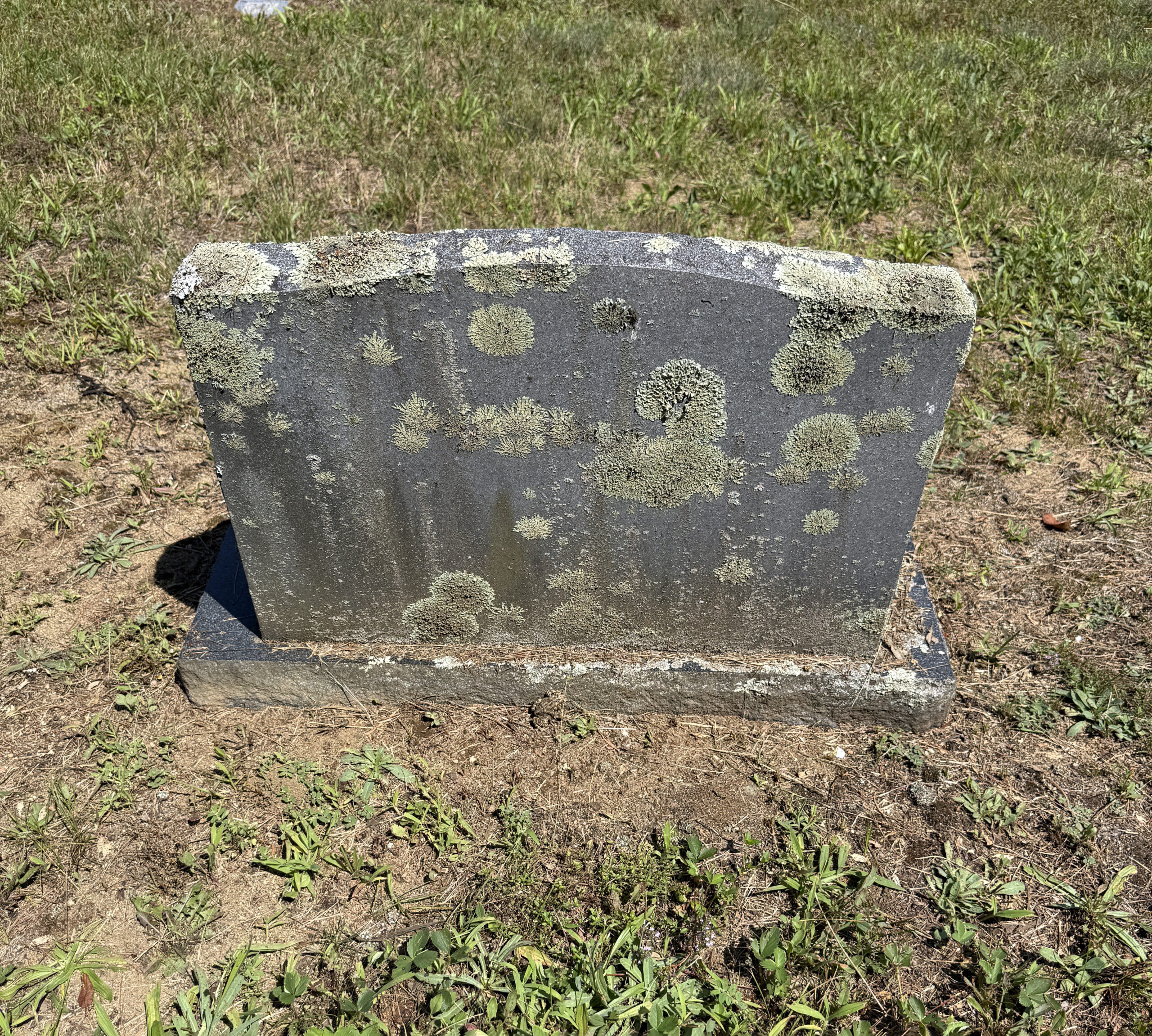
A gravestone can look dirty because of biological growth, lichen, moss, algae, black staining, green staining, soil splashback, tree debris, hard water minerals, air pollution, oxidation, moisture, shade, and long-term weather exposure. What looks like simple dirt is often a living or mineral-based buildup attached to the stone surface.
This guide explains why headstones become stained, blackened, green, crusted, or covered with growth, what those stains may mean, why pressure washing can cause damage, and when preservation-first gravestone cleaning may help.
Gravestone Revival provides preservation-first cemetery care throughout Saratoga County, Montgomery County, and Fulton County, New York. Before & After Photo Documentation and a Written Gravesite Condition Report are always provided for cemetery care projects.
Quick Answer: Why Do Gravestones Get So Dirty?
Gravestones get dirty because stone surfaces collect moisture, spores, minerals, pollen, soil, pollution, tree sap, grass clippings, and organic matter. Over time, those materials can feed biological growth or create staining that bonds to the surface.
The most common causes are lichen, moss, algae, mold, mildew, black biological staining, green growth, soil splashback, hard water deposits, oxidation on bronze markers, and air pollution on older cemetery monuments.
Gravestone Stains and Biological Growth
Many dirty-looking gravestones are not simply covered with loose dirt. They are covered with biological growth or mineral staining that has developed over months, years, or decades. This is especially common in shaded cemetery sections, damp areas, older rural cemeteries, tree-covered plots, and stones that have not been cleaned in many years.
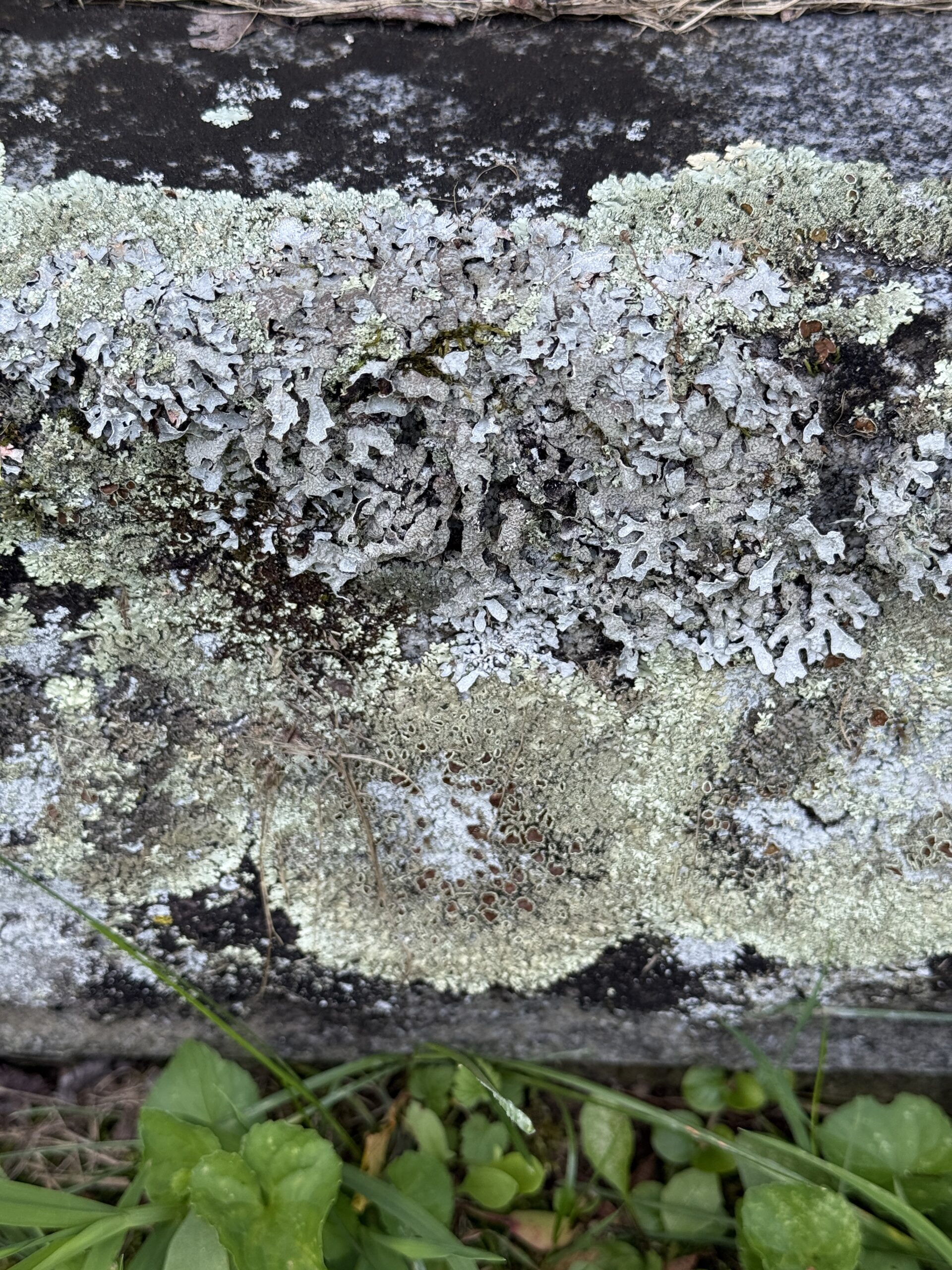
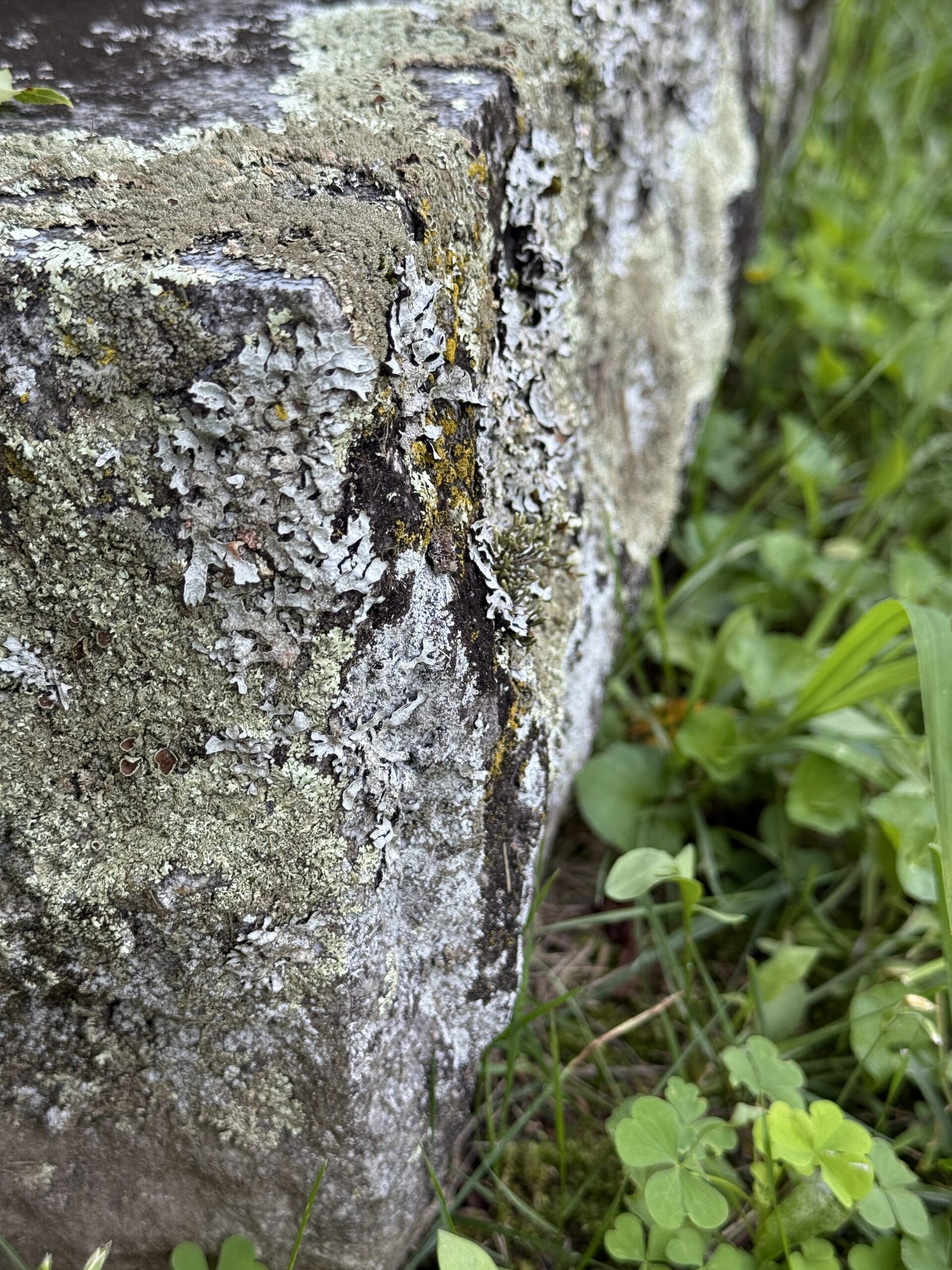
- Lichen: crusty, patchy, gray, green, orange, white, or black growth attached to the stone surface.
- Moss: soft green growth often found on damp, shaded, or horizontal surfaces.
- Algae: green or dark film that can spread across stone, especially where moisture remains.
- Mold and mildew: dark or cloudy growth that can make inscriptions and symbols harder to read.
- Black staining: dark streaks or blotches caused by biological growth, moisture patterns, pollution, or mineral deposits.
- Green staining: often related to algae, moss, moisture, or biological film.
- Soil splashback: dirt and minerals thrown onto the marker by rain, sprinklers, mowing, or runoff.
- Hard water deposits: whitish or chalky mineral residue from irrigation or water exposure.
- Bronze oxidation: color and contrast changes on bronze grave markers caused by exposure, moisture, and age.
Why Lichen Grows on Gravestones
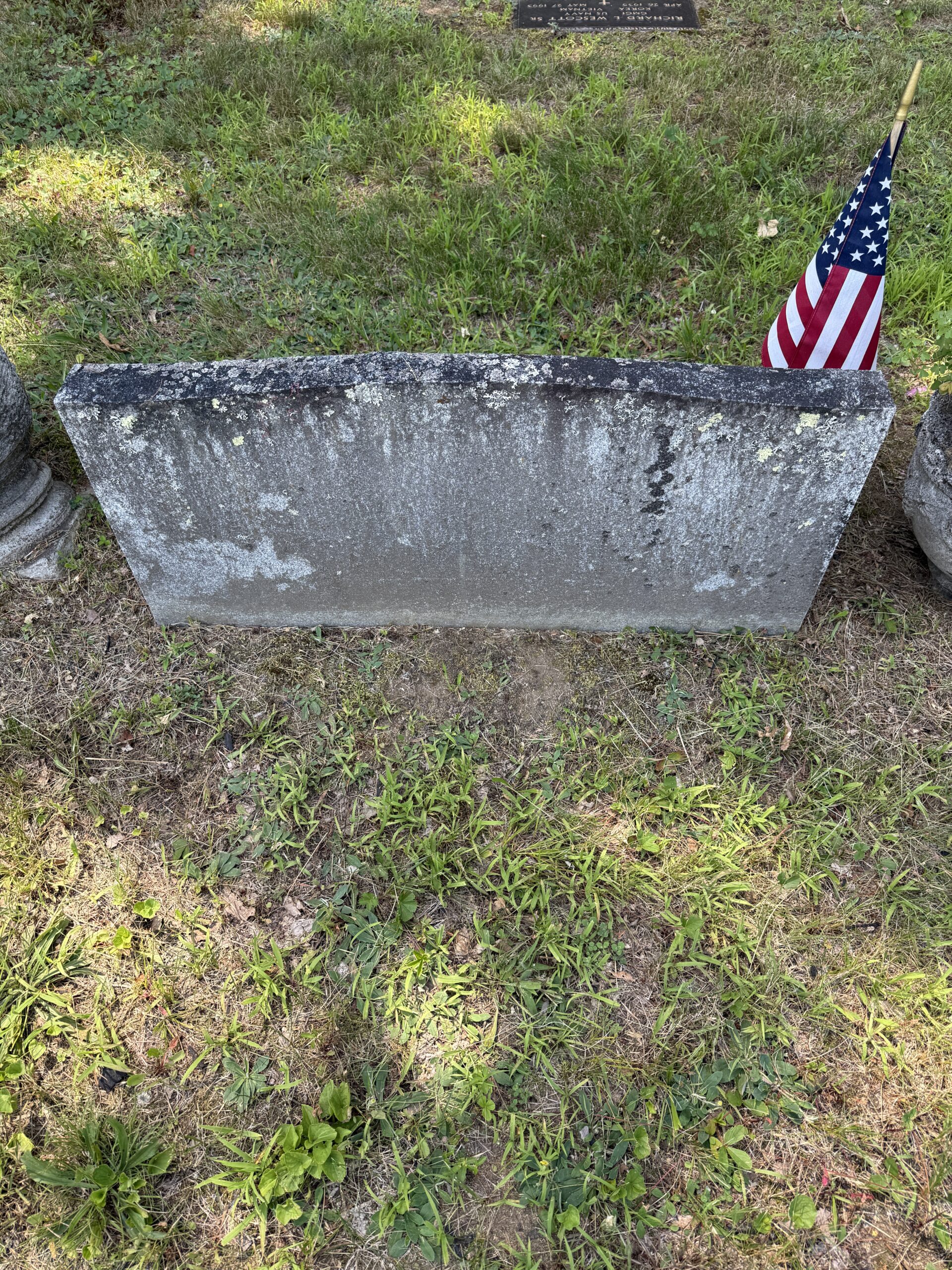
Lichen is one of the most common reasons a gravestone appears dirty, crusted, or spotted. It can attach tightly to stone and spread across inscriptions, edges, bases, and carved surfaces. Lichen often appears as white, gray, green, black, yellow, or orange patches.
Lichen thrives where moisture, shade, air movement, and organic material are present. Older marble, limestone, sandstone, and rougher granite surfaces can give lichen a place to attach. Once established, lichen can be difficult to remove safely without patience and preservation-first methods.
Families often notice lichen because it makes the headstone look neglected, but the bigger issue is readability. Names, dates, and symbols may become difficult to see beneath the growth.
What Causes Black Stains on Headstones?
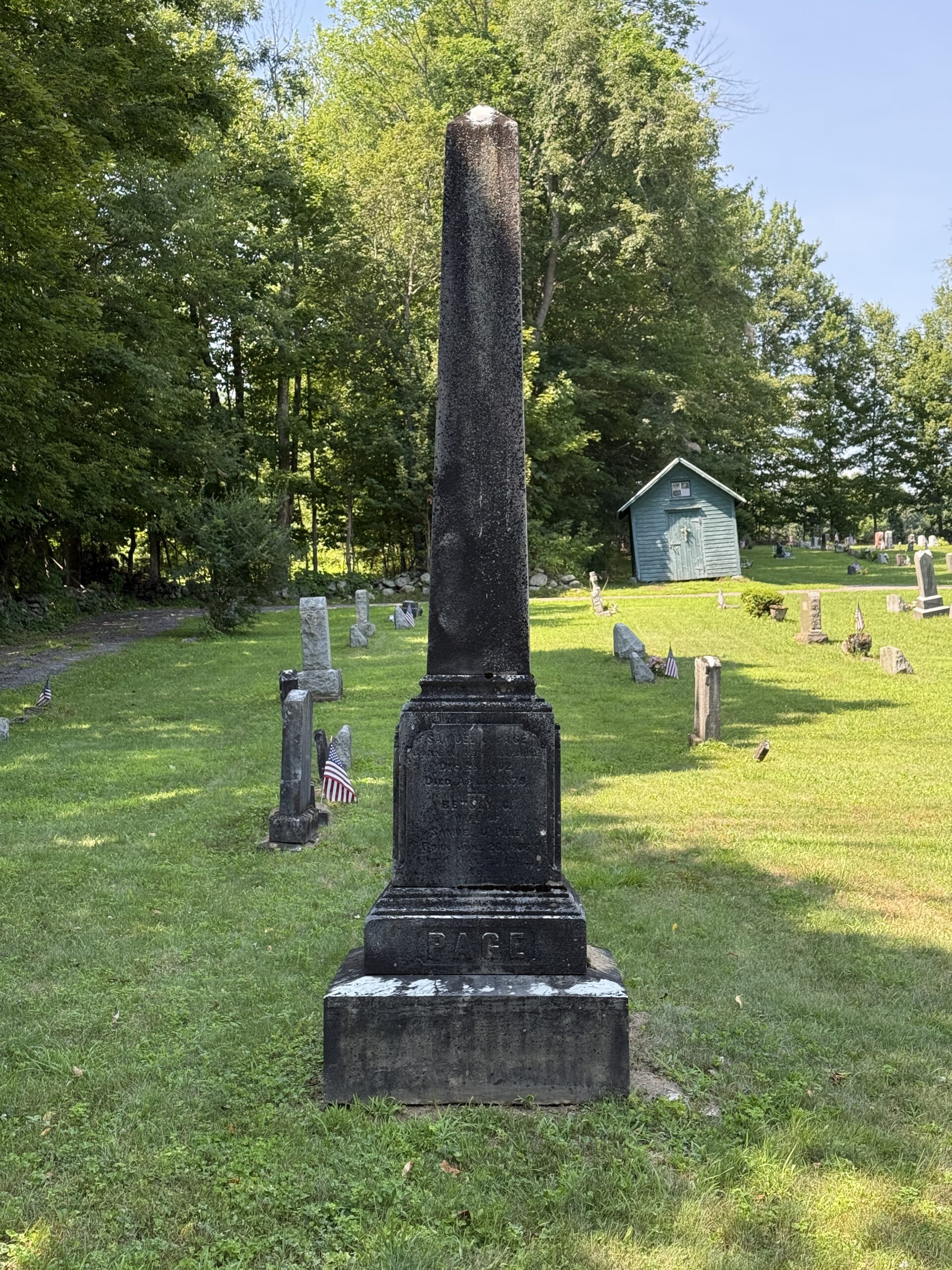
Black staining can come from several sources. It may be biological growth, pollution residue, moisture staining, minerals, tree debris, or old deposits that have bonded to the stone surface. On some monuments, black streaking follows the path of rainwater as it runs down the face of the stone.
Black staining is common on older upright stones, obelisks, marble monuments, granite markers, and cemetery sections with heavy tree cover. It may be worse where water runs over carved details, ledges, bases, and shaded areas that stay damp longer.
Not all black staining can be removed the same way. The stone type, age, surface condition, and source of the staining matter.
Why Some Gravestones Turn Green
Green staining is often related to algae, moss, damp conditions, shade, and organic material on the stone. A gravestone that stays wet after rain, sits near trees, or receives limited sunlight may develop green film or moss more easily than a marker in an open, dry section of the cemetery.
Flat headstones and low markers can be especially vulnerable because they collect moisture, grass clippings, leaves, pollen, soil, and mower debris. Bronze markers can also develop color changes and contrast loss due to oxidation and exposure.
Related guide: Why Is My Headstone Inscription Hard to Read?
Why Stone Type Matters
Different gravestone materials respond differently to staining, biological growth, weathering, and cleaning. The same stain may behave differently on marble than it does on granite, bronze, slate, limestone, or sandstone.
- Marble: often becomes soft, sugared, darkened, or worn over time and must be treated gently.
- Granite: durable but still affected by biological growth, staining, paint loss, and surface deposits.
- Limestone and sandstone: porous materials that may hold moisture and biological growth.
- Slate: can preserve inscriptions well but may split, flake, or delaminate if damaged.
- Bronze: can oxidize, darken, lose contrast, and collect debris in recessed areas.
- Flat markers: often collect more soil, grass, water, and mowing debris than upright monuments.
This is why gravestone cleaning should start with condition review, not with a one-size-fits-all cleaning method.
Why Pressure Washing Is Not the Answer
Pressure washing may make a gravestone look cleaner at first, but it can damage cemetery memorials. High pressure can erode soft stone, force water into cracks, loosen paint from engraved lettering, damage fragile surfaces, and accelerate future deterioration.
Pressure washing is especially risky on marble, limestone, sandstone, older granite, cracked stones, weathered inscriptions, fallen markers, unstable stones, and headstones with painted lettering. A gravestone may look “clean” immediately after pressure washing while actually losing surface detail, inscription contrast, or long-term stability.
Helpful guide: Pressure Washing Gravestones: Hidden Damage Explained
Safe Gravestone Cleaning Is Preservation-First
Preservation-first gravestone cleaning starts with the stone’s condition. The goal is not to make every memorial look new. The goal is to safely reduce harmful or heavy buildup, improve readability when possible, protect the inscription, and avoid unnecessary damage.
- Identify the stone material and condition before cleaning.
- Document the memorial before work begins.
- Avoid pressure washing, bleach, acidic cleaners, wire brushes, and abrasive tools.
- Use gentle methods appropriate for cemetery memorials.
- Allow biological cleaning products time to work when appropriate.
- Respect cemetery rules and family plot conditions.
- Provide before and after documentation when work is completed.
Related service: Professional Gravestone Cleaning
When Dirt and Growth Make an Inscription Hard to Read
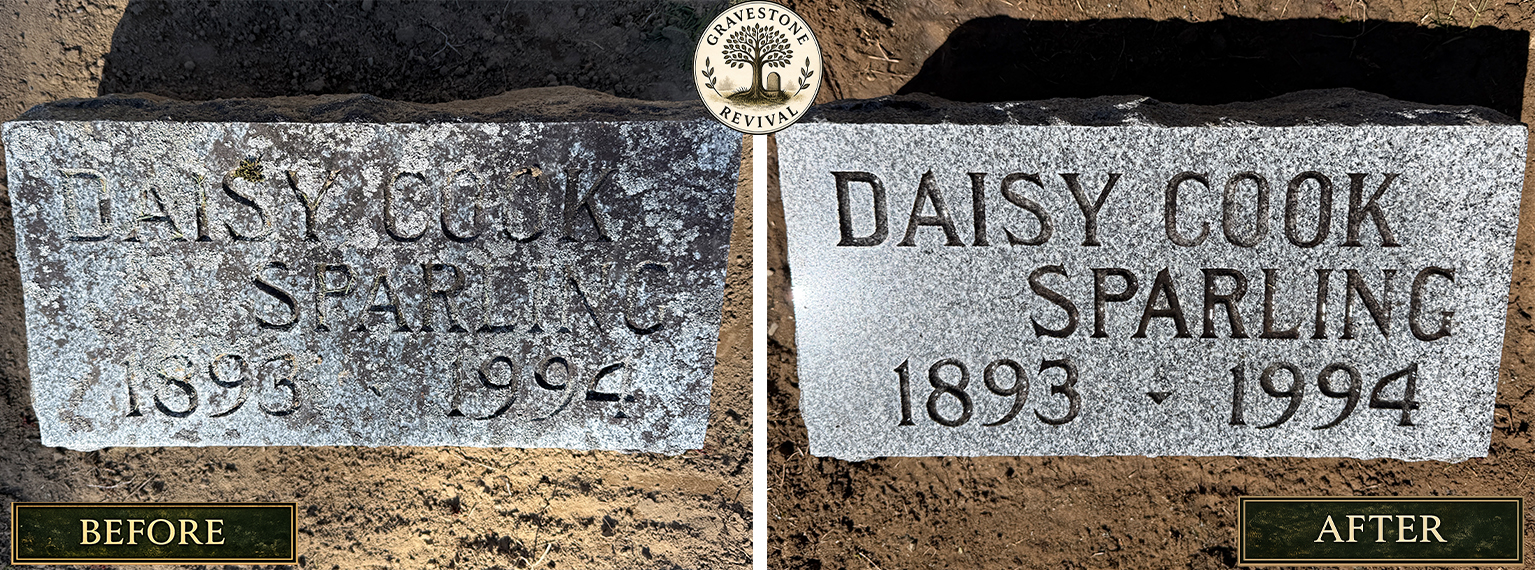
Stains and biological growth often hide names, dates, family inscriptions, veteran details, and cemetery symbols. Sometimes the inscription is still clear beneath the buildup. Other times the lettering has also been affected by weathering, paint loss, sun exposure, or past improper cleaning.
If the inscription is difficult to read, cleaning may help when buildup is the primary issue. If the original lettering paint has worn away, letter repainting may be appropriate on certain markers. If the stone is cracked, fallen, sunken, or unstable, documentation or repair may need to happen first.
Related services: Headstone Letter Repainting | Cemetery Condition Reports
What Not to Do With a Dirty Gravestone
Many gravestones are damaged by good intentions. Harsh cleaning can permanently change the surface, remove inscription detail, stain the stone, or make future preservation harder.
- Do not use pressure washing.
- Do not use bleach, vinegar, acidic cleaners, or household chemicals.
- Do not use wire brushes, metal tools, sandpaper, or abrasive pads.
- Do not scrape lichen aggressively from old or fragile stone.
- Do not use shaving cream, chalk, flour, wax, or paint to read inscriptions.
- Do not clean a cracked, unstable, flaking, or fallen stone without condition review.
- Do not assume every stain can or should be fully removed.
When a Condition Report Makes Sense
If a gravestone is heavily stained, covered with growth, difficult to read, cracked, sunken, leaning, or located in a cemetery you cannot visit regularly, a condition report may be the best first step.
A written gravesite condition report can document the memorial’s current condition, show the type of growth or staining present, note visible concerns, and help determine whether cleaning, lettering, leveling, repair, or documentation may be appropriate.
Related services: Cemetery Condition Reports | Family Memorial Documentation
FAQ: Dirty, Stained, or Green Gravestones
Why is my gravestone so dirty?
A gravestone may look dirty because of biological growth, lichen, moss, algae, mold, mildew, soil, pollution, tree debris, mineral deposits, oxidation, or long-term weather exposure.
What causes black stains on headstones?
Black stains can be caused by biological growth, moisture patterns, pollution, minerals, tree debris, or long-term deposits that have bonded to the stone surface.
Why is my headstone turning green?
Green staining is often caused by algae, moss, moisture, shade, grass debris, or biological film. It is common on damp, shaded, flat, or low cemetery markers.
Is lichen bad for gravestones?
Lichen can attach tightly to stone and hide inscriptions. It should not be aggressively scraped from fragile or weathered memorials. The stone type and condition should be reviewed before removal.
Can dirty gravestones be cleaned?
Often yes, when the memorial is stable and the stone condition allows cleaning. The safest approach is preservation-first cleaning, not pressure washing or harsh chemicals.
Can pressure washing clean a gravestone?
Pressure washing may remove visible buildup, but it can also damage stone, force water into cracks, remove lettering paint, and erode fragile surfaces. Gravestone Revival does not use pressure washing on cemetery memorials.
Does Gravestone Revival document cleaning work?
Yes. Before & After Photo Documentation and a Written Gravesite Condition Report are always provided for cemetery care projects.
Need Help With a Dirty or Stained Gravestone?
If a family gravestone is dirty, stained, blackened, green, covered with lichen, or difficult to read, Gravestone Revival can help document the condition and recommend whether preservation-first cleaning may be appropriate.
Send the cemetery name, town, family surname, memorial photos if available, and what kind of growth or staining you are seeing.
Before & After Photo Documentation and a Written Gravesite Condition Report are always provided.