Why Is My Gravestone Sinking?
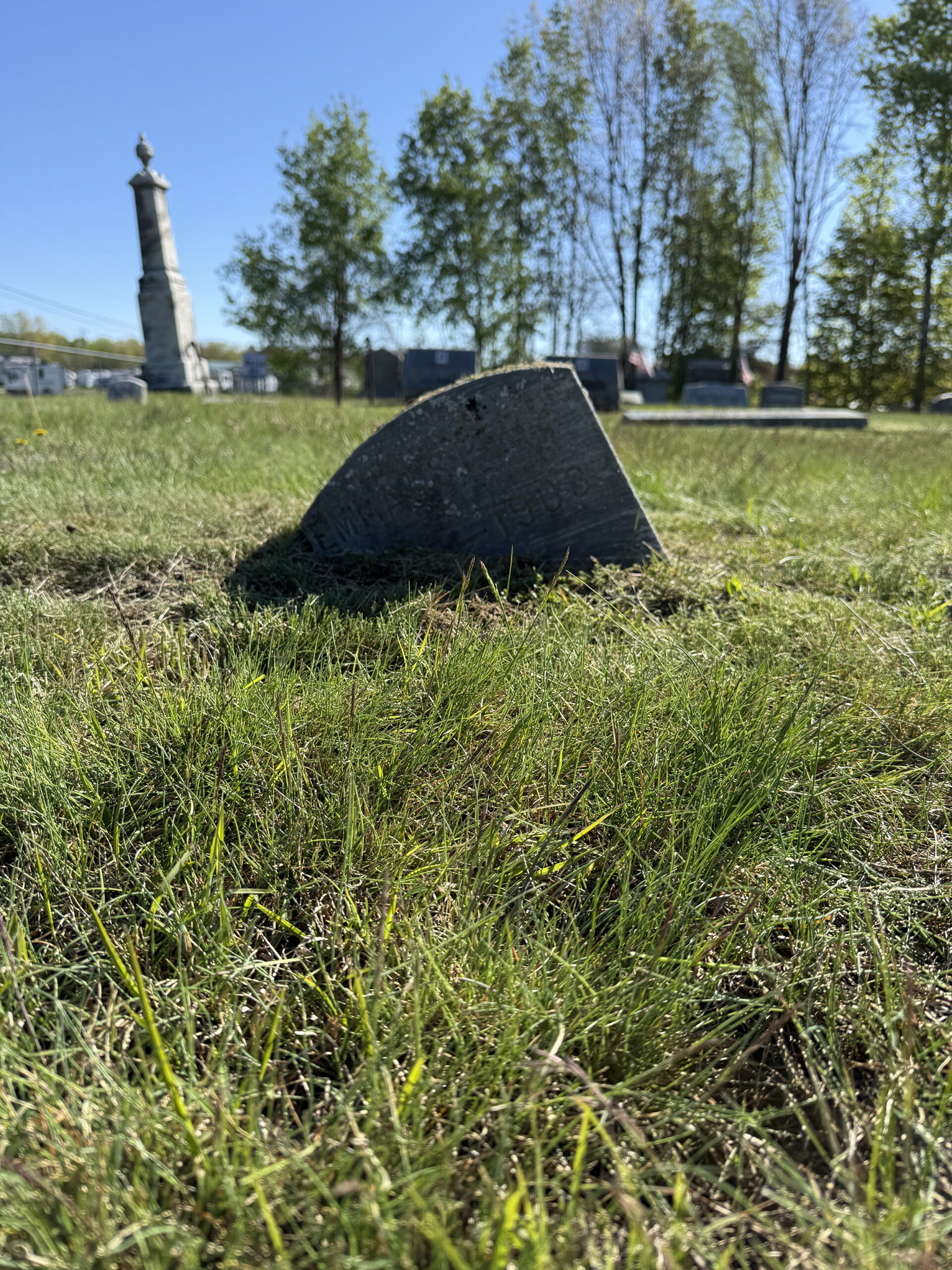
A gravestone sinks because the soil, base, or support beneath the marker has settled, shifted, eroded, or compacted over time. Common causes include grave subsidence, soil settlement, poor drainage, freeze-thaw movement, inadequate base preparation, mowing conditions, and long-term cemetery ground movement.
A sinking gravestone may become partly buried, harder to read, uneven, unstable, or more vulnerable to mower damage and water buildup. Flat markers, bronze markers, and smaller memorials are especially prone to sinking below grade.
Gravestone Revival provides preservation-first cemetery care throughout Saratoga County, Montgomery County, and Fulton County, New York. Before & After Photo Documentation and a Written Gravesite Condition Report are always provided for cemetery care projects.
Quick Answer: Why Do Gravestones Sink?
Gravestones sink when the ground beneath them loses support. This may happen because soil settles, water softens the ground, the grave surface subsides, freeze-thaw cycles move the base, roots disturb the soil, or the marker was not set on a stable foundation.
Sinking is common with flat grave markers because they sit close to the ground. Once a marker sinks below grade, grass, soil, leaves, and mowing debris can cover the edges and make the inscription harder to read.
Common Reasons a Gravestone Sinks
- Soil settlement: the ground beneath the marker compresses or shifts over time.
- Grave subsidence: the burial area settles as loosened soil compacts and air pockets close.
- Poor drainage: water softens soil and weakens support around the memorial.
- Freeze-thaw movement: water in the soil freezes, expands, thaws, and moves the marker.
- Inadequate base preparation: a marker set without proper support may settle unevenly.
- Erosion: rain, runoff, slope, or missing soil can remove support around the marker.
- Tree roots: roots can lift, push, or disturb soil near the marker.
- Mowing and maintenance conditions: repeated ground-level contact can expose or cover sunken markers.
- Age: older cemetery markers may settle after decades of weather, ground movement, and cemetery maintenance.
What Is Grave Subsidence?
Grave subsidence is the sinking or settling of the ground over or near a burial plot. It can happen naturally as loosened soil compacts, air pockets close, water moves through the ground, and the grave surface settles downward over time.
Some settling is normal in cemeteries. The concern begins when subsidence affects the memorial itself. A flat marker may drop below grade. An upright marker may lean because one side of the base has settled. A family plot may develop uneven ground, water pooling, or exposed edges around the memorial.
Related guide: Why Are Gravestones Leaning?
Why Flat Markers Sink Below Grade
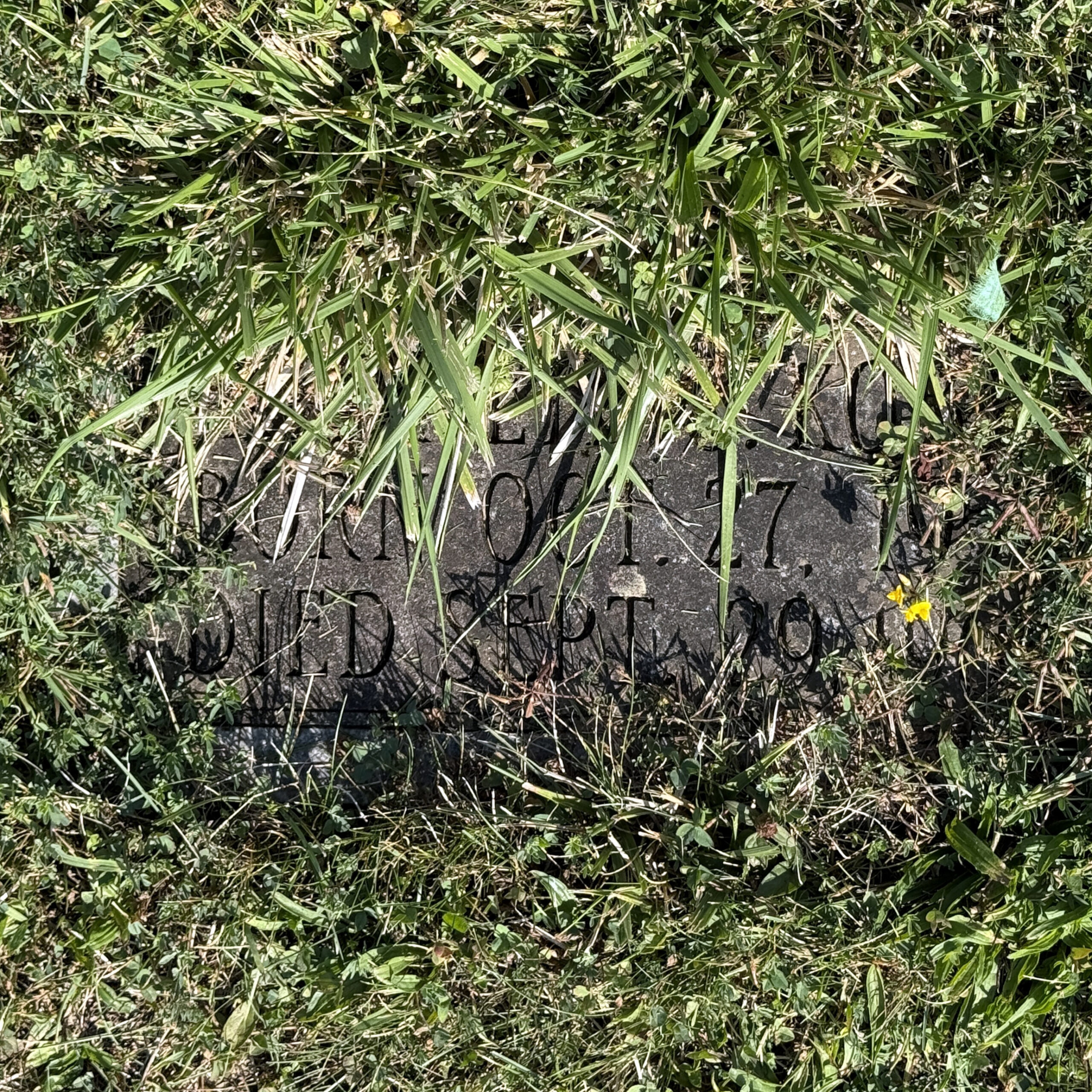
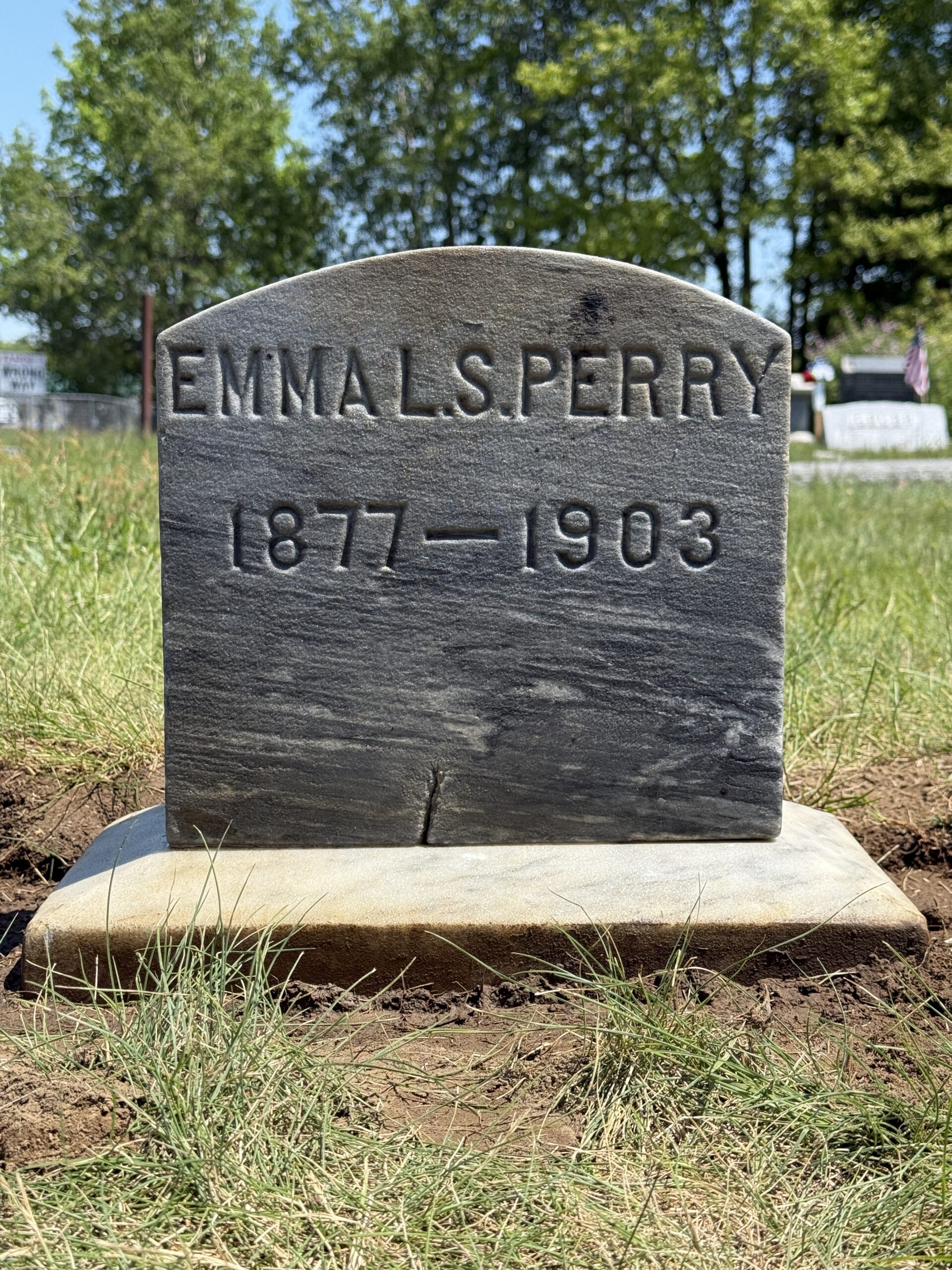
Flat markers and bronze grave markers are especially vulnerable because they sit close to the soil. When the ground settles, the marker can drop below the surrounding grass. Over time, rain, soil, leaves, grass clippings, and mowing debris can cover the edges or even part of the inscription.
A flat marker that sits below grade may collect water and biological growth more easily. It may also become harder for family members to locate, photograph, read, or clean safely.
Related service: Gravestone Leveling & Reset
Why Freeze-Thaw Cycles Make Sinking Worse
In New York cemeteries, freeze-thaw movement can make sinking worse. Water enters the soil around the marker. When it freezes, it expands and moves the ground. When it thaws, the soil settles again. Over many seasons, this can shift a marker, lower one side, or create uneven support beneath the memorial.
Freeze-thaw movement is especially concerning when combined with poor drainage, older soil, previous settling, or a marker that already sits below grade.
How Sinking Can Affect the Inscription
A sinking gravestone often becomes harder to read. Soil can cover the lower edge. Grass can grow over names or dates. Water and debris can collect in engraved letters. Bronze markers may lose contrast when dirt, oxidation, and ground moisture collect around the surface.
If the inscription is already shallow, worn, or faded, sinking can make the problem worse. Documentation should happen before cleaning, leveling, or reset work begins.
Helpful guide: Why Is My Headstone Inscription Hard to Read?
When a Sinking Gravestone Becomes a Problem
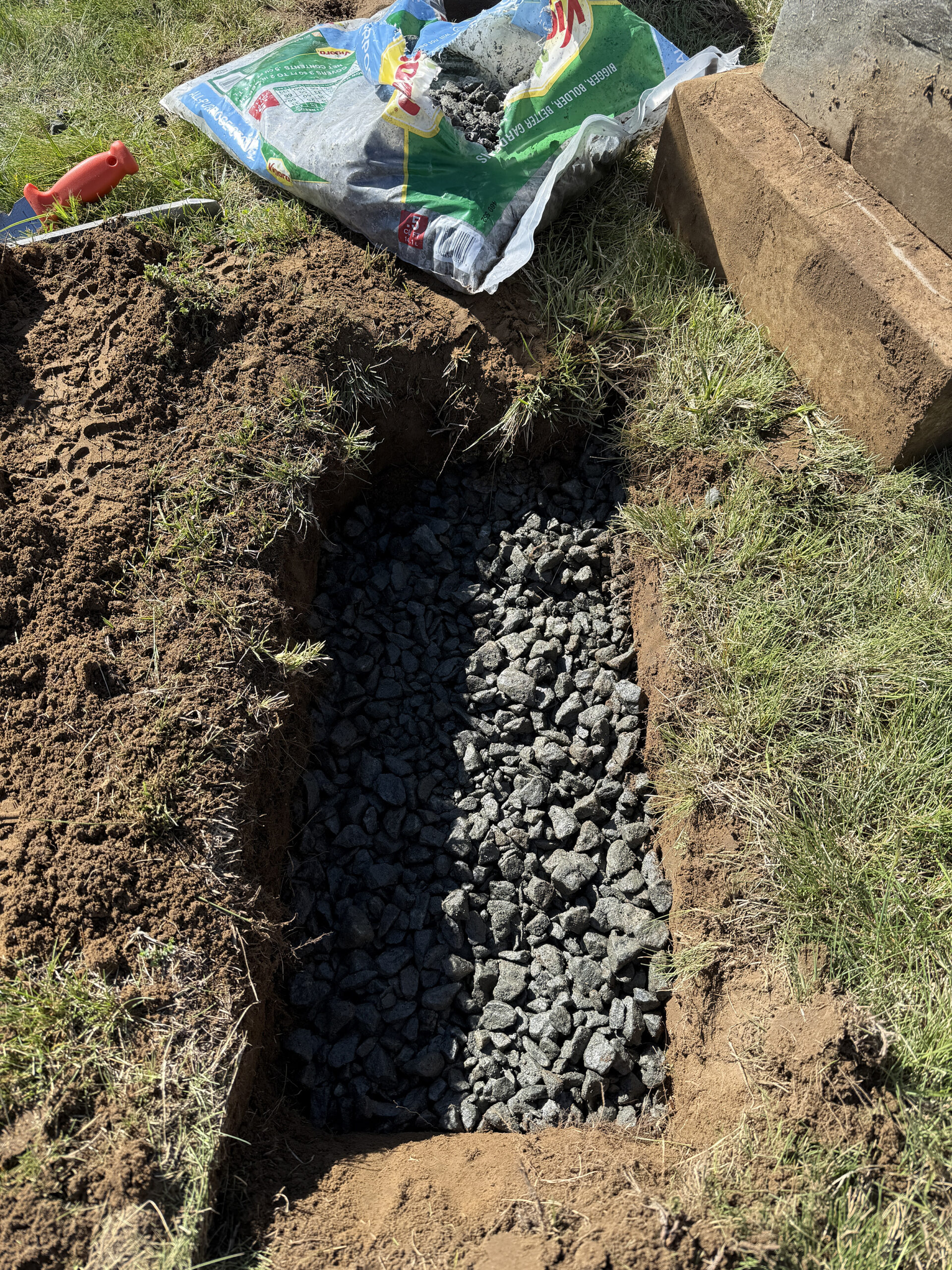
A slightly low marker may not be urgent, but sinking becomes a concern when the marker is difficult to read, collects water, sits below grade, creates a trip hazard, is struck by mowing equipment, or causes an upright stone to lean.
- The marker is partly buried by soil or grass.
- The inscription is becoming covered or hard to read.
- Water pools around or on top of the marker.
- The stone has become uneven, tilted, or unstable.
- The marker is below mowing height and may be struck.
- The base is separated or one side has dropped.
- Nearby ground shows visible subsidence or depression.
- The marker has cracks, chips, or previous repair concerns.
Can a Sunken Gravestone Be Raised or Reset?
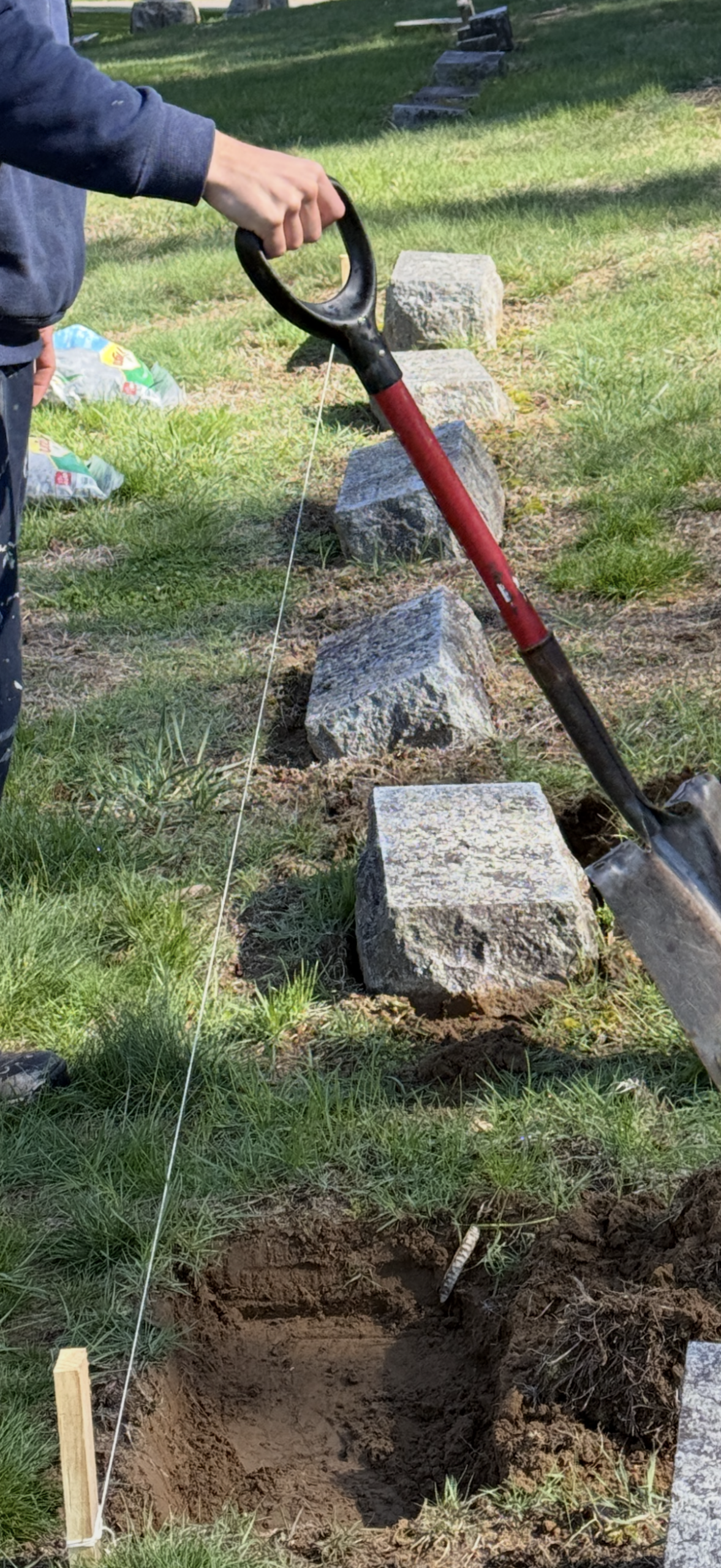
Often, yes. A sunken gravestone may be raised, leveled, and reset when the cemetery rules, marker condition, size, base, and site conditions allow it. The process usually involves documenting the marker, carefully exposing the edges, lifting or repositioning the stone, preparing a stable base, leveling the marker, and documenting the final result.
Reset work should not be rushed. If the marker is cracked, broken, unstable, or connected to a larger base problem, repair or stabilization may need to be considered first.
Related services: Gravestone Leveling & Reset | Headstone Repair & Stabilization
What Not to Do With a Sunken Gravestone
A sunken gravestone may be heavier, more fragile, or more unstable than it appears. Well-intentioned attempts to fix it can damage the marker or violate cemetery rules.
- Do not pry up the marker with metal tools.
- Do not pull, drag, or lift the stone without proper review.
- Do not fill around the marker with random soil.
- Do not wedge bricks, rocks, or wood under the memorial.
- Do not use concrete as a quick fix.
- Do not pressure wash a sunken or unstable marker.
- Do not dig without cemetery approval.
- Do not move broken pieces before documenting them.
The safest first step is documentation and condition review.
Why Documentation Matters Before Leveling or Resetting
Before a sinking gravestone is lifted, leveled, cleaned, or reset, the memorial should be documented. Photos help show the original condition, visible sinking, inscription readability, surrounding cemetery context, and whether there are related problems such as cracks, staining, biological growth, or leaning.
- Full memorial photographs
- Close-up inscription photos
- Photos showing how far the marker has sunk
- Images of soil, grass, water, or debris around the marker
- Nearby family plot context
- Written notes about visible condition concerns
- Before and after photos if work is completed
Related services: Cemetery Condition Reports | Family Memorial Documentation
Out-of-Town Families Often Notice Sinking Late
Many families do not realize a gravestone is sinking until they visit after months or years away. Others discover it through a relative, cemetery staff member, genealogy visit, or photo.
If you cannot visit regularly, current cemetery documentation can show whether the marker is sinking, leaning, dirty, cracked, hard to read, or in need of leveling, cleaning, repair, or condition reporting.
Helpful resources: Out-of-Town Cemetery Care | Family Plot Care
FAQ: Why Is My Gravestone Sinking?
Why is my family gravestone sinking?
A family gravestone may sink because of soil settlement, grave subsidence, poor drainage, freeze-thaw movement, erosion, inadequate base preparation, or long-term cemetery ground movement.
Can a sunken gravestone be fixed?
Often yes. A sunken gravestone may be raised, leveled, and reset when cemetery rules, marker condition, size, base, and site conditions allow it.
Why do flat grave markers sink?
Flat markers sit close to the ground, so soil settlement, grass growth, water, mowing debris, and freeze-thaw movement can cause them to drop below grade over time.
Is a sinking gravestone dangerous?
It can be. A sunken marker can become a trip hazard, collect water, be struck by mowing equipment, or cause an upright stone to lean if the base settles unevenly.
Should I dig around a sunken gravestone myself?
No. Digging, prying, or lifting a marker without proper review can damage the stone, violate cemetery rules, or create safety issues.
Does Gravestone Revival document leveling and reset work?
Yes. Before & After Photo Documentation and a Written Gravesite Condition Report are always provided for cemetery care projects.
Need Help With a Sinking Gravestone?
If a family gravestone is sinking, settling, partly buried, hard to read, leaning, or below grade, Gravestone Revival can help document the condition and recommend whether leveling, resetting, cleaning, repair, or a cemetery condition report may be appropriate.
Send the cemetery name, town, family surname, memorial photos if available, and what you are seeing at the gravesite.
Before & After Photo Documentation and a Written Gravesite Condition Report are always provided.