Why Is Stuff Growing on My Headstone?
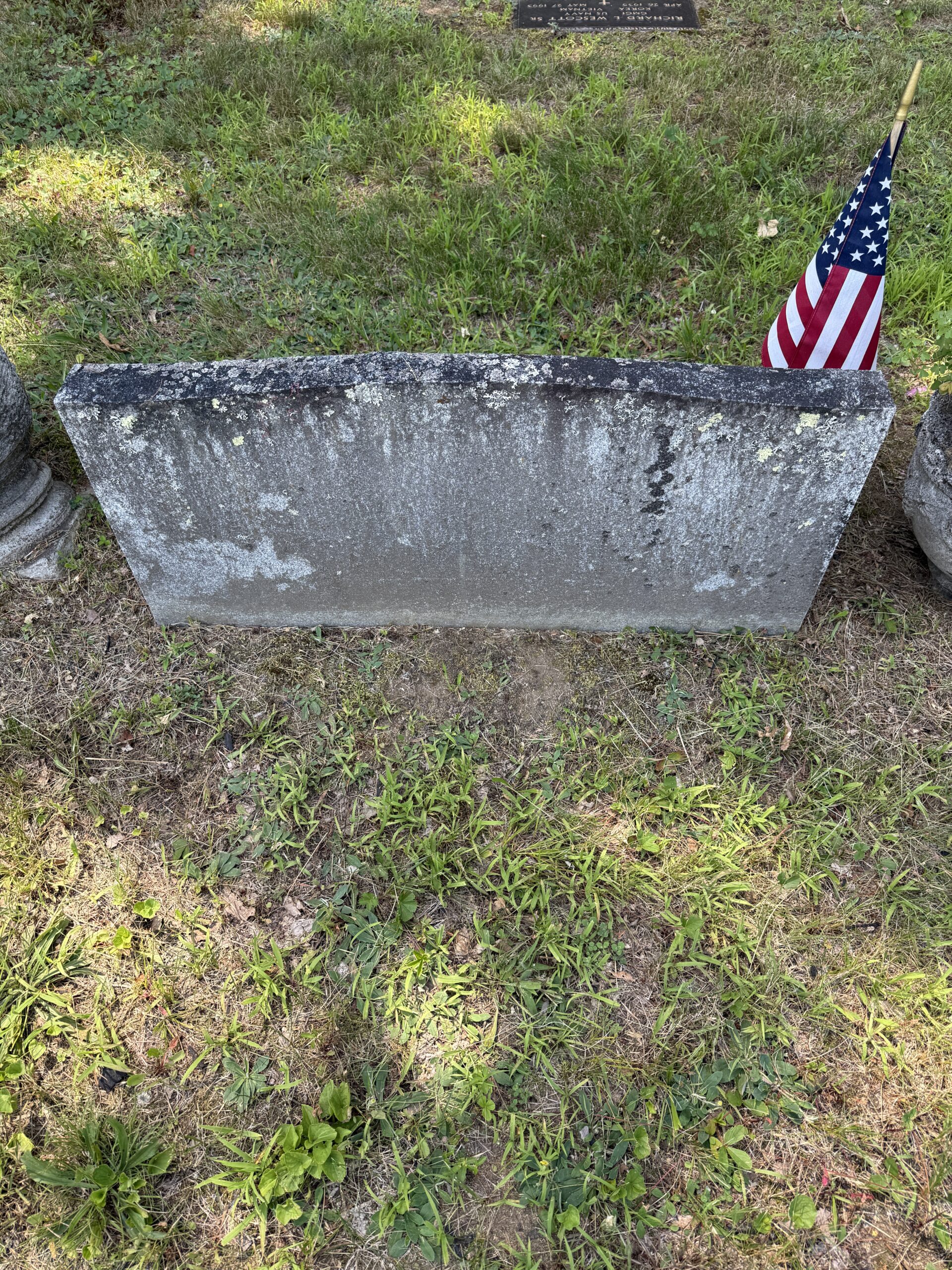
The green, black, white, gray, orange, mossy, or crusty material growing on a headstone is often biological growth such as lichen, moss, algae, mildew, or biofilm. It can grow where moisture, shade, tree cover, rough stone texture, soil splashback, and cemetery weather exposure create the right conditions.
What looks like “dirt” may actually be living growth attached to the stone surface. It can hide names, dates, symbols, veteran inscriptions, and family details, and it should be handled with preservation-first cemetery cleaning methods.
Gravestone Revival provides preservation-first cemetery care throughout Saratoga County, Montgomery County, and Fulton County, New York. Before & After Photo Documentation and a Written Gravesite Condition Report are always provided for cemetery care projects.
Quick Answer: What Is Growing on My Headstone?
The material growing on a headstone may be lichen, moss, algae, mildew, biofilm, or other biological growth. It may appear green, black, white, gray, orange, yellow, crusty, powdery, slimy, fuzzy, or patchy depending on the growth type, stone material, moisture, shade, and age of the memorial.
Do not scrape, pressure wash, bleach, or aggressively scrub the growth. The safest first step is documentation and a preservation-first cleaning review.
Common Things That Grow on Headstones
- Lichen: crusty, patchy, gray, white, green, yellow, orange, or black growth that attaches tightly to stone.
- Moss: soft green growth often found on shaded, damp, horizontal, or low areas.
- Algae: green, dark, or slippery film that can spread across stone where moisture remains.
- Mildew or mold-like growth: dark, cloudy, or blotchy growth that may appear in damp cemetery sections.
- Biofilm: a thin biological layer that can hold moisture, soil, and staining against the stone.
- Black biological staining: dark streaks or blotches that may follow moisture paths.
- Soil and organic buildup: dirt, pollen, leaves, tree debris, and grass clippings that support growth.
Why Lichen Grows on Gravestones
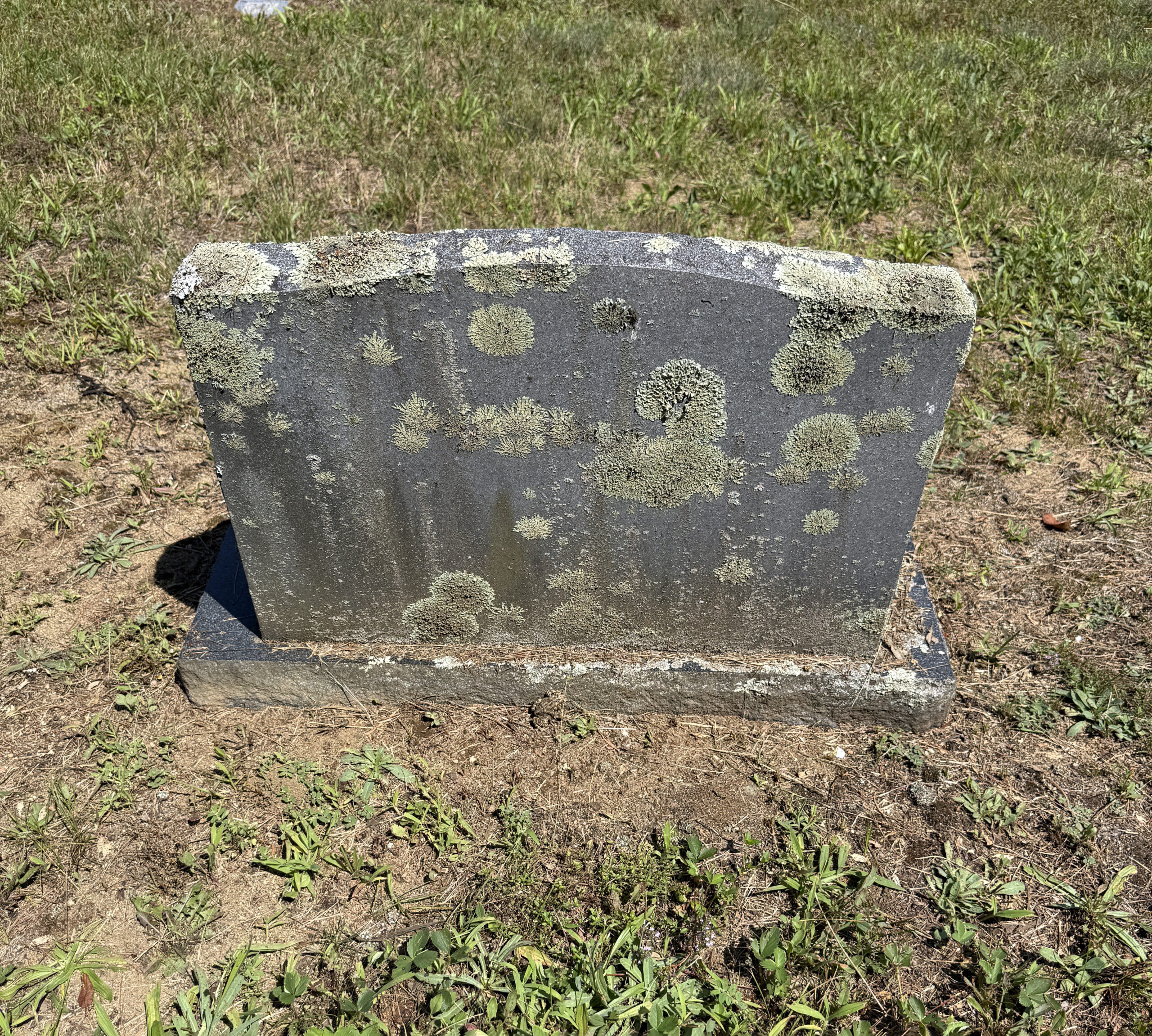
Lichen is one of the most common types of growth found on gravestones. It can appear as crusty spots, raised patches, flat stains, or rough growth attached to the surface. Lichen often appears white, gray, green, yellow, orange, or black.
Lichen can grow on older marble, limestone, sandstone, slate, and granite, especially where the stone surface is rough, shaded, damp, or exposed to trees and organic debris. Because it can attach tightly, it should not be aggressively scraped from fragile stone.
Families often notice lichen because it makes a memorial look neglected or makes the inscription harder to read. Cleaning may help, but it should be done with the gentlest appropriate method for the stone and condition.
Why Moss Grows on Headstones
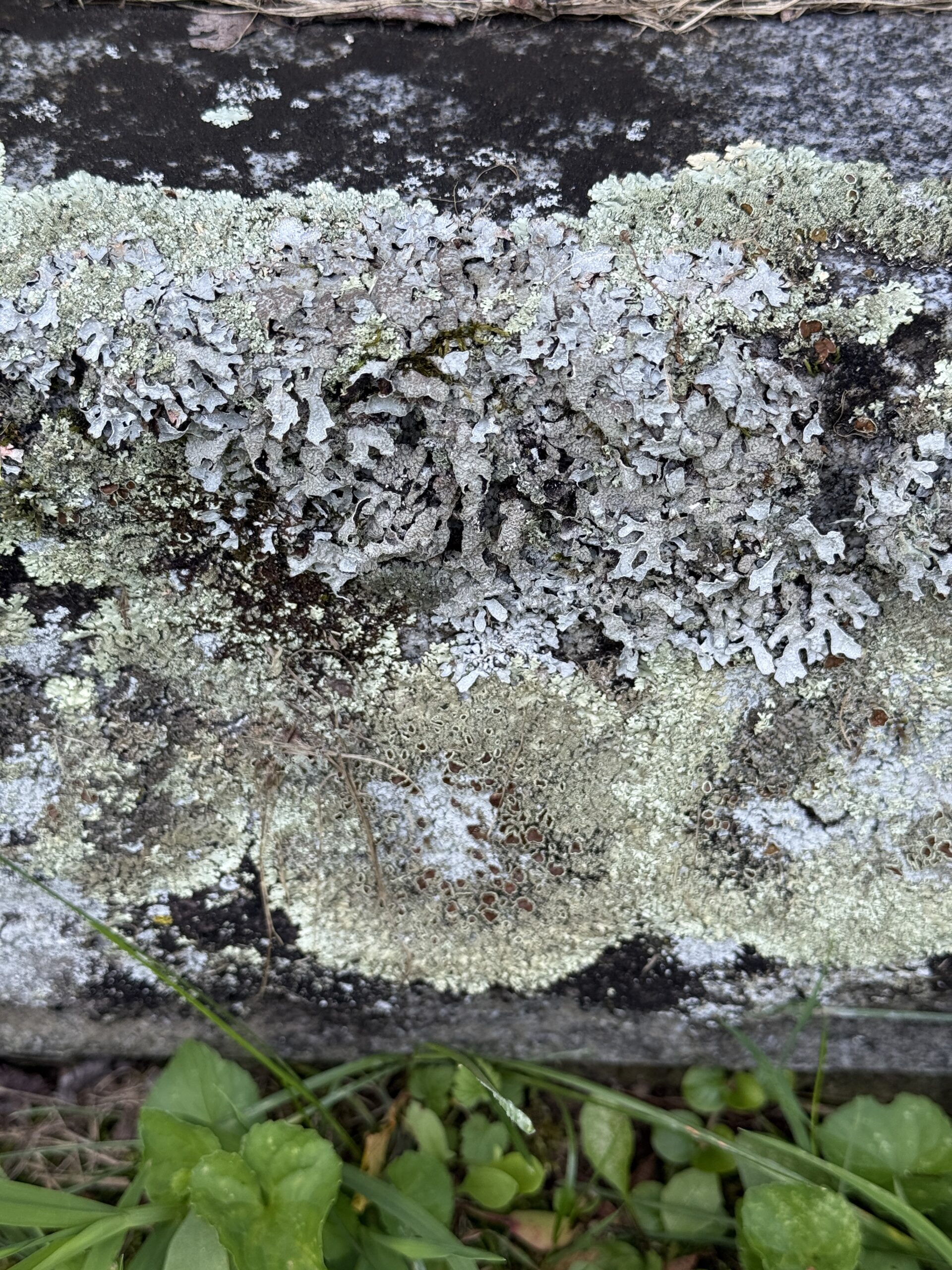
Moss often grows where the cemetery setting stays damp and shaded. It may appear around bases, edges, flat markers, fallen stones, low areas, and stones near trees or heavy vegetation.
Moss can hold moisture against the memorial and trap soil, leaves, and organic material. On flat markers, moss may grow around the edges and help hide the inscription or make the marker harder to locate.
Moss should be removed carefully. Pulling or scraping aggressively can damage weathered stone or loosen fragile material.
Why Algae Turns a Headstone Green
Green growth on a headstone is often algae or a moisture-related biological film. It can spread across stone faces, bases, flat markers, bronze markers, and shaded surfaces that stay wet after rain.
Algae may appear as a green film, dark green staining, or a slippery surface. It is common in shaded cemeteries, under trees, near low areas, around irrigation, or on stones that do not dry quickly.
If green growth is hiding an inscription, safe cleaning may improve readability, but the stone should still be reviewed for material, age, cracks, and stability first.
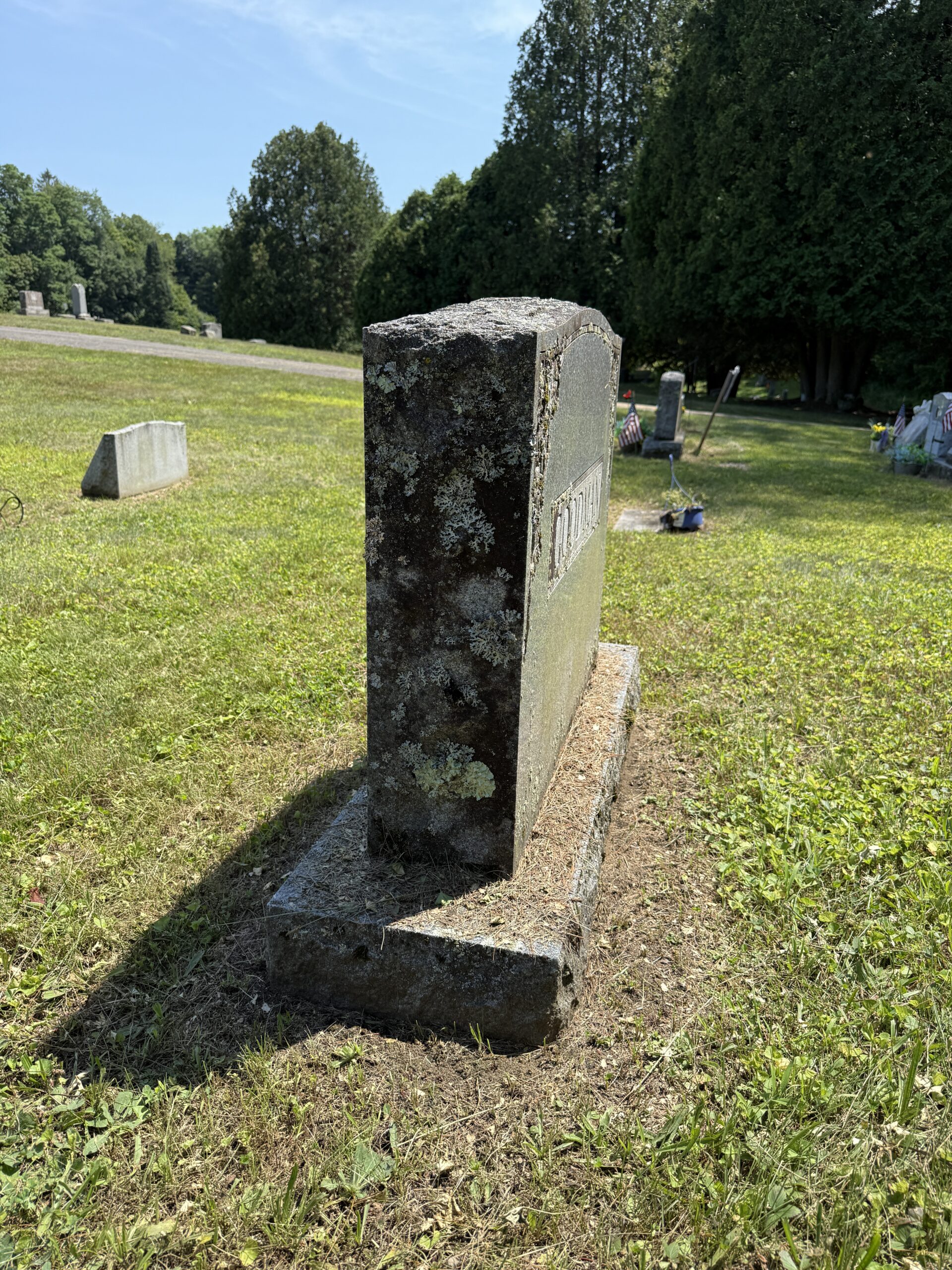
What Are the White, Gray, or Crusty Spots on a Gravestone?
White, gray, or crusty spots may be lichen, mineral deposits, weathering, biological growth, or surface residue. On older stones, these patches can be difficult to identify without looking closely at the stone type, texture, location, and surrounding cemetery conditions.
Crusty growth should not be scraped away with metal tools, knives, screwdrivers, wire brushes, or abrasive pads. If the stone is marble, limestone, sandstone, slate, cracked, flaking, or weathered, aggressive removal can cause permanent damage.
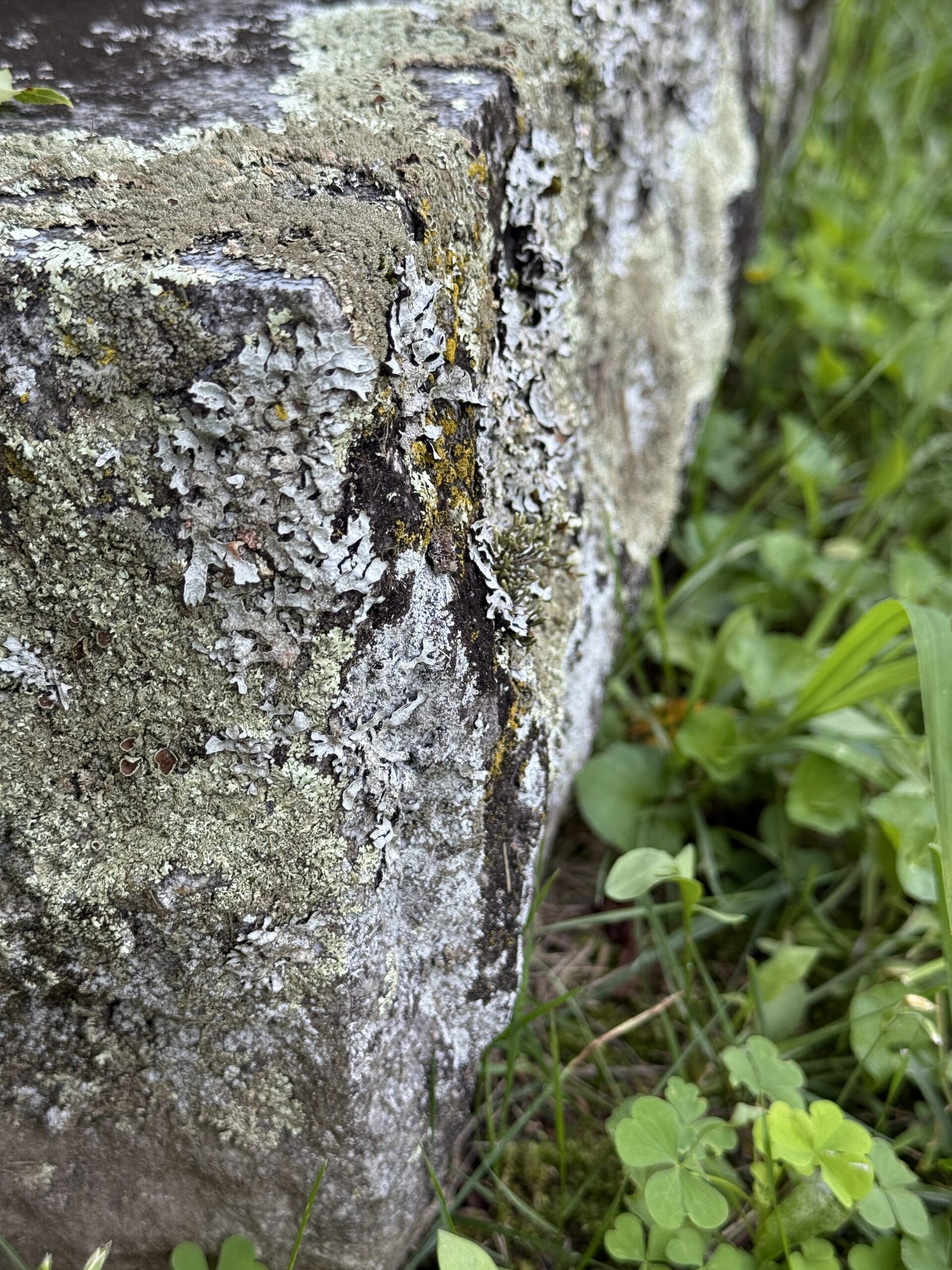
What Causes Black Growth or Black Streaks?
Black growth or black streaking may come from biological growth, moisture patterns, pollution, tree debris, minerals, or long-term staining. On upright monuments and obelisks, black streaks often follow the path of rainwater as it runs down the stone face.
Black staining is common on older stones, monuments with ledges, shaded cemetery sections, and markers under trees. It may hide carved details and reduce inscription contrast.
Related guide: Why Is My Gravestone So Dirty?
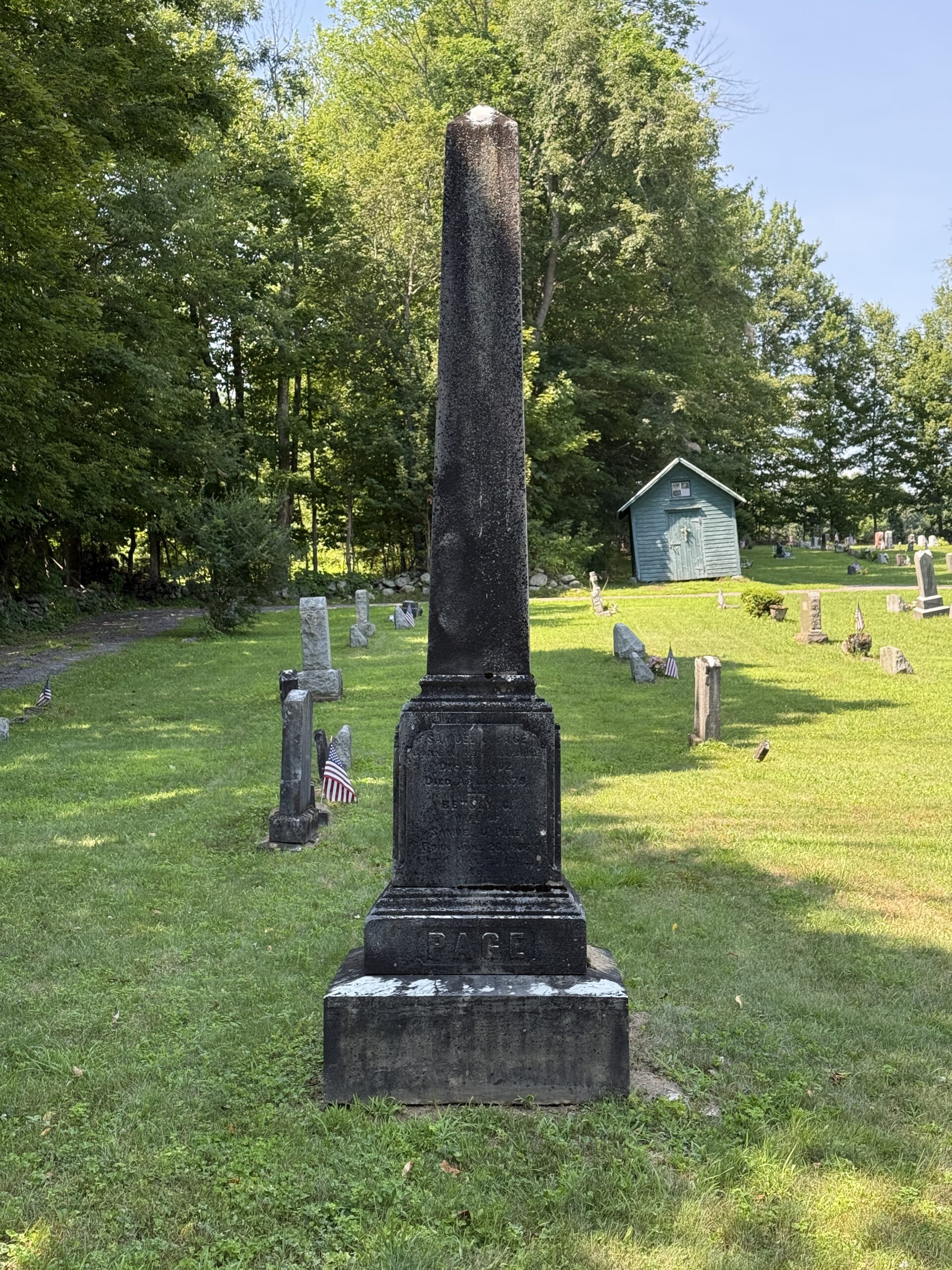
Why Flat Markers and Bronze Markers Get More Growth
Flat markers and bronze grave markers sit close to grass, soil, water, leaves, pollen, mower debris, and shade. Because they face upward, they collect more moisture and organic material than many upright monuments.
Flat granite markers may collect soil and growth inside engraved letters. Bronze markers can darken, oxidize, collect debris, and lose contrast. If a flat marker sinks below grade, growth and staining may become worse because water and soil remain around the surface longer.
Related guide: Why Is My Gravestone Sinking?
Why Shade, Moisture, and Trees Matter
Biological growth is more likely when a gravestone stays damp. Shade slows drying. Trees drop leaves, sap, pollen, seeds, and organic debris. Low cemetery areas may hold water longer after rain. Rough or weathered stone gives growth more surface texture to attach to.
That is why two memorials in the same cemetery may look very different. One marker may be open to sun and dry quickly, while another sits under trees and becomes covered with growth.
Can Growth Damage a Headstone?
Biological growth can hold moisture against stone, hide cracks, cover inscriptions, trap soil, and make the surface harder to inspect. On fragile or weathered stone, the biggest risk is often not only the growth itself but aggressive attempts to remove it.
Scraping, wire brushing, pressure washing, and harsh chemicals can damage a memorial more quickly than patient cleaning. The right approach depends on the stone material, condition, age, growth type, and cemetery rules.
Helpful guide: Pressure Washing Gravestones: Hidden Damage Explained
When Growth Makes an Inscription Hard to Read
Growth often collects in carved letters, around names, across dates, and over symbols. Lichen, algae, moss, and black staining can reduce contrast and make inscriptions difficult to read from a distance or in photographs.
Sometimes the lettering is still intact beneath the growth. Other times the inscription is also affected by weathering, worn engraving, faded paint, sinking, or previous improper cleaning.
Helpful guide: Why Is My Headstone Inscription Hard to Read?
What Not to Do With Growth on a Headstone
Many gravestones are damaged by good intentions. If something is growing on a headstone, avoid quick fixes that can permanently harm the memorial.
- Do not use pressure washing.
- Do not use bleach, vinegar, acidic cleaners, or household chemicals.
- Do not use wire brushes, metal tools, sandpaper, or abrasive pads.
- Do not scrape lichen aggressively from old or fragile stone.
- Do not use shaving cream, chalk, flour, wax, or paint to make inscriptions readable.
- Do not clean a cracked, unstable, flaking, or fallen stone without condition review.
- Do not assume every stain or growth can be safely removed the same way.
When Professional Gravestone Cleaning May Help
Professional gravestone cleaning may help when growth is covering the stone, hiding the inscription, spreading across the memorial, or making the family plot look neglected. Cleaning should begin with documentation and a review of the stone’s condition.
The goal is not to make an old headstone look new. The goal is to safely reduce heavy growth, improve readability when possible, protect the inscription, and preserve the dignity of the memorial.
Related service: Professional Gravestone Cleaning
Why Documentation Comes First
Before growth is removed, the memorial should be documented. Photos help show the original condition, inscription visibility, type of growth, staining patterns, cracks, sinking, leaning, and any related cemetery concerns.
- Full memorial photographs
- Close-up photos of the growth
- Inscription and symbol documentation
- Photos of shaded areas, base, and edges
- Notes about stone condition and visible concerns
- Before and after photos if cleaning is completed
Related services: Cemetery Condition Reports | Family Memorial Documentation
FAQ: Growth on Headstones
What is the green stuff growing on my headstone?
Green growth is often algae, moss, lichen, or biological film. It is common on damp, shaded, flat, or low cemetery markers.
What are the white or gray spots on a gravestone?
White or gray spots may be lichen, mineral deposits, biological growth, weathering, or surface residue. The stone type and condition should be reviewed before removal.
Is lichen bad for a headstone?
Lichen can hide inscriptions and hold moisture against the surface. It should not be aggressively scraped, especially from fragile, old, or weathered stone.
Can moss be removed from a gravestone?
Often yes, but it should be removed carefully using preservation-first methods. Do not rip, scrape, pressure wash, or use harsh chemicals.
Can pressure washing remove growth from a headstone?
Pressure washing may remove visible growth, but it can damage stone, force water into cracks, remove lettering paint, and erode fragile surfaces. Gravestone Revival does not use pressure washing on cemetery memorials.
Does Gravestone Revival clean biological growth from gravestones?
Yes, when the stone condition, cemetery rules, and project scope allow it. Cleaning is preservation-first and includes documentation.
Need Help With Growth on a Family Headstone?
If a family headstone has green growth, black staining, white spots, lichen, moss, algae, mildew, or crusty buildup, Gravestone Revival can help document the condition and recommend whether preservation-first gravestone cleaning may be appropriate.
Send the cemetery name, town, family surname, memorial photos if available, and what kind of growth or staining you are seeing.
Before & After Photo Documentation and a Written Gravesite Condition Report are always provided.