How Much Does Gravestone Repair Cost?
What Families Should Know Before Repairing a Headstone or Memorial
Gravestone repair cost depends on the type of damage, stone material, size, weight, cemetery rules, access, foundation condition, and whether the memorial needs documentation, cleaning, leveling, stabilization, or repair.
A cracked flat marker, a broken tablet stone, a leaning upright monument, a sunken grave marker, and a failed previous repair are completely different projects. That is why repair costs can vary widely.
This guide explains the common cost factors families should understand before requesting gravestone repair, headstone stabilization, leveling, reset work, or cemetery condition reporting.
Gravestone Revival provides preservation-first cemetery care throughout Saratoga County, Montgomery County, and Fulton County, New York. Before & After Photo Documentation and a Written Gravesite Condition Report are always provided for cemetery care projects.
Quick Answer: What Does Gravestone Repair Usually Depend On?
Gravestone repair cost depends on what is actually wrong with the memorial. A small chip may need a very different approach than a cracked tablet stone, a broken headstone, a leaning monument, a sunken flat marker, or a base that has shifted out of level.
The most important cost factors are damage type, stone material, marker size, weight, stability, cemetery access, cemetery permission, previous repairs, and whether the work requires cleaning, leveling, stabilization, resetting, documentation, or repair materials.
The safest first step is usually documentation. Clear photos and condition notes help determine whether the memorial needs repair, stabilization, leveling, cleaning, monitoring, or cemetery approval before work begins.
General Gravestone Repair Cost Ranges People May See
Important: the ranges below are broad general examples only. They are not Gravestone Revival prices, quotes, guarantees, or a substitute for an estimate. Actual cost depends on cemetery rules, stone condition, location, access, size, material, damage type, and project scope.
| Situation | Broad range people may see |
|---|---|
| Condition review or documentation | Varies by scope |
| Cleaning before repair or inspection | $200–$400+ |
| Leveling or resetting a smaller marker | $300–$800+ |
| Crack repair or stabilization | $400–$1,000+ |
| Broken stone repair or multiple pieces | $500–$2,000+ |
| Major restoration, heavy reset, or complex stabilization | $1,000–$3,000+ |
These ranges are useful only for orientation. A cracked flat marker, a leaning upright headstone, a broken historic marble tablet, and a heavy monument with foundation failure are not the same kind of project.
Why There Is No One-Size-Fits-All Repair Price
Gravestone repair is not like replacing a standard household part. Cemetery memorials differ in age, material, size, weight, installation method, foundation condition, cemetery rules, and family significance.
One memorial may need cleaning and documentation only. Another may need a reset because the base has shifted. Another may need stabilization because the stone is cracked or broken. Another may be too fragile for repair until the condition is reviewed more carefully.
The right question is not only “How much does repair cost?” The better question is: What is actually wrong with the memorial, and what is the safest preservation-first next step?
Common Gravestone Repair Situations
Cracked Gravestones
Cracks may be caused by freeze-thaw cycles, soil movement, impact damage, base movement, trapped moisture, or failed previous repairs. A hairline crack is different from a structural crack that runs through the stone.
Some cracks can be stabilized or repaired. Others should be documented and monitored first, especially when the stone is fragile, flaking, leaning, or still moving.
Helpful guide: What Causes Gravestones to Crack?
Broken Headstones
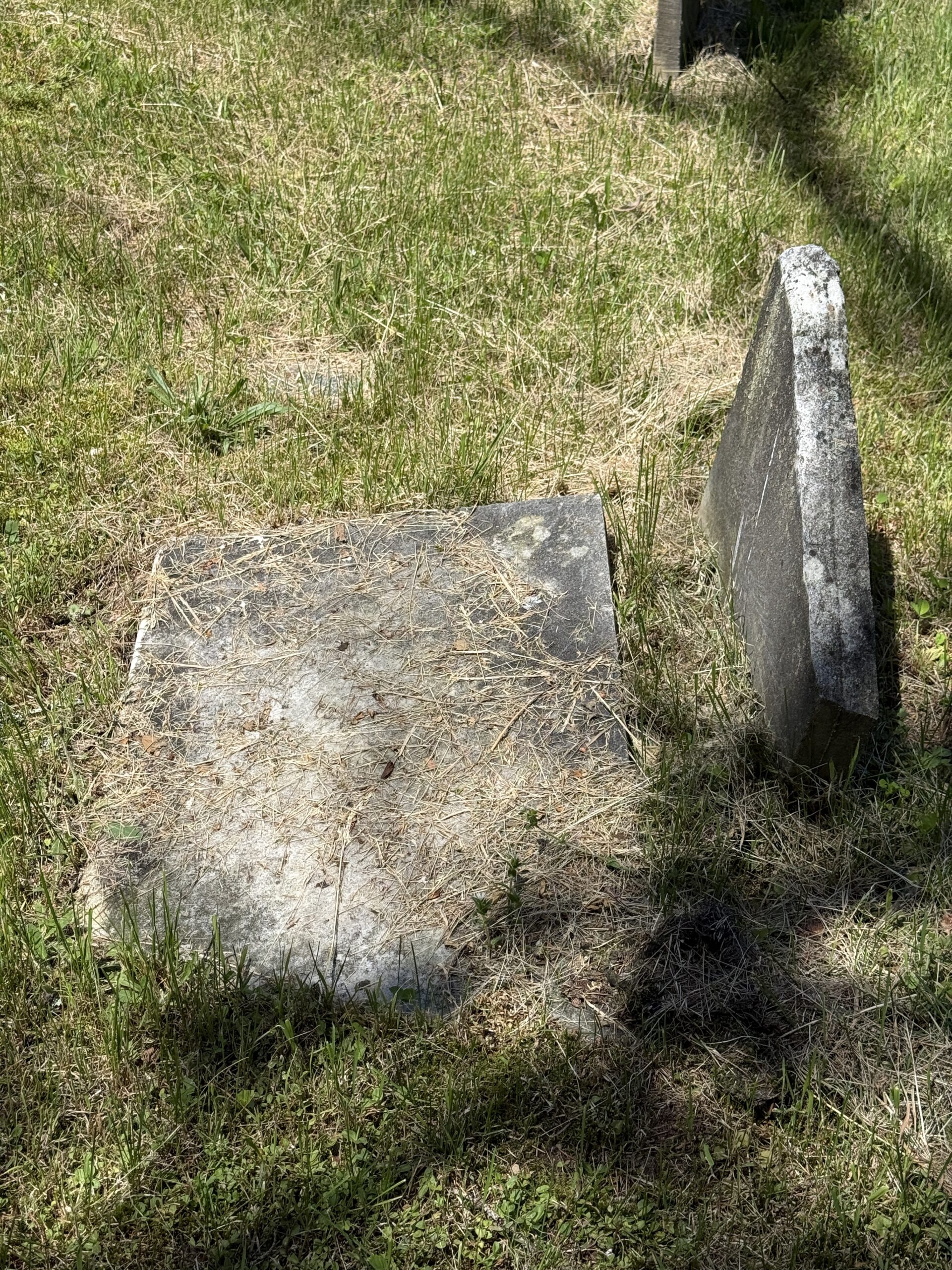
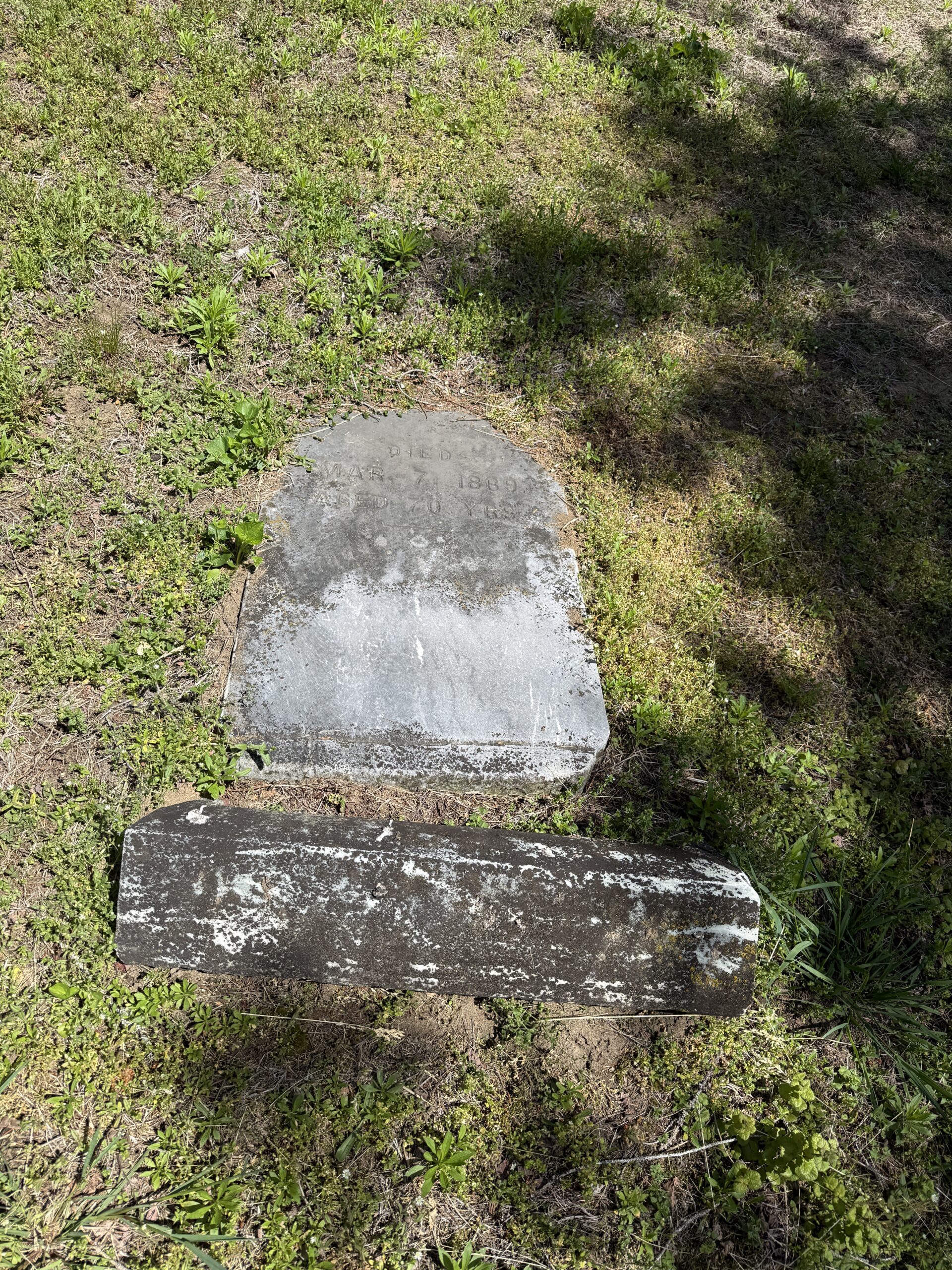
A broken headstone may be in two pieces, several pieces, or separated from its base. Repair cost depends on the number of pieces, stone material, break location, weight, missing material, and whether the stone can be safely aligned and stabilized.
Broken stones should be photographed before pieces are moved. The position of each fragment can help document the condition and plan the repair.
Leaning Gravestones
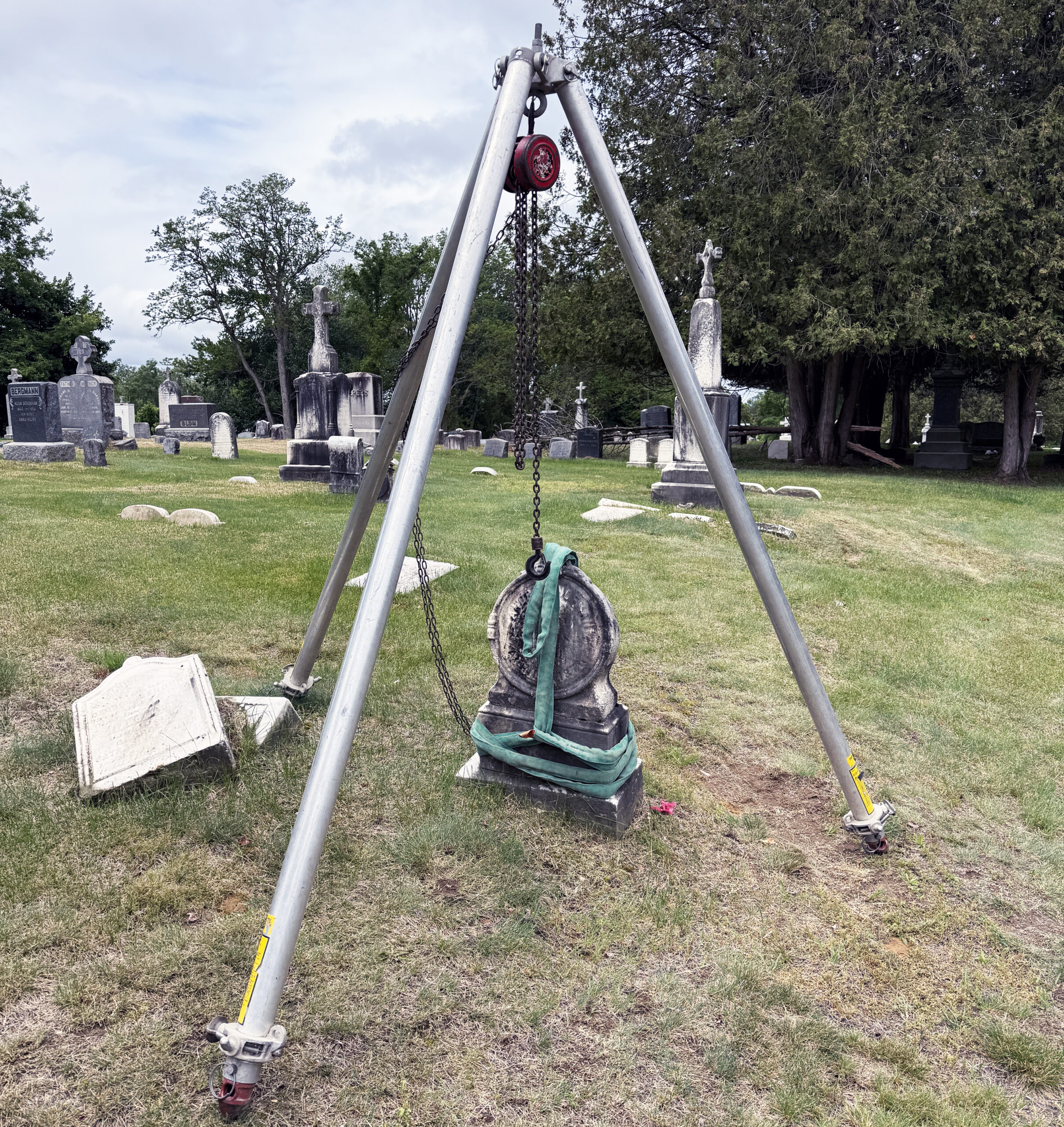
A leaning gravestone is often a support problem, not simply a stone problem. Soil settlement, frost heave, roots, water movement, grave subsidence, and base failure can all cause a monument to lean.
Repair may involve careful resetting, base correction, stabilization, or documentation before any work begins.
Helpful guide: Why Are Gravestones Leaning?
Sunken Grave Markers
Flat markers and smaller memorials can sink below grade because of soil settling, grave subsidence, water, poor drainage, or freeze-thaw movement. When a marker sinks, it may collect soil, grass, water, biological growth, and mowing debris.
Repair may involve raising, leveling, resetting, and improving the support beneath the marker when cemetery rules and stone condition allow it.
Helpful guide: Why Is My Gravestone Sinking?
Faded or Hard-to-Read Lettering
Sometimes families describe faded lettering as “repair,” but the correct service may be cleaning, documentation, or headstone letter repainting. Weather, age, sun exposure, biological growth, and old paint loss can all reduce inscription readability.
Helpful guide: Why Is My Headstone Inscription Hard to Read?
Major Factors That Affect Gravestone Repair Cost
1. Type of Damage
The type of damage is usually the biggest factor. A small chip, open crack, fallen stone, broken base, sunken marker, and leaning monument each require a different repair plan.
2. Stone Material
Granite, marble, sandstone, limestone, slate, and bronze markers all behave differently. Older marble, limestone, and sandstone may be more fragile and porous. Granite is durable but can still crack, shift, or separate from a base. Bronze markers may need different care than stone markers.
3. Size and Weight
A small flat marker and a large upright monument are very different projects. Larger stones may require more labor, equipment, planning, cemetery coordination, and safety precautions.
4. Stability and Safety
If a stone is leaning, rocking, separated, or unstable, the repair may need to address the support problem first. A cosmetic repair will not solve a foundation or base issue.
5. Cemetery Access
Repair work can be affected by hills, narrow roads, wet ground, wooded cemetery sections, older burial grounds, limited parking, and how close equipment can safely get to the memorial.
6. Cemetery Rules and Permissions
Many cemeteries have rules about who may work on memorials, what materials may be used, whether approval is required, and whether family authorization is needed. These rules can affect timing, scope, and cost.
7. Previous Repairs
Old repairs can complicate the project. Cement patches, household adhesives, metal pins, caulk, silicone, and inappropriate materials may trap moisture, stain stone, fail over time, or create new stress points.
8. Documentation Needs
Families often need documentation before repair, especially for out-of-town relatives, estate contacts, family historians, cemetery approval, insurance questions, or visible damage caused by storms, equipment, or vandalism.
Repair, Stabilization, Leveling, or Cleaning: Which One Is Actually Needed?
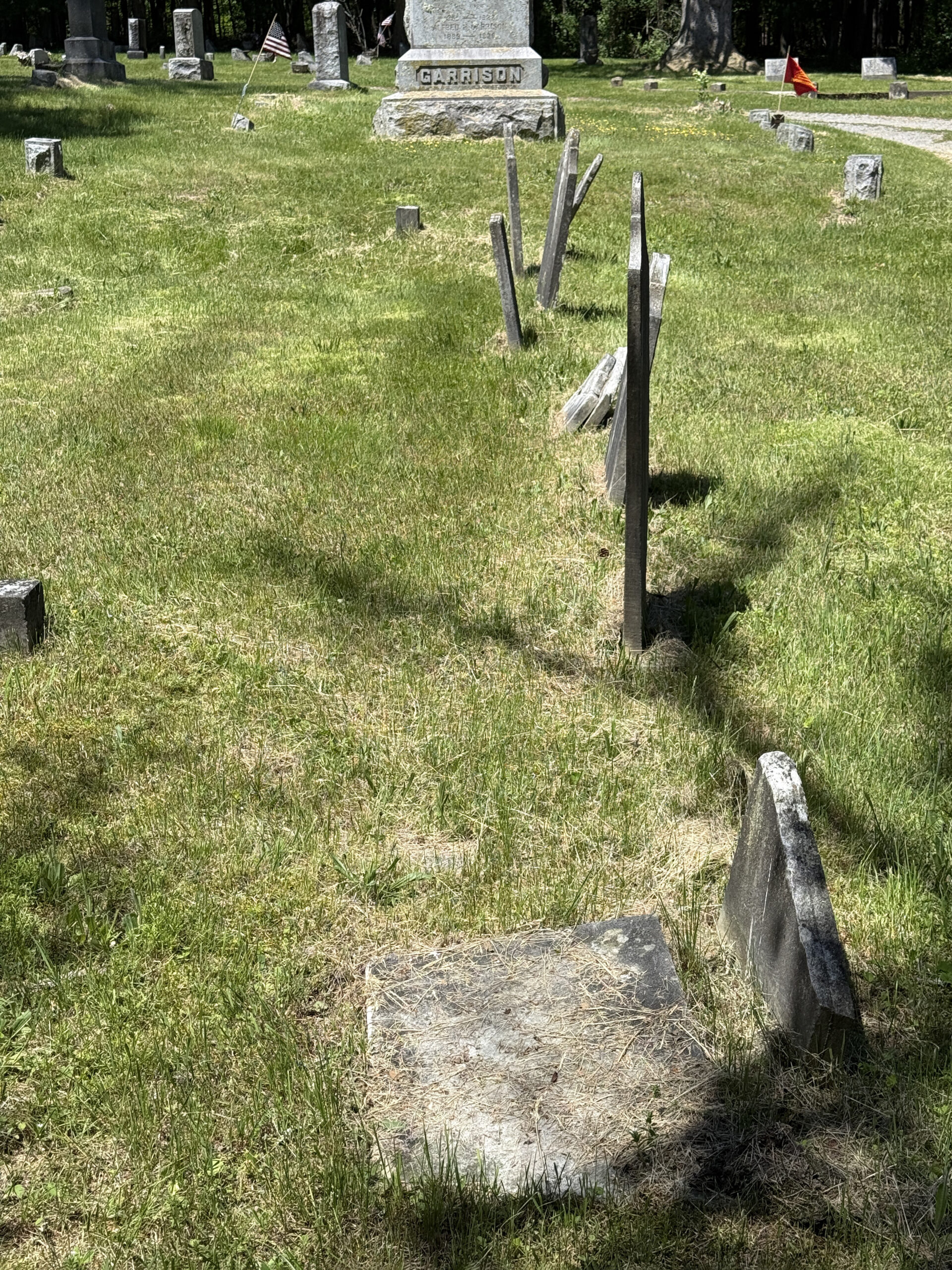
Families often use the word “repair” for several different cemetery problems. The correct service depends on the condition of the memorial.
- Cleaning may be the right first step when biological growth, dirt, staining, or debris is hiding the inscription.
- Leveling and reset may be needed when a flat marker is sinking or a smaller marker has shifted.
- Repair and stabilization may be needed when a stone is cracked, broken, fallen, separated, or unstable.
- Letter repainting may be appropriate when the original inscription contrast has faded on suitable markers.
- Condition reporting may be needed when the family wants clear documentation before deciding what to do.
Related services: Gravestone Cleaning | Gravestone Leveling & Reset | Headstone Repair & Stabilization | Headstone Letter Repainting
What Families Can Safely Do Before Asking for a Quote
You can help the estimate process by gathering clear information without touching, lifting, cleaning, or repairing the stone yourself.
- Take a full photo of the front of the memorial.
- Take a photo of the back and both sides if accessible.
- Take close-up photos of cracks, breaks, leaning, sinking, or damaged areas.
- Photograph the base and ground around the stone.
- Photograph nearby family markers if it is part of a family plot.
- Write down the cemetery name and town.
- Include the family surname and inscription if readable.
- Note whether the stone appears loose, fallen, cracked, or partly buried.
Good photos help determine whether the next step should be repair, stabilization, cleaning, leveling, documentation, or a cemetery condition report.
What Not to Do Before Repair
Many gravestones are damaged by well-intentioned repairs. Avoid quick fixes that may make the memorial harder or more expensive to repair later.
- Do not use household glue, caulk, silicone, cement, or construction adhesive.
- Do not pressure wash the stone.
- Do not use bleach, vinegar, acidic cleaners, or harsh chemicals.
- Do not push, pull, or straighten an upright stone by hand.
- Do not pry up a sunken marker with metal tools.
- Do not scrape, grind, sand, or chisel damaged areas.
- Do not move broken pieces before documenting them.
- Do not assume the cemetery will allow repair work without approval.
Helpful guide: Pressure Washing Gravestones: Hidden Damage Explained
When Repair Should Be Left to Professionals
Some cemetery issues should not be handled as do-it-yourself projects. Heavy, cracked, leaning, fallen, historic, unstable, or multi-piece memorials can be dangerous and easily damaged.
- Upright stones that are leaning or loose
- Broken headstones in multiple pieces
- Cracks that run through the stone
- Fallen markers
- Separated bases
- Large granite monuments
- Old marble, sandstone, limestone, or slate markers
- Markers with previous failed repairs
- Memorials near walkways, roads, or visitor areas
Cemetery Permission Can Affect Repair Timing and Cost
Before repair work begins, the cemetery may need to approve the work. Some cemeteries require family authorization, cemetery office approval, monument company approval, specific materials, or restrictions on who may perform work.
This is especially important for church cemeteries, municipal cemeteries, historic cemeteries, veteran sections, and older burial grounds with specific rules.
Families should ask the cemetery who manages monument repairs, whether outside work is allowed, whether approval is required, and whether there are rules about materials, foundations, cleaning, leveling, or repairs.
Repair vs. Replacement: Which Makes More Sense?
Some families wonder whether a damaged gravestone should be repaired or replaced. The answer depends on family wishes, cemetery rules, historic value, inscription importance, stone condition, cost, and whether repair can safely preserve the existing memorial.
For historic or family-significant stones, repair or stabilization may preserve the original memorial, inscription, carving, and family history. For severely failed modern markers, replacement may sometimes be considered. Documentation helps the family make that decision with a clear record of the current condition.
Gravestone Revival’s approach is preservation-first. The goal is to protect the memorial when appropriate, not to replace original cemetery history unnecessarily.
Does Insurance Ever Cover Gravestone Damage?
Sometimes families ask whether storm damage, vandalism, vehicle damage, or cemetery equipment damage may be covered by insurance. Coverage depends on the policy, the cause of damage, cemetery responsibility, documentation, and whether there is a clear incident record.
If vandalism, impact damage, or storm damage is suspected, take photographs before anything is moved. Contact the cemetery office and ask what documentation they require. If there is a possible insurance claim, written condition notes and photos may be helpful.
Why Documentation Comes First
Before a damaged gravestone is cleaned, repaired, leveled, reset, or stabilized, documentation protects the family record. It also helps clarify what is actually happening at the cemetery.
- Full memorial photographs
- Close-up damage photos
- Inscription and symbol documentation
- Base and ground condition photos
- Nearby family plot context
- Notes about leaning, sinking, cracking, staining, or previous repairs
- Before and after photos if work is completed
- Written condition report for the family record
Related services: Cemetery Condition Reports | Family Memorial Documentation
FAQ: Gravestone Repair Cost
How much does gravestone repair cost?
Cost depends on the damage type, stone material, size, weight, cemetery rules, location, access, and whether the work involves cleaning, repair, stabilization, leveling, resetting, or documentation.
Can a broken gravestone be repaired?
Often yes, but it depends on the stone material, number of pieces, break location, missing material, stability, and cemetery rules. Some stones need stabilization or documentation before repair is attempted.
How much does it cost to reset a gravestone?
Reset costs vary depending on the marker size, weight, base condition, soil condition, access, and whether the stone is flat, upright, leaning, sunken, or separated from its base.
Can a leaning gravestone be fixed?
Often yes. A leaning gravestone may need careful resetting, base correction, stabilization, or documentation depending on the cause of the lean and the condition of the stone.
Can I repair a gravestone myself?
Families can safely photograph and document the condition, but gluing, lifting, straightening, pressure washing, cement patching, and moving broken pieces can cause damage or create safety issues.
Does the cemetery pay for gravestone repair?
Usually the answer depends on cemetery rules, the cause of damage, plot agreements, perpetual care terms, and who is responsible for the memorial. Families should contact the cemetery office for guidance.
Is cleaning included in gravestone repair?
Sometimes cleaning is needed before repair or documentation, but it depends on the stone condition and project scope. Cleaning should be preservation-first and should not involve pressure washing.
Why do I need photos before a repair estimate?
Photos help show the stone material, size, damage type, base condition, cemetery setting, inscription visibility, access, and whether cleaning, leveling, stabilization, repair, or a condition report may be needed.
Need Help Understanding a Gravestone Repair Cost?
If a family memorial is cracked, broken, leaning, sunken, separated, hard to read, unstable, or damaged, Gravestone Revival can help document the condition and recommend whether repair, stabilization, leveling, cleaning, or a cemetery condition report may be appropriate.
Send the cemetery name, town, family surname, memorial photos if available, and what kind of damage you are seeing.
Before & After Photo Documentation and a Written Gravesite Condition Report are always provided.