
Importance of Keeping Gravestones Clean
Gravestones are more than markers—they are historical records, family legacies, and places of remembrance. Over time, weather, pollution, biological growth, and environmental debris can obscure inscriptions and gradually degrade the surface of stone and bronze.
Keeping a gravestone clean isn’t only about appearance. It’s about preservation, legibility, and protecting a memorial for future generations—without using damaging methods.
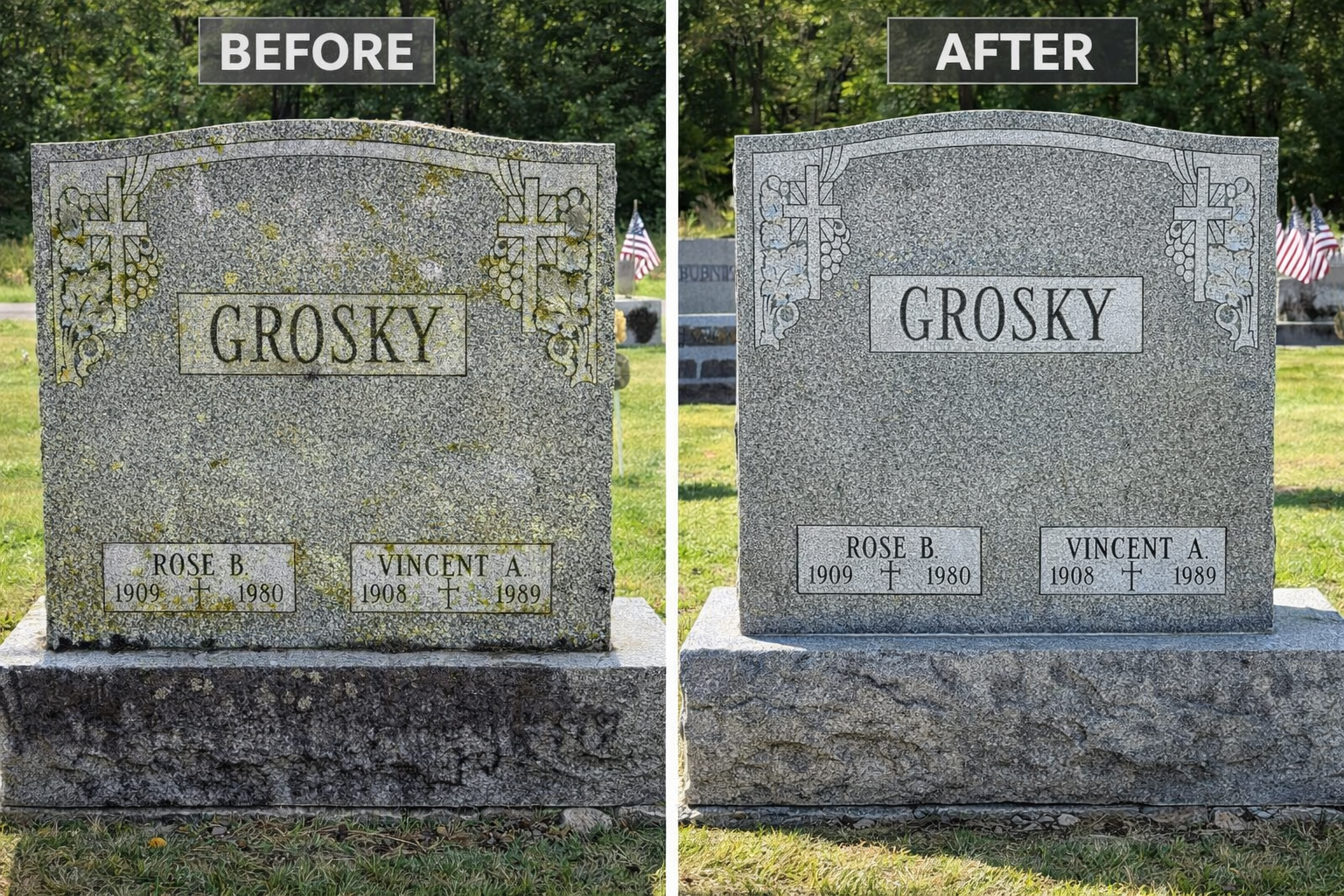
Our approach is preservation-first: no harsh chemicals and no power washing. If we visit a gravesite for service, Before & After Photo Documentation and a Written Gravesite Condition Report are always provided.
Before & After Photo Documentation and a Written Gravesite Condition Report are always provided.
1) Preservation: Protecting Historic Stone and Bronze
Many memorials—especially older headstones—are made from marble, limestone, sandstone, granite, slate, or bronze. These materials react differently to moisture, temperature swings, and biological growth. Moss, algae, and lichen don’t just sit on the surface; they can hold moisture and contribute to surface breakdown over time.
Preservation-first cleaning focuses on removing buildup gently so the memorial can dry properly and remain stable—without stripping the surface or accelerating erosion.
2) Legibility: Keeping Names and Dates Readable
When staining and grime build up, inscriptions become difficult to read—especially fine engraving, shallow lettering, and older stones with softened detail. When a name and date are obscured, a memorial loses part of its purpose as a record for family and community history.
Routine cleaning restores clarity while protecting the original craftsmanship. If you’re planning to repaint letters for readability, cleaning is a smart first step for better adhesion and longer-lasting results.
Related Service: Headstone Letter Repainting
3) Preventing Damage: Why “DIY Shortcuts” Can Backfire
Improper cleaning methods—especially pressure washing, harsh chemicals, bleach, acidic cleaners, wire brushes, or abrasive pads—can permanently damage a memorial. These methods can pit or etch stone, loosen grains, remove protective surface layers, and accelerate deterioration.
Preservation-first cleaning avoids abrasion and focuses on gentle, controlled methods that clean safely and gradually.
Related guide: Cemetery Etiquette
4) Respect and Dignity: A Memorial That Feels Cared For
A clean, well-presented memorial reflects ongoing care. Many families find comfort in knowing a loved one’s resting place is maintained with dignity—especially when they cannot visit often.
Keeping the area tidy matters too. A clean headstone paired with a neat plot presentation makes visits calmer and more meaningful.
Related guide: Gravesite Decoration & Memorial Traditions
Gravestone Cleaning in Saratoga County
In Saratoga County, gravestones endure harsh winters, seasonal moisture, and environmental exposure that contribute to buildup and staining. Regular maintenance using safe, non-destructive methods protects both the appearance and long-term integrity of a memorial.
If you want professional help—or want to ensure your memorial is treated correctly—our preservation-first cleaning provides long-term peace of mind.
- Gravestone Cleaning — preservation-first methods with clear documentation.
- Gravesite & Plot Maintenance — tidy reset around the memorial for a cleaner presentation.
- Headstone Letter Repainting — restore readability after cleaning (when appropriate).
Before & After Photo Documentation and a Written Gravesite Condition Report are always provided.