Cemetery Etiquette Guide
Cemetery etiquette means visiting graves respectfully, following cemetery rules, keeping memorial areas neat, protecting headstones and markers, giving privacy to grieving families, and leaving the cemetery as peaceful as you found it.
This guide explains how to visit a cemetery respectfully, what to know before taking photos or placing decorations, how to behave near funerals, and how local and out-of-town families can document a memorial without disturbing the cemetery or nearby graves.
Gravestone Revival provides preservation-first cemetery care, family memorial documentation, cemetery condition reports, and gravestone cleaning with no harsh chemicals and no pressure washing. Before & After Photo Documentation and a Written Gravesite Condition Report are always provided for cemetery care projects.
Quick Answer: What Is Proper Cemetery Etiquette?
Proper cemetery etiquette means speaking quietly, using roads and paths when possible, avoiding contact with headstones, respecting nearby families, following posted cemetery rules, keeping decorations modest, removing trash, and never doing anything that could damage a grave marker or interfere with cemetery maintenance.
The simplest rule is this: visit as if every grave belongs to someone’s parent, grandparent, spouse, child, veteran, ancestor, or loved one.
Cemetery Etiquette Checklist
- Keep voices low and silence your phone.
- Use roads, paths, and walkways whenever possible.
- Avoid stepping directly on graves, flat markers, borders, or footstones.
- Never lean on headstones, monuments, statues, or cemetery fencing.
- Follow posted cemetery rules for flowers, flags, decorations, pets, vehicles, and visiting hours.
- Respect nearby families, especially anyone grieving or attending a funeral.
- Leave no trace by removing packaging, old flowers, broken items, and litter.
- Document respectfully if taking cemetery photos for family history or memorial care.
Cemetery Rules Always Come First
Every cemetery has its own rules. Some cemeteries allow certain flowers, flags, wreaths, or seasonal decorations, while others restrict glass, artificial flowers, planting, urns, solar lights, toys, fencing, gravel, edging, or anything that interferes with mowing and cemetery maintenance.
Before placing anything at a grave, look for posted cemetery rules near the entrance or contact the cemetery office, church, association, town, or cemetery caretaker. Rules may also change by season.
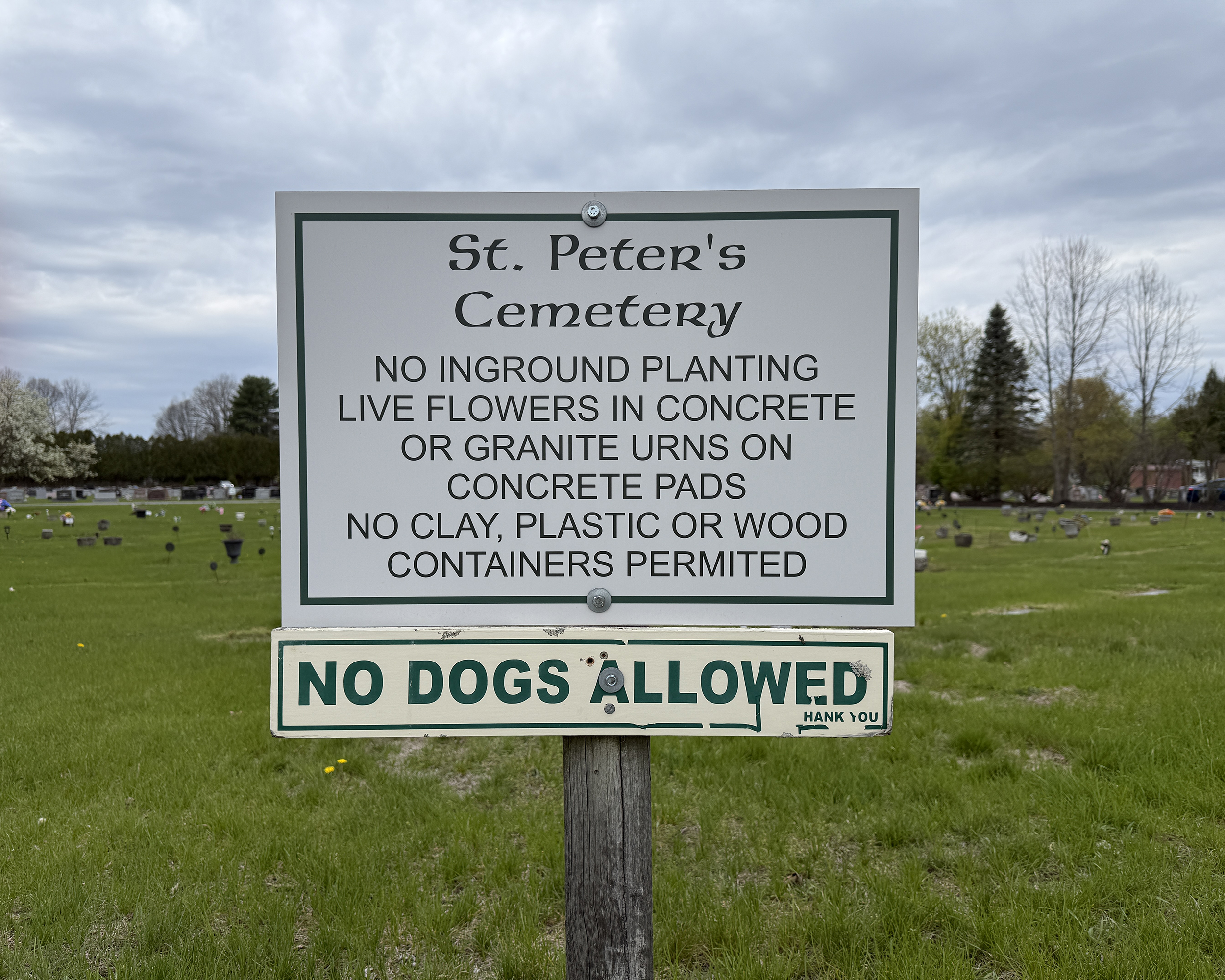
Posted cemetery rules should always guide flowers, decorations, pets, containers, and visitor behavior.
Respect the Quiet Nature of the Cemetery
Cemeteries are places of remembrance, family history, grief, and reflection. Keep conversations low, avoid loud music, silence mobile devices, and be aware that another visitor may be mourning nearby.
If you encounter a funeral or memorial service, keep your distance, avoid walking through the area, and give the family privacy. If you need to reach another section, wait or take a different route.
Where to Walk and What Not to Touch
Use cemetery roads, paths, and walkways whenever possible. In older cemetery sections, the ground may be uneven and markers may be fragile, sunken, loose, or hidden by grass.
- Do not lean on headstones, monuments, crosses, statues, or mausoleums.
- Do not stand on flat markers, grave borders, footstones, or plot edging.
- Do not move flowers, flags, stones, coins, personal items, or decorations left by another family.
- Do not clean, scrape, rub, chalk, or touch inscriptions unless you have permission and understand preservation-safe methods.
- Do not climb on monuments or allow children to play on cemetery structures.
If a marker appears unstable, cracked, tilted, or sunken, document it from a safe distance and avoid touching it.
Children and Pets in Cemeteries
Children can visit cemeteries respectfully when they are supervised and taught that the grounds are not a playground. Calm walking, quiet voices, and careful movement around markers are important.
- Keep children away from fragile or leaning stones.
- Do not allow running, climbing, shouting, or playing between graves.
- Keep pets leashed if the cemetery allows them.
- Clean up after pets immediately.
- Follow posted pet restrictions. Some cemeteries do not allow dogs.
Flowers, Flags, Wreaths, and Decorations
Flowers, flags, wreaths, and small tributes can be meaningful when they are cemetery-safe and allowed by the cemetery. The safest choices are modest, neat, easy to maintain, and placed in approved locations.
Avoid glass containers, loose items, oversized displays, fencing, sharp stakes, toys, gravel, edging, alcohol, food, or anything that can blow away, break, interfere with mowing, or create a safety concern.
Helpful guides: What Not to Place at Gravesites | Gravesite Decoration & Memorial Traditions | Popular Times to Decorate a Gravesite
Photography and Cemetery Documentation Etiquette
Cemetery photography can be meaningful for family history, genealogy, memorial documentation, and out-of-town family care. It should always be done quietly and respectfully.
- Photograph your loved one’s memorial respectfully.
- Avoid photographing funerals, private services, or grieving strangers.
- Be cautious with children’s graves and sensitive sections.
- Do not move items to make a photo look better unless you own or placed them.
- Do not publish private family details without considering privacy.
- Take wide photos when documenting family plots so relatives can understand the surrounding context.
Related service: Family Memorial Documentation
Funeral and Burial Service Etiquette
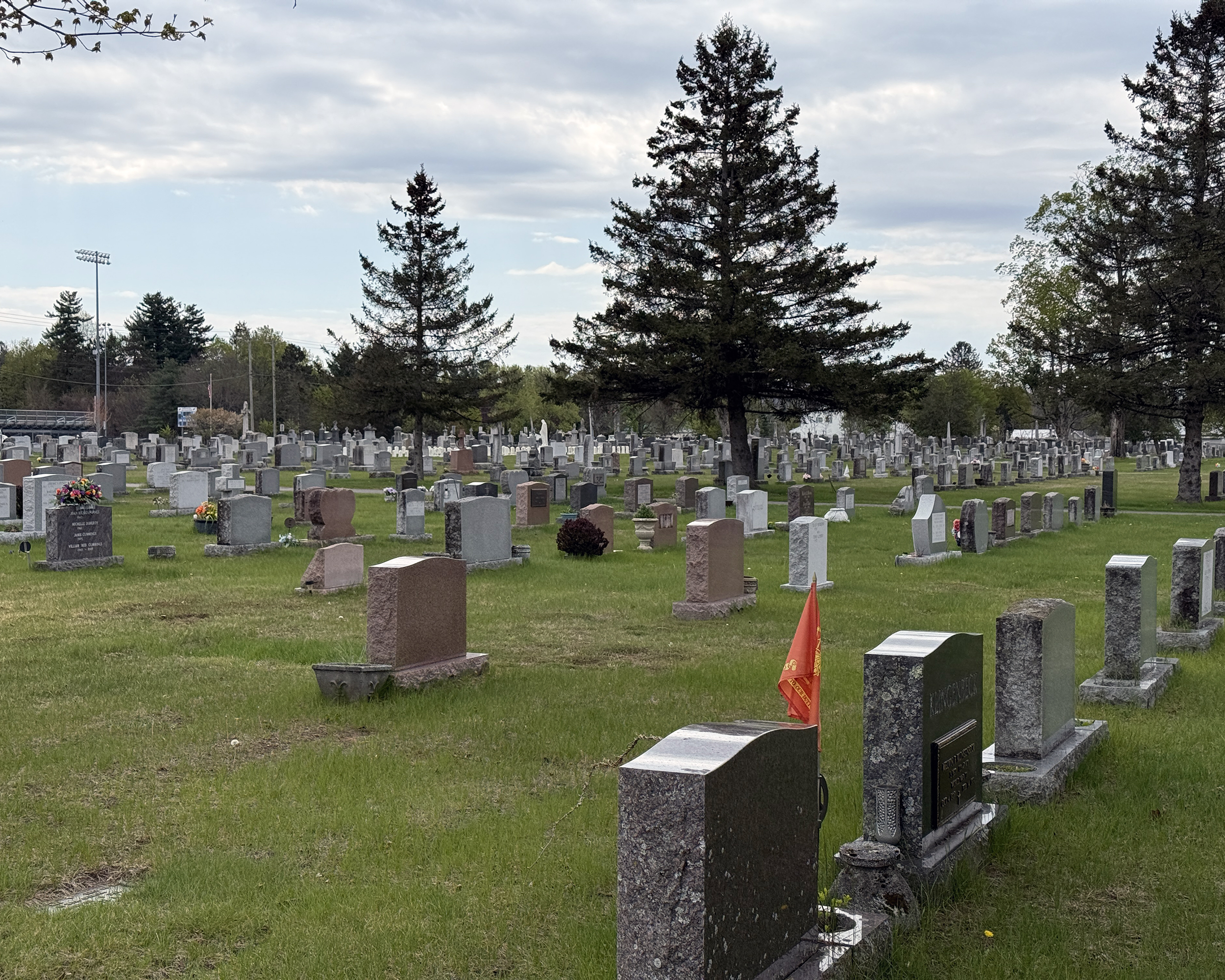
If a funeral, committal service, military honors ceremony, or family memorial gathering is taking place, give the group privacy and space. Avoid walking close to the service, taking photos, driving nearby, or creating noise.
- Pause nearby work or visiting if a service is in progress.
- Do not photograph the service unless you are part of the family and have permission.
- Keep vehicles away from the service area.
- Speak quietly and wait for the service to conclude if you need to pass.
Cemetery Etiquette for Out-of-Town Families
Many families cannot visit a cemetery regularly because they live out of town, out of state, or far from the burial location. In those cases, respectful documentation can help the family understand what is present and what condition the memorial appears to be in.
When requesting cemetery documentation, provide the cemetery name, memorial name, family surname, section, lot, plot, nearby landmark, or any older family information you have. Clear information helps locate the grave without disturbing nearby memorials.
Helpful resources: Out-of-Town Family Cemetery Care | Family Resources | Cemetery Condition Reports
Cleaning and Care Etiquette
Never clean a gravestone with pressure washing, bleach, acidic cleaners, wire brushes, household cleaners, metal tools, or abrasive pads. These methods can permanently damage stone, bronze, inscriptions, and historic cemetery materials.
Also avoid cleaning a stone that is loose, cracked, flaking, severely weathered, unstable, or historically fragile without first evaluating its condition.
Helpful guides: Why Gravestone Cleaning Matters | Pressure Washing Gravestones: Hidden Damage Explained | Gravestone Cleaning
Common Cemetery Rule Violations to Avoid
- Leaving glass vases, jars, or breakable containers.
- Placing decorations outside the approved memorial area.
- Using fences, edging, stones, gravel, or borders without permission.
- Planting flowers, shrubs, or trees without cemetery approval.
- Leaving food, alcohol, balloons, plastic items, or loose objects.
- Using pressure washing or harsh cleaners on a memorial.
- Moving another family’s flowers, flags, coins, or personal items.
- Driving or parking outside approved cemetery roads.
- Bringing pets where cemetery rules do not allow them.
How Gravestone Revival Helps Families Respect Cemetery Etiquette
Gravestone Revival helps families care for memorials without disturbing the cemetery, damaging the stone, or guessing at what should be done. Our work focuses on documentation, preservation-first care, and clear reporting.
- Family Memorial Documentation — cemetery photos, inscriptions, plot context, and memorial documentation.
- Cemetery Condition Reports — written notes about visible condition, stability concerns, staining, growth, and readability.
- Gravestone Cleaning — preservation-first cleaning with no harsh chemicals and no pressure washing.
- Out-of-Town Family Cemetery Care — documentation and cemetery care for families who cannot visit regularly.
Local Cemetery Resources
Because cemetery rules vary by location, local cemetery pages can help families understand cemetery context, visitor rules, maps, photos, cemetery layout, and related resources.
Helpful cemetery resources: Cemetery Guide | Saratoga County Cemetery Guide | Montgomery County Cemetery Guide | Fulton County Cemetery Guide
FAQ: Cemetery Etiquette
What is proper cemetery etiquette?
Proper cemetery etiquette means visiting quietly, respecting other families, following cemetery rules, avoiding contact with headstones, keeping decorations modest, removing trash, and protecting the cemetery grounds.
Is it disrespectful to take pictures in a cemetery?
No, cemetery photography can be respectful when done quietly and for family documentation, genealogy, or memorial care. Avoid photographing funerals, grieving visitors, or private family moments.
Can I clean a gravestone during a cemetery visit?
Only if cemetery rules allow it and the memorial is stable enough for cleaning. Never use pressure washing, bleach, acidic cleaners, wire brushes, household cleaners, or abrasive methods.
Can I leave flowers or decorations at a grave?
Often yes, but cemetery rules vary. Check posted rules before leaving flowers, wreaths, flags, plants, urns, artificial flowers, solar lights, or seasonal decorations.
Are dogs allowed in cemeteries?
It depends on the cemetery. Some cemeteries allow leashed dogs, while others prohibit pets. Always follow posted rules and clean up after pets if they are allowed.
What should I do if a headstone looks damaged or unstable?
Do not touch, lean on, or try to move it. Document the condition from a safe distance and contact the cemetery or a preservation-focused cemetery care provider for guidance.
Need Help Documenting or Caring for a Family Memorial?
If your loved one, ancestor, spouse, parent, grandparent, or veteran family member is buried in Saratoga County, Montgomery County, or Fulton County, Gravestone Revival can help with cemetery documentation, grave photography, gravestone cleaning, condition reporting, and respectful cemetery care.
Send the cemetery name, town, family surname, known section or lot details, and what kind of documentation or cemetery care you need.
Before & After Photo Documentation and a Written Gravesite Condition Report are always provided.