What Not to Place at Gravesites
Many cemeteries restrict glass, loose decorations, oversized displays, balloons, food, alcohol, planting, fencing, edging, hooks, stakes, and anything that interferes with mowing, safety, or cemetery maintenance.
Decorating a gravesite can be meaningful, but cemetery rules always come first. The safest tribute is simple, respectful, secure, weather-appropriate, and allowed by the cemetery.
This guide explains what families should avoid placing at gravesites, why cemeteries remove certain items, and how to choose cemetery-safe memorial tributes without damaging the marker or creating problems for cemetery staff.
Quick Answer: What Should You Not Leave at a Gravesite?
Do not leave glass containers, balloons, food, alcohol, loose paper, breakable ceramics, oversized decorations, fencing, edging, gravel, stones, planting, sharp stakes, hooks, adhesives on headstones, or anything that can blow away, break, attract animals, create a trip hazard, damage the memorial, or interfere with mowing.
Every cemetery has different rules. Always check posted signs, cemetery regulations, or the cemetery office before placing flowers, flags, wreaths, plants, solar lights, seasonal decorations, or personal items.
Items Commonly Prohibited or Removed by Cemeteries
- Glass items: jars, vases, bottles, candle holders, picture frames, or glass ornaments.
- Balloons: latex balloons, foil balloons, strings, ribbons, and balloon weights.
- Food and alcohol: items that attract animals, spoil, spill, or create cleanup issues.
- Loose paper: notes, cards, photos, envelopes, and paper decorations that break down in weather.
- Breakable ceramics: figurines, statues, pots, or ornaments that can crack or shatter.
- Oversized displays: large arrangements, tall decorations, large flags, or bulky seasonal items.
- Fencing and edging: decorative borders, wire fencing, stones, bricks, gravel, or plot outlines.
- Sharp stakes and hooks: shepherd hooks, metal rods, rebar, or deep stakes that interfere with mowing.
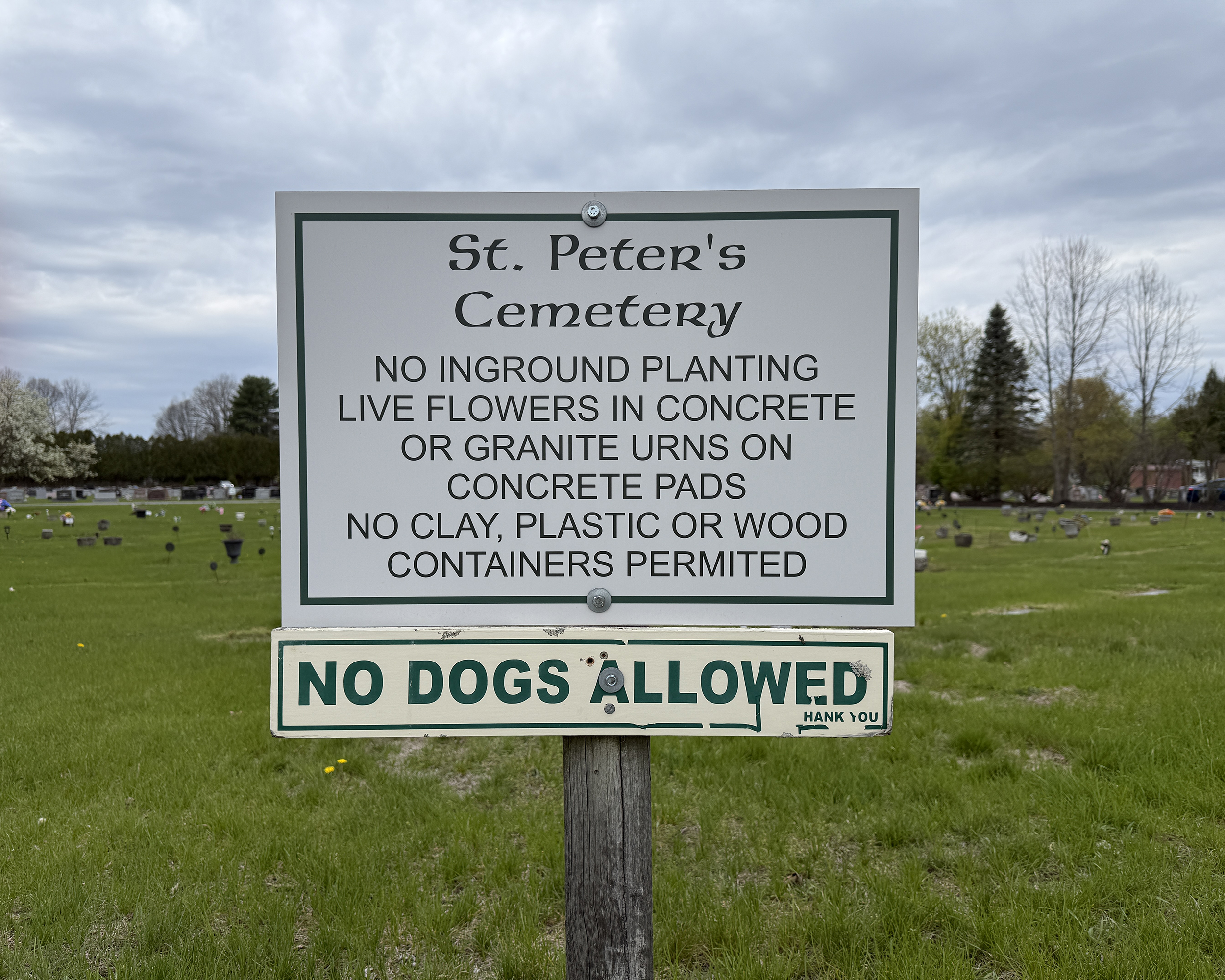
- Planting without permission: shrubs, trees, flowers, bulbs, or ground plantings not approved by the cemetery.
- Adhesives on headstones: tape, glue, wire, nails, zip ties, or anything attached directly to the memorial.
Most cemetery removals happen because of safety, maintenance, cleanup schedules, or rule enforcement — not because the tribute itself was disrespectful.
Why Glass Is Usually a Problem
Glass is one of the most commonly restricted cemetery materials. Glass vases, jars, bottles, candle holders, and framed photos can break in wind, storms, freezing weather, or during mowing.
Broken glass can injure visitors, children, pets, and cemetery staff. It can also damage mowing equipment or become hidden in grass where it is difficult to see.
Better option: use cemetery-approved containers, built-in memorial vases, low-profile arrangements, or non-breakable materials allowed by that cemetery.
Do Not Add Fencing, Borders, Stones, or Plot Edging
Families sometimes want to define a grave space with small fencing, stones, bricks, edging, gravel, mulch, or borders. In many cemeteries, these items are not allowed because they interfere with mowing and can become trip hazards.
Even when the intention is loving, borders can make cemetery maintenance harder and may affect neighboring plots. They can also shift, sink, break, or become hidden by grass.
Better option: keep flowers and approved items close to the marker, vase, or cemetery-approved placement area.
Avoid Balloons, Loose Ribbons, and Lightweight Items
Balloons and lightweight decorations can blow away quickly. They may end up in neighboring plots, trees, roads, drainage areas, or cemetery equipment. Strings, ribbons, plastic pieces, and foil can also create litter and cleanup problems.
Even when balloons are left for a birthday, anniversary, or child’s grave, they may be removed because they do not hold up well outdoors and can become debris.
Better option: choose small flowers, a modest wreath, a cemetery-approved flag, or a family visit photo instead of leaving loose materials behind.
Avoid Food, Alcohol, and Items That Attract Animals
Food, alcohol, candy, open drinks, and perishable items may be meaningful in some personal or cultural traditions, but many cemeteries restrict them because they attract animals, insects, litter, spills, odor, and cleanup issues.
If a food or drink item is part of a remembrance ritual, it is usually better to bring it for the visit and take it with you when you leave unless the cemetery specifically allows it.
Be Careful With Solar Lights, Shepherd Hooks, and Stakes
Solar lights, shepherd hooks, metal stakes, flag holders, and plant supports may be restricted by cemetery rules. These items can interfere with mowing, become hidden in grass, create trip hazards, or shift during storms and freeze-thaw cycles.
Some cemeteries allow certain items only in specific locations, seasons, or sections. Others remove them during cleanup or mowing periods.
Better option: check posted cemetery rules before placing anything with a stake, hook, rod, or sharp base.
Do Not Attach Items Directly to the Headstone
Do not attach flowers, photos, decorations, cards, ribbons, wire, tape, glue, hooks, nails, or clips directly to a headstone unless the cemetery and memorial design specifically allow it.
Adhesives and fasteners can stain stone, trap moisture, damage polished surfaces, loosen lettering paint, leave residue, or scratch bronze and granite. They can also be difficult to remove without causing additional problems.
Better option: use approved vases, holders, or placement areas rather than attaching items to the memorial itself.
Do Not Plant Flowers, Shrubs, or Trees Without Permission
Planting may seem like a lasting tribute, but many cemeteries restrict or prohibit in-ground planting. Roots, soil changes, watering, dead plants, and spreading growth can affect nearby markers, mowing, and cemetery layout.
Some cemeteries allow flowers only in approved urns, vases, or containers. Others allow seasonal planting only with written permission. Rules vary widely.
Better option: use cemetery-approved flowers, urns, or containers and confirm current rules before planting anything in the ground.
Paper Notes, Cards, and Photos Usually Do Not Last
Letters, cards, photos, and handwritten notes can be deeply meaningful, but they often break down quickly in rain, snow, sun, wind, and mowing conditions. Paper can become litter, and photo frames often contain glass or plastic that may be restricted.
Better option: bring the note for the visit, read it at the gravesite, photograph it if meaningful, and take it with you when you leave.
What Is Usually Safer to Place at a Gravesite?
Allowed items vary by cemetery, but simple, low-profile, secure, and seasonal tributes are more likely to be accepted than large or fragile displays.
- Fresh flowers in approved containers
- Artificial flowers when allowed by cemetery rules
- Small wreaths during approved seasons
- American flags at veteran graves when permitted
- Low-profile seasonal arrangements
- Built-in cemetery-approved memorial vases
- Simple family visit documentation instead of leaving loose items behind
Helpful guide: How to Choose Flowers for a Gravesite
Why Cemeteries Remove Decorations
Cemeteries usually remove decorations for maintenance, safety, appearance, seasonal cleanup, or rule compliance. Removal does not necessarily mean the tribute was inappropriate in spirit. It may simply have violated cemetery policy or become unsafe over time.
- Items interfere with mowing or trimming.
- Glass or ceramic items break.
- Flowers become wilted, faded, or weather-damaged.
- Loose items blow into other plots.
- Decorations create trip hazards.
- Items are outside approved placement areas.
- The cemetery begins seasonal cleanup.
If you are unsure why an item was removed, contact the cemetery office, church, town, cemetery association, or caretaker.
Out-of-Town Families Should Check Rules Before Sending Items
Out-of-town families often want to send flowers, decorations, flags, or memorial items to a loved one’s grave. Before doing that, it is important to know the cemetery rules and current condition of the gravesite.
A cemetery condition report or family memorial documentation visit can show whether flowers are already present, whether old items need removal, whether the marker is readable, and whether there are visible concerns such as staining, sinking, leaning, or damage.
Helpful resources: Out-of-Town Cemetery Care | Family Memorial Documentation | Cemetery Condition Reports
FAQ: What Not to Place at Gravesites
Can I leave glass at a gravesite?
Usually no. Many cemeteries restrict glass because it can break, injure visitors or staff, and damage mowing equipment.
Are balloons allowed at gravesites?
Many cemeteries discourage or remove balloons because they blow away, create litter, and can interfere with cemetery maintenance.
Can I plant flowers at a grave?
It depends on the cemetery. Some prohibit in-ground planting entirely, while others require approval or allow planting only in certain containers or areas.
Why did the cemetery remove flowers or decorations?
Decorations may be removed because of mowing, seasonal cleanup, weather damage, cemetery rules, safety concerns, or placement outside approved areas.
Can I attach flowers or photos to a headstone?
Do not attach items directly to a headstone with tape, glue, wire, nails, clips, or adhesives. These can stain, scratch, trap moisture, or damage the memorial.
What is the safest tribute to leave at a grave?
A modest flower arrangement, approved cemetery vase, small wreath, or veteran flag may be appropriate when cemetery rules allow it. Simple and cemetery-safe is usually best.
Need Help Documenting a Family Memorial?
If your loved one, parent, grandparent, spouse, veteran family member, or ancestor is buried in Saratoga County, Montgomery County, or Fulton County, Gravestone Revival can help with cemetery documentation, grave photography, gravestone cleaning, condition reporting, and preservation-first cemetery care.
Send the cemetery name, town, family surname, memorial photos if available, and what kind of documentation or cemetery care you need.
Before & After Photo Documentation and a Written Gravesite Condition Report are always provided.