Why Gravestone Cleaning Matters
Gravestone cleaning matters because it helps preserve stone and bronze memorials, improves inscription readability, reduces moisture-holding biological growth, protects family history, and gives families a clearer record of a loved one’s gravesite.
Safe cleaning is not about making an old memorial look new. It is about caring for the marker in a way that respects the material, the cemetery, the family, and the history recorded on the stone.
Gravestone Revival uses preservation-first methods. We do not use pressure washing, harsh chemicals, bleach, acidic cleaners, wire brushes, or abrasive shortcuts on cemetery memorials. Before & After Photo Documentation and a Written Gravesite Condition Report are always provided for cemetery care projects.
Quick Answer: Why Is Gravestone Cleaning Important?
Gravestone cleaning is important because biological growth, soil, staining, pollution, and weather exposure can obscure names, dates, symbols, and inscriptions. When cleaning is done safely, it can improve readability, help the memorial dry properly, support long-term preservation, and give families a documented record of the grave’s current condition.
The safest cleaning approach is gentle, controlled, and preservation-first. A gravestone should never be pressure washed or treated with harsh household chemicals.
1. Cleaning Helps Preserve the Memorial
Many gravestones are exposed to decades of moisture, shade, freeze-thaw cycles, grass clippings, soil splash, tree debris, biological growth, and air pollution. Moss, algae, lichen, and other buildup can trap moisture against the surface of the memorial.
Preservation-first cleaning helps remove buildup gently so the stone or bronze can be better documented and cared for. The goal is not aggressive restoration. The goal is safe memorial care that respects the age, material, and condition of the grave marker.
2. Cleaning Improves Name and Date Readability
A cemetery memorial is also a family record. When a name, date, military service line, epitaph, religious symbol, or family surname becomes difficult to read, part of that record becomes harder to access.
Safe cleaning can make inscriptions easier to read, especially when dirt, biological staining, grass overgrowth, or surface buildup is covering the lettering. For families researching genealogy or documenting a family plot, readability matters.
Related service: Headstone Letter Repainting
3. Cleaning Supports Family Memorial Documentation
For out-of-town families, cleaning and documentation often work together. A family may not know the current condition of a parent’s, grandparent’s, spouse’s, veteran’s, or ancestor’s grave until someone visits the cemetery and documents it clearly.
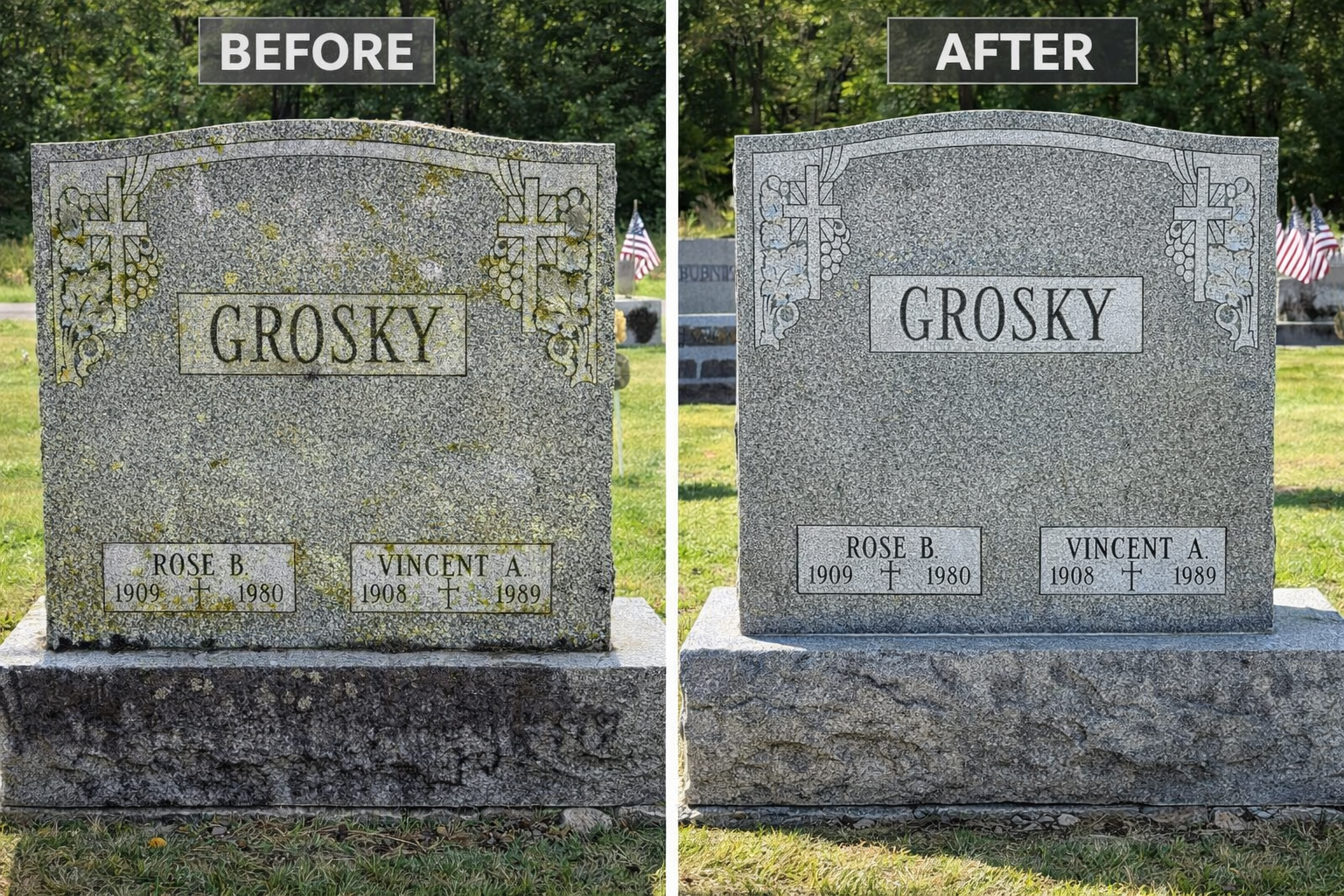
Photographs before and after cleaning help show what changed, what remains visible, and whether there are condition concerns that need additional attention. Written notes can document the marker, surrounding plot, nearby family stones, and visible preservation issues.
Related service: Family Memorial Documentation
4. Cleaning Can Reveal Condition Problems
Cleaning is often when condition issues become easier to see. A memorial may have cracks, shifting, sunken areas, biological staining, loose bases, unstable joints, flaking stone, failed previous repairs, or lettering that needs additional care.
This is why documentation matters. A clean marker is helpful, but a clear written condition report gives the family a better understanding of what may need to be watched, repaired, reset, or preserved over time.
Related service: Cemetery Condition Reports
5. Safe Cleaning Avoids Permanent Damage
Not every cleaning method is safe. Pressure washing, bleach, acidic cleaners, wire brushes, metal tools, abrasive pads, and household cleaning products can permanently damage cemetery memorials. These shortcuts can etch stone, loosen grains, strip surface detail, discolor bronze, and accelerate deterioration.
Preservation-first cleaning avoids aggressive methods and treats the memorial as a historic object, not an outdoor patio or sidewalk.
- Do not pressure wash gravestones.
- Do not use bleach or harsh household cleaners.
- Do not use wire brushes or abrasive pads.
- Do not scrape soft or fragile stone.
- Do not assume every marker can be cleaned the same way.
- Do not clean an unstable marker without evaluating condition first.
Related guide: Cemetery Etiquette
When a Gravestone Should Not Be Cleaned
Some gravestones should not be cleaned until the condition is reviewed. Cleaning can be risky when a memorial is unstable, badly cracked, severely weathered, actively flaking, sugaring, delaminating, or made from fragile historic material.
In those cases, documentation may be the better first step. Photos and written observations can help the family understand the condition before deciding whether cleaning, repair, resetting, stabilization, or another preservation step is appropriate.
- Loose or leaning stones
- Broken bases or unstable monuments
- Severely eroded marble or sandstone
- Flaking, scaling, or crumbling surfaces
- Cracked markers with open separation
- Historic stones that may need conservation review
- Markers where cemetery rules are unclear
Related service: Headstone Repair & Gravestone Stabilization
Before and After Photos Matter
Before and after photos are more than proof that cleaning happened. They create a family record. They show the condition before work began, document what changed, and help relatives who cannot visit understand the current condition of the memorial.
For out-of-town families, this documentation is often the most important part of the service. It gives the family confidence that the grave was located, photographed, cared for, and reported clearly.
Helpful resource: Out-of-Town Family Cemetery Care
How Often Should a Gravestone Be Cleaned?
Most gravestones do not need constant cleaning. The right schedule depends on the cemetery environment, stone material, shade, moisture, biological growth, family preferences, and cemetery rules.
A marker in a shaded, damp cemetery may collect biological growth faster than a marker in a sunny, open section. A fragile historic stone may need a much more cautious approach than a modern granite marker.
Related guide: How Often Should a Gravestone Be Cleaned?
Gravestone Cleaning in Saratoga County and Nearby Areas
In Saratoga County, Montgomery County, and Fulton County, gravestones are exposed to harsh winters, snow, ice, rain, tree cover, shade, mowing debris, and seasonal moisture. These conditions can contribute to staining, biological growth, and declining readability over time.
Gravestone Revival provides cemetery-safe gravestone cleaning, family memorial documentation, cemetery condition reports, and preservation-first cemetery care for local and out-of-town families.
- Gravestone Cleaning — preservation-first cleaning with before and after documentation.
- Cemetery Condition Reports — written visible condition notes and gravesite documentation.
- Family Memorial Documentation — cemetery photos, marker documentation, and family plot records.
- Out-of-Town Family Cemetery Care — documentation and cemetery care for families who cannot visit regularly.
FAQ: Why Gravestone Cleaning Matters
Why is gravestone cleaning important?
Gravestone cleaning is important because it helps preserve the memorial, improves inscription readability, reduces buildup, supports family history, and gives families a clearer record of the grave’s current condition.
Can cleaning damage a headstone?
Yes, improper cleaning can damage a headstone. Pressure washing, bleach, acidic cleaners, wire brushes, metal tools, and abrasive pads can permanently harm stone and bronze memorials.
Is pressure washing safe for gravestones?
No. Pressure washing is not a preservation-first method for cemetery memorials. It can damage stone surfaces, loosen material, force water into cracks, and accelerate deterioration.
Should every old gravestone be cleaned?
No. Some old gravestones should be documented first and not cleaned until their condition is reviewed. Fragile, cracked, flaking, unstable, or severely weathered stones may require repair or conservation guidance before cleaning.
How often should gravestones be cleaned?
Most gravestones do not need frequent cleaning. The right schedule depends on the stone material, cemetery environment, shade, moisture, biological growth, and family goals.
Do you provide before and after photos?
Yes. Before & After Photo Documentation and a Written Gravesite Condition Report are always provided for cemetery care projects.
Request Preservation-First Gravestone Cleaning
If a family memorial is becoming difficult to read, covered in buildup, or in need of careful documentation, Gravestone Revival can help with preservation-first gravestone cleaning, cemetery photography, and written condition reporting.
Send the cemetery name, town, family surname, marker photos if available, and what kind of cemetery care or documentation you need.
Before & After Photo Documentation and a Written Gravesite Condition Report are always provided.