Headstone Symbols and Meanings Guide
Headstone symbols and meanings can help families understand carved crosses, hands, flowers, lambs, urns, anchors, military markers, fraternal emblems, and other cemetery symbolism found on gravestones and family memorials.
Symbols should be read as clues, not absolute answers. A symbol’s meaning can change depending on religion, time period, family tradition, military service, fraternal membership, local custom, and the inscription around it.
Gravestone Revival helps families document symbols, inscriptions, veteran emblems, family plots, and memorial condition through preservation-first cemetery care. Before & After Photo Documentation and a Written Gravesite Condition Report are always provided for cemetery care projects.
Quick Answer: How Should You Read Headstone Symbols?
To understand headstone symbols and meanings, look at the symbol together with the inscription, dates, surname, nearby family markers, religious context, military service details, and cemetery section. A carved symbol can suggest faith, grief, hope, service, family connection, fraternal membership, age, occupation, or remembrance, but it should not be interpreted alone.
- Start with the inscription: names, dates, epitaphs, and titles often explain the symbol.
- Look at nearby family stones: repeated symbols may show shared faith, family identity, or organization membership.
- Consider the time period: Victorian cemetery symbolism may differ from modern marker design.
- Check veteran markers carefully: military information and emblems may follow official marker rules.
- Document before cleaning: photograph symbols before any cemetery care begins.
Faith and Belief Symbols
Faith symbols are among the most common cemetery symbols. They may reflect the deceased person’s religion, family tradition, parish connection, or spiritual belief. On government veteran markers, an emblem of belief represents the decedent’s sincerely held belief and is separate from civic, fraternal, professional, political, or military emblems.
- Cross: Christian faith, resurrection, salvation, or family religious identity.
- Celtic cross: Christian symbolism combined with Celtic design tradition.
- Star of David: Jewish faith and identity.
- Dove: peace, the soul, innocence, or spiritual transition depending on context.
- Open Bible or book: scripture, faith, learning, memory, or a recorded life story.
- Praying hands: prayer, devotion, faith, and remembrance.
- Angel: guardianship, heaven, protection, grief, or a messenger between earth and the divine.
When religious symbols are worn, stained, or partly obscured, family memorial documentation can help preserve what remains visible before further weathering occurs.
Nature Symbols: Flowers, Trees, Leaves, and Plants
Nature symbols are common on older headstones and family monuments. They often connect death, grief, memory, love, and the cycle of life. These symbols are especially common in 1800s and early 1900s cemetery sections.
- Willow tree: mourning, grief, remembrance, and sorrow.
- Rose: love, beauty, remembrance, or a life in bloom.
- Lily: purity, peace, innocence, or spiritual renewal.
- Broken flower or broken stem: a life cut short, grief, or early death.
- Ivy: memory, attachment, affection, and enduring connection.
- Oak leaves and acorns: strength, endurance, maturity, and legacy.
- Laurel wreath: honor, victory, remembrance, or achievement.
- Palm branch: peace, victory, martyrdom, or spiritual triumph depending on context.
Symbols carved into weathered marble, sandstone, limestone, or slate should never be scrubbed aggressively. Gentle documentation is often the first step before any cleaning is considered.
Hands, Fingers, and Human Figures
Hands are some of the most expressive cemetery symbols. They can suggest farewell, reunion, guidance, prayer, marriage, or the hand of God depending on the design and inscription.
- Clasped hands: farewell, reunion, marriage, eternal bond, or parting until meeting again.
- Pointing finger upward: heaven, spiritual ascent, or hope beyond death.
- Pointing finger downward: sometimes interpreted as God reaching down or mortality, depending on context.
- Praying hands: prayer, devotion, and faith.
- Hand holding a flower: remembrance, affection, or grief.
- Hand holding a chain or link: connection, organization symbolism, or unity depending on surrounding marks.
When documenting hands, photograph the cuffs, sleeves, and surrounding inscription. On some older stones, details in the cuffs can suggest gender, marriage, or family symbolism.
Classic Memorial Symbols: Urns, Drapery, Anchors, Books, and Hourglasses
Classic memorial motifs appear often in historic cemeteries. These symbols usually connect to mourning, time, death, hope, memory, and the idea of a completed life.
- Draped urn: mourning, death, grief, and remembrance.
- Anchor: hope, steadfastness, security, faith, or maritime connection.
- Open book: scripture, knowledge, life story, or memory.
- Closed book: a completed life or finished story.
- Hourglass: time, mortality, and the shortness of life.
- Scythe: mortality, harvest of life, or the passage from life to death.
- Obelisk: remembrance, permanence, and memorial prominence.
- Crown: victory, eternal life, honor, or spiritual reward.
If these symbols are hard to read because of staining or biological growth, preservation-first gravestone cleaning may help improve visibility when the marker is stable enough for cleaning.
Children’s Headstone Symbols
Children’s memorials often use softer symbols connected to innocence, tenderness, purity, and family grief. These markers should always be approached with extra care and respect, especially when photographing or documenting cemetery sections.
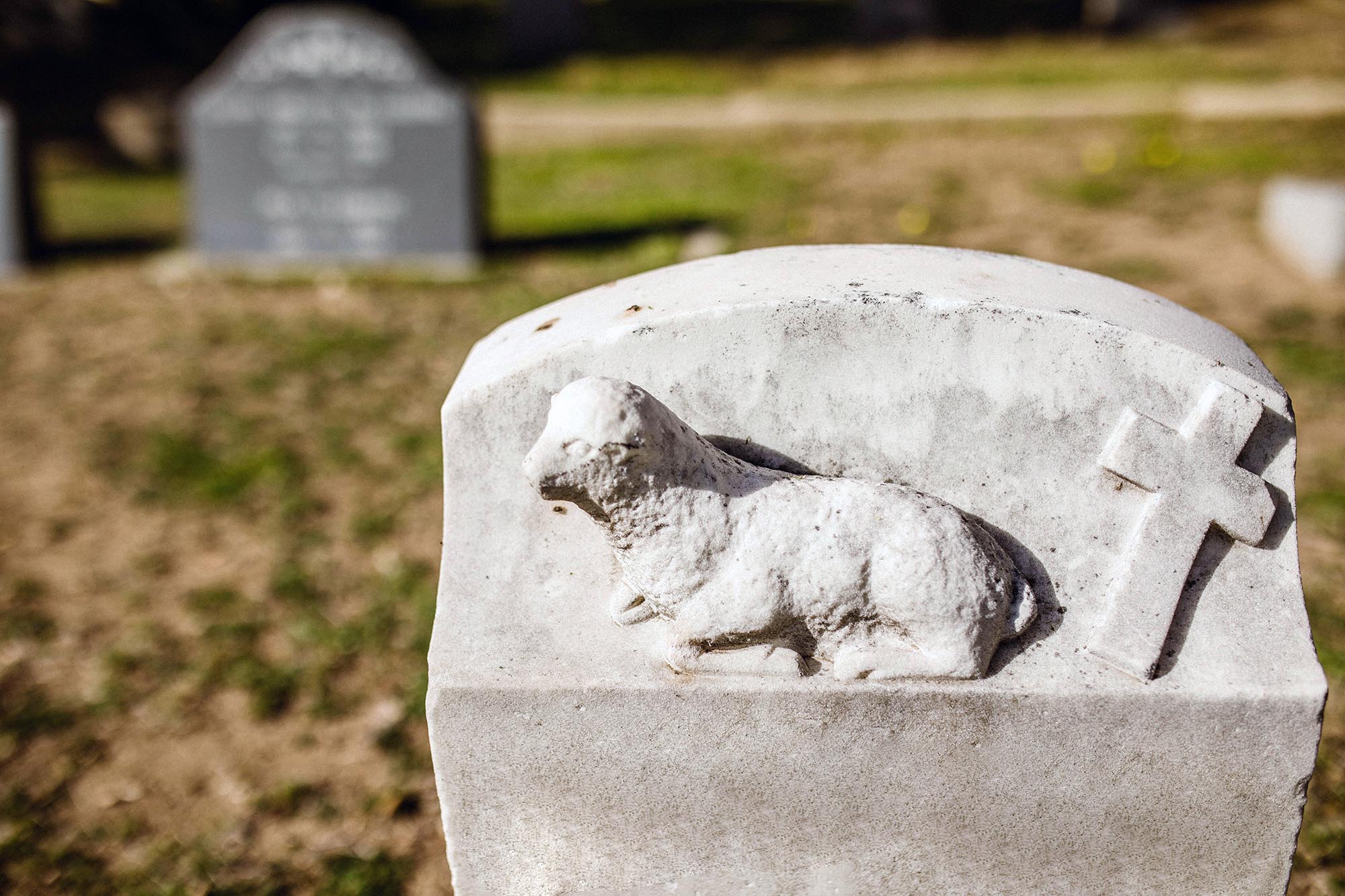
- Lamb: innocence, purity, and childhood; very common on children’s graves.
- Sleeping child: rest, innocence, and tender remembrance.
- Broken bud: a young life cut short.
- Angel child: innocence, heaven, and protection.
- Dove: peace, innocence, or the soul.
- Small shoes or toys: childhood and family remembrance.
When documenting children’s graves for family history, avoid sharing sensitive photos publicly unless the family has given permission.
Fraternal and Organization Symbols
Fraternal, civic, and organization symbols can be important clues for genealogy research. They may show membership in a lodge, society, mutual aid group, veterans group, or community organization.
- Freemasonry square and compasses: Masonic affiliation; sometimes includes the letter G.
- Order of the Eastern Star: five-pointed star emblem connected with Eastern Star membership.
- Independent Order of Odd Fellows three links: often shown with F, L, and T for Friendship, Love, and Truth.
- Woodmen of the World tree stump: fraternal memorial tradition often shown through tree stump or woodcraft-style stones.
- Knights of Columbus emblem: Catholic fraternal membership.
- Elks, Eagles, Moose, and other lodge emblems: civic or fraternal affiliation depending on the symbol.
Fraternal symbols can be mistaken for religious or decorative symbols. When possible, document the symbol, nearby text, lodge name, initials, and any metal marker or flag holder near the grave.
Military and Veteran Headstone Symbols
Military headstones and veteran memorials may include service branch information, rank, war service, awards, government marker formatting, flags, medallions, veteran organization markers, or an approved emblem of belief.
- Government marker layout: may include name, rank, branch, dates, war service, awards, and emblem of belief.
- Emblems of belief: religious or belief symbols approved for government headstones and markers.
- Military branch abbreviations: Army, Navy, Marine Corps, Air Force, Coast Guard, and related abbreviations.
- Medallions: may identify veteran status on a private marker.
- Flags: common around Memorial Day, Veterans Day, and family remembrance visits.
- Coins: sometimes left as a veteran tribute, though customs and cemetery rules vary.
Related guide: Veteran Grave Care & Memorial Documentation
How to Document Headstone Symbols for Family History
Headstone symbols are often most useful when they are documented clearly. For genealogy, family history, and out-of-town family care, a good cemetery documentation set should show the whole memorial, close-up symbols, inscriptions, plot context, nearby family stones, and cemetery location.
- Photograph the full memorial from straight on.
- Take close-up photos of each symbol or emblem.
- Photograph the inscription, dates, surname, and epitaph.
- Document nearby family markers and plot layout.
- Include cemetery entrance signs, section markers, and road context when helpful.
- Take photos before cleaning so original condition is preserved.
- Write notes about visible condition concerns, staining, wear, or unreadable areas.
Related service: Family Memorial Documentation
Preserving Symbols Before They Become Harder to Read
Weather, lichen, moss, algae, soil splash, mower debris, pollution, and time can make headstone symbols harder to read. On older stones, carved detail may become shallow, softened, stained, or partly lost.
Preservation-first documentation is often the safest first step. A written condition report and close-up symbol photos can help families understand what is still visible, what may be deteriorating, and whether cleaning or another service is appropriate.
- Cemetery Condition Reports — written notes about visible condition, staining, growth, stability, and readability.
- Gravestone Cleaning — preservation-first cleaning when the memorial is appropriate for cleaning.
- Headstone Letter Repainting — careful repainting for eligible engraved lettering when cleaning alone is not enough.
- Out-of-Town Family Cemetery Care — documentation and cemetery care for families who cannot visit regularly.
FAQ: Headstone Symbols and Meanings
Do headstone symbols always have one meaning?
No. Headstone symbols can have different meanings depending on faith, time period, region, family tradition, inscription, cemetery section, and the symbol’s design. Use the symbol as a clue, not a final answer.
What are the most common cemetery symbols?
Common cemetery symbols include crosses, angels, doves, clasped hands, flowers, lambs, urns, anchors, books, willow trees, wreaths, military emblems, and fraternal organization symbols.
What does a lamb on a headstone mean?
A lamb usually represents innocence, purity, and childhood. Lambs are especially common on children’s graves.
What do clasped hands on a gravestone mean?
Clasped hands can suggest farewell, reunion, marriage, eternal bond, or parting until meeting again. The surrounding inscription and details on the hands can help clarify the meaning.
What do three chain links on a headstone mean?
Three chain links often point to the Independent Order of Odd Fellows. The letters F, L, and T usually stand for Friendship, Love, and Truth.
Can cleaning make headstone symbols easier to read?
Sometimes. Preservation-first cleaning can improve readability when symbols are covered by biological growth, staining, or surface buildup. However, fragile, cracked, unstable, or severely weathered stones should be documented and evaluated before cleaning.
Need Help Documenting Cemetery Symbols or a Family Memorial?
If a family memorial has symbols, inscriptions, military details, fraternal emblems, or worn carvings you want documented, Gravestone Revival can help with cemetery photography, family memorial documentation, gravestone cleaning, and written condition reporting.
Send the cemetery name, town, family surname, memorial photos if available, and what kind of documentation or cemetery care you need.
Before & After Photo Documentation and a Written Gravesite Condition Report are always provided.